

Cost of Insuring High Value Artwork: A 2026 Guide
Oct 24, 2026
Last Updated: October 23, 2026
Quick Summary
The cost of insuring high value artwork is priced per thousand pounds of insured value, then adjusted for risk such as location, security and whether pieces travel. Extensions like transit and exhibition cover add 10-40%, and a higher deductible can lower the premium.
- Premiums scale with insured value, so accuracy at valuation stage matters more than shopping around.
- A single £20,000 painting in a secure home might cost £30 to £60 a year before extensions.
- Most insurers and appraisers recommend a fresh valuation every three to five years.
- Standard home policies often cap per-item cover and exclude transit, lending and exhibition.
- Agreed value fixes the settlement figure at policy inception and removes post-loss negotiation.
Table of Contents
- What Drives the Cost of Insuring High Value Artwork
- Fine Art Insurance Cost: How Premiums Are Calculated
- How to Insure Valuable Artwork: A Step-by-Step Process
- Art Insurance Appraisal: Getting Value Right
- Homeowners Insurance for Artwork: Where the Gaps Are
- Coverage While Shipping, Lending or Exhibiting Art
- Conclusion
- Frequently Asked Questions
What Drives the Cost of Insuring High Value Artwork
The cost of insuring high value artwork depends on four things: the insured value you declare, where the art lives, how risky that setting is, and how broad your coverage is. There is no flat rate, and any insurer who quotes one without asking about those four points is guessing.
At Cairngorm Artists, we ship original Highland paintings to collectors around the world.
Here is the honest answer. You can also browse fine art prints available to buy.
Most people assume the artwork's price tag sets the premium. It does not. The premium follows the insurance value, which is a separate number you agree with your insurer.
Get that number wrong and you either overpay every year or face a shortfall at claim time.
Fine Art Insurance Cost: How Premiums Are Calculated
Insurers calculate fine art insurance cost by applying a rate to your insured value, then adjusting for risk. The rate is usually expressed as a cost per thousand pounds of cover, and the final premium reflects your collection size, location, security, and how often the work moves.
Here is how the calculation works in practice:
- Start with insured value: the agreed figure for the whole collection, not what you paid for it.
- Apply the base rate: a rate per thousand pounds of insured value, set by the insurer.
- Adjust for risk: security, building type, location, and whether pieces travel.
The biggest lever is valuation. The second biggest is risk.
Worked Examples: What a Policy Might Cost
We cannot publish live rates, because premiums move with the market and depend on your circumstances.
Example 1: A single painting in a secure home
Suppose you own one original painting insured for £20,000.
Example 2: A small collection with transit and exhibition cover
Now take three paintings insured for a combined £75,000, kept in a climate-controlled room with a monitored alarm and a safe for small works. The base premium at £2.00 per £1,000 would be £150. Adding worldwide transit and temporary exhibition cover might add 25-40%, bringing the total to roughly £190-£210. Increase the deductible from £250 to £1,000 and the premium might fall by 10-15%, but you absorb the first £1,000 of any loss.
Example 3: The same collection in a higher-risk setting
Move that £75,000 collection to a ground-floor flat in a city centre with no alarm and a shared entrance.
These figures are illustrative and not a quote.
Three things to take from this:
- Premiums scale with insured value, so accuracy at valuation stage matters more than shopping around.
- Extensions are where quotes diverge, so compare them line by line.
- A deductible is a discount you pay for in exposure, not a saving.
For current rates, ask your broker or insurer directly.
| Scenario | Insured value | Rate per £1,000 | Indicative annual premium |
|---|---|---|---|
| Single painting in secure home | £20,000 | £1.50 to £3.00 | £30 to £60 before extensions |
| Same painting with transit cover | £20,000 | £1.50 to £3.00 | Rises by 10-20% |
| Three paintings, climate-controlled room | £75,000 | £2.00 | £150 base |
| Same collection with transit and exhibition | £75,000 | £2.00 | Roughly £190-£210 |
| Same collection, higher-risk city flat | £75,000 | £4.00-£6.00 | £300-£450 before extensions |
How to Insure Valuable Artwork: A Step-by-Step Process
Knowing how to insure valuable artwork comes down to seven steps: value the collection, document it, choose the right policy type, decide on scheduled versus blanket cover, set a deductible, compare quotes properly, and diarise a review date.
Work through them in order. Skipping step two is the most common and most expensive mistake.
- Get a professional valuation. Use a qualified appraiser with knowledge of the artist and market. Ask for a written report you can hand to an insurer.
- Build a documentation file. Photographs of the front, back, frame and any signature. For practical guidance on keeping originals in good condition, see how to clean and maintain original wildlife paintings. Receipts, provenance papers, and condition reports.
- Choose your policy type. A standalone fine art policy or a scheduled endorsement on a home policy. They are not equivalent.
- Decide scheduled or blanket cover. Scheduled cover lists each piece with its own limit. Blanket cover applies one limit across the collection.
- Set your deductible. A higher excess reduces premium but leaves small losses to you.
- Compare quotes on coverage, not price. Check the valuation clause, exclusions, transit cover, and claim settlement basis.
- Set a review reminder. Revalue every few years, and after any major purchase or market shift.
Association of Independent Museums guidance on collections care sets out documentation standards that translate well to private collections.
Art Insurance Appraisal: Getting Value Right
An art insurance appraisal is a written professional assessment of what a piece is worth for insurance purposes. It is not the same as a sale valuation, and confusing the two is where most coverage disputes begin.
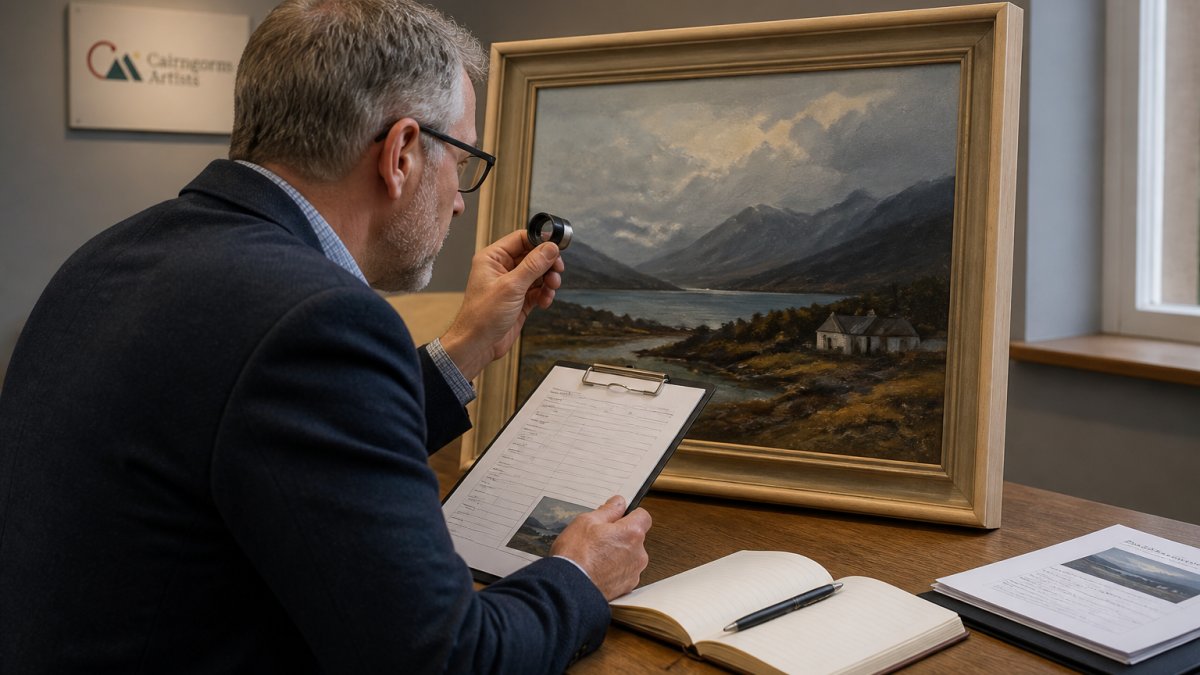
A good appraisal report includes the artist, title, medium, dimensions, date, provenance, condition, and a reasoned valuation figure. Ask the appraiser which basis they are using, and make sure your insurer accepts it.
Types of Appraisal and When to Use Them
Not every appraisal serves the same purpose. Insurance appraisals typically fall into three categories:
- Replacement cost appraisal: estimates what it would cost to buy a comparable work today. Common for household contents, but harder to apply to one-off originals where comparables are scarce.
- Fair market value appraisal: estimates what the piece would sell for between a willing buyer and seller. Used for tax, estate, and donation purposes, and sometimes for insurance where agreed value is not offered.
- Agreed value appraisal: produces a figure the insurer accepts as the settlement basis, fixed at policy inception. This is the most common basis for fine art policies because it removes post-loss negotiation.
Ask the appraiser which basis they are using and confirm your insurer accepts that basis before you commission the report. A report prepared on the wrong basis may be rejected or may leave you underinsured.
How Often to Reappraise
Most insurers and appraisers recommend a fresh valuation every three to five years, and sooner if the market for your artist has moved sharply. A common pattern is to reappraise when:
- You buy or inherit a significant new piece.
- The artist has a major exhibition, retrospective, or auction result that shifts prices.
- You move the collection to a new location or change how it is stored.
Market shifts cut both ways. If prices for your artist have risen and your insured value has not, you are underinsured and a partial loss may not be fully covered. If prices have fallen, you may be overpaying on an inflated insured value. Either way, the review is the moment to correct it.
Agreed Value, Market Value and Replacement Value
These three terms decide how a claim is settled, and they are not interchangeable.
Agreed value is a figure fixed when the policy starts and written into it.
Market value is what the piece would fetch today.
Replacement value is what it would cost to buy a comparable piece.
For original paintings by living artists, agreed value is often considered a fair basis.
Readers building a collection from scratch often want affordable routes in. Our guide to affordable ways to collect Scottish fine art covers where value and quality overlap.
Homeowners Insurance for Artwork: Where the Gaps Are
Homeowners insurance for artwork usually covers it, but only up to a per-item limit and often only for named perils.
Four gaps appear again and again:
- Per-item limits. A single painting may exceed the limit, leaving the excess uninsured.
- Named perils only. Many home policies cover fire and theft but not accidental damage or gradual deterioration.
- Matching sets. If one piece in a pair is lost, some policies pay only the value of that piece, not the set.
The fix is straightforward.
A standalone policy typically brings broader cover, higher limits, and a settlement basis that suits art rather than household goods.
If you are weighing up what to protect first, look at the pieces you could not replace.
Coverage While Shipping, Lending or Exhibiting Art
Coverage while shipping, lending or exhibiting art is where most collections are least protected and most exposed.
Three situations need explicit cover:
- Shipping. Ask whether the policy covers transit, who arranges it, and whether it is door to door.
- Lending. If a piece goes to a gallery or a friend's wall, confirm the policy follows it and who is responsible while it is away.
- Exhibiting. Public exhibition brings handling, crowds, and lighting exposure. Our tips for lighting large canvas paintings explain how to display them without risking damage. Check whether the policy extends to it.
For anyone moving work between locations, our guide to safe art shipping covers packing, crating, and carrier selection in detail.
At Cairngorm Artists, every original leaves us ready to hang and backed by our safe-arrival promise. That covers the journey to your door.
Two further points worth knowing. First, if you lend a piece, get the borrower's insurance details in writing before it leaves. Second, if you exhibit, ask the venue what cover they carry and where their responsibility ends.
Conclusion
Insuring a collection well takes an afternoon of paperwork and a decision about valuation basis. Insuring it badly takes no effort at all, and you find out at the worst possible moment.
Start with a professional appraisal. Document everything. Then compare policies on the valuation clause and the exclusions, not on the headline premium.
At Cairngorm Artists, we want every original Highland painting to arrive safely and stay protected.
Frequently Asked Questions
How much does it cost to insure high-value artwork?
There is no single figure. The cost of insuring high value artwork depends on the insured value, the risk profile of where it is kept, and the breadth of cover you choose. Insurers typically quote a rate per thousand dollars of insured value, then adjust it for factors like location, security, and whether the piece is scheduled or covered under a blanket policy. Ask for a quote based on your actual appraisal rather than relying on a generic percentage.
What factors affect the cost of fine art insurance?
Premium calculation usually reflects the insured value of each piece, the type and age of the artwork, the security and climate conditions where it is stored or displayed, whether it travels or is lent for exhibition, your claims history, and the deductible you accept. A higher deductible lowers the premium. So does keeping works in a professionally monitored home with fire and leak protection. Explain any of these risk factors clearly when you request a quote.
Do I need an appraisal to insure original artwork?
For high-value pieces, most fine art insurers ask for a professional art insurance appraisal or at least strong documentation: proof of purchase, provenance, condition reports and photographs. An appraisal establishes the insured value and supports a claim settlement. Update it every few years or after a significant market shift, and keep the paperwork with your policy so a claim is not delayed by missing evidence.
Does homeowners insurance for artwork cover valuable pieces?
Homeowners and contents coverage often includes a per-item limit for valuables, which a high-value painting can exceed quickly. Some policies also exclude damage from shipping, lending or exhibition. Check the per-item limit and the policy exclusions before assuming you are covered. If a piece is worth more than that limit, a scheduled item on a fine art policy or a dedicated valuable items endorsement is usually the safer route.
Protecting art starts before the policy. Choose work you intend to keep, from artists whose story you want on your wall. Explore the Cairngorm Artists collection and find an original painting made to last a lifetime.


