

Affordable Ways to Collect Scottish Fine Art
Oct 07, 2026
Table of Contents
- Why Collect Scottish Fine Art
- Understanding Price Bands for Scottish Art Prints
- How to Start an Art Collection on a Budget
- Scottish Paintings for Sale: Where to Find Them
- Building Confidence as a New Collector
- Caring for Your Scottish Art Prints
- Frequently Asked Questions
Last Updated: October 7, 2026
Why Collect Scottish Fine Art
To collect scottish fine art doesn't require deep pockets or years of experience. At Cairngorm Artists, we believe authentic Highland landscapes and wildlife art should be accessible to anyone drawn to Scotland's raw beauty, whether decorating a living room, honoring your heritage, or building a collection over time.

The appeal runs deeper than aesthetics: original Scottish paintings connect you to place, to artists, and to a visual tradition rooted in the Highlands, something with intention and story, not mass-produced decoration.
The key is knowing where to look, what to expect at each price point, and how to build confidence. Below, we'll show you how to navigate Scottish art prints, evaluate quality, and grow a collection that reflects your taste without straining your budget.
Understanding Price Bands for Scottish Art Prints
Scottish fine art prints come in distinct price ranges. Knowing these bands helps you set realistic expectations and find work that fits your budget.
Entry-Level Fine Art Prints (£16-£31)
Entry-level fine art prints are where most new collectors start: archival-quality works on acid-free paper, printed from original paintings by established Highland artists, not cheap reproductions.
Expect pieces like the Old Bothy, Isle of Harris (£16.00), a quiet waterside cottage against rolling hills, or the Snowy Hare (£29.00), a playful portrait with expressive brushwork.

You gain authentic artwork from real artists and archival acid- and lignin-free materials; you trade limited edition status and smaller sizes.
This band suits testing your taste, decorating a rental, or collecting gradually before upgrading as confidence grows.
Mid-Range Fine Art Prints (£35-£60)
Mid-range prints are the sweet spot for most collectors: at £35-£60 you get larger formats, more complex compositions, and often more established artists, focal points rather than accents.
You also get more sophisticated subject matter, abstract Highland landscapes, detailed wildlife studies, with more expressive brushwork and intentional color relationships.
| Price Band | Entry Point | Mid-Range | Best For |
|---|---|---|---|
| £16-£31 | Old Bothy, Snowy Hare | Loch Morlich Chill | Testing taste, rental spaces, gradual collecting |
| £35-£60 | Kingfisher Moments | Scottish Glen, Goldfinch Glow | Focal points, established collectors, investment pieces |
Mid-range prints work well once you've bought a piece or two and know what resonates, a real acquisition without a major financial commitment.
How to Start an Art Collection on a Budget
Most guides say "set a budget" and "buy what you love." That's incomplete. What helps is knowing what Scottish artwork costs, what extra costs sit on top of the sticker price, and how to verify you're buying something genuine.
A Practical Beginner's Guide to Collecting Scottish Fine Art Affordably
Think of collecting in three tiers.
Tier 1, Open-edition prints and reproductions. Unlimited runs of a single image, usually on archival paper or canvas.
Tier 2, Limited-edition prints. Numbered runs (commonly 25, 50, 100, or 150) signed by the artist; once sold out, no more are printed.
Tier 3, Original works on paper and small originals. Watercolours, pastels, ink drawings, and small oils or acrylics on board or canvas, one-of-a-kind.
A note on variation. These bands are indicative, not fixed.
Hidden Costs and Total Ownership Cost
The listed price is rarely the full cost. Budget for these on top:
- Framing. Custom framing runs from around £40 for a simple A4 frame to several hundred pounds for large, conservation-grade framing with UV-protective glazing. Ready-made frames are cheaper but rarely fit non-standard sizes.
- Shipping and packing. Prints shipped flat or in tubes cost less than framed works, which need rigid, padded packaging. International shipping adds customs paperwork and delays.
- Import charges. Buying from outside the UK means VAT, possibly customs duty on the declared value, and a courier handling fee, a meaningful percentage on top.
How to Assess Authenticity, Condition, and Provenance
Before you buy, run through this checklist. It applies to prints and originals alike.
For prints:
- Is the edition limited or open? Limited editions should be numbered (e.g. "12/50") and signed, usually in pencil beneath the image.
- Does the seller state the paper type? Look for acid-free, archival, or cotton rag paper; "high-quality paper" is a yellow flag.
- Is there a certificate of authenticity? Not all artists issue one, but reputable limited-edition sellers usually do.
For originals:
- Is the work signed? Most Scottish artists sign the front, and many also sign, title, and date the back.
- What is the medium and support? Oil on canvas, watercolour on paper, acrylic on board, each has different care needs and resale behaviour.
- Is there provenance? A documented history (previous owners, exhibition labels, gallery receipts) adds confidence and value. For modestly priced works provenance may be thin, but the seller should still know where the piece came from.
A note on reproductions. "Giclée" simply describes an inkjet printing process, not a quality guarantee. What matters is the paper, the inks (pigment vs dye), and whether the print is authorised by the artist. A giclée on archival paper from the artist's own studio is a legitimate fine art print; one on thin poster paper from an unlicensed seller is not.
Step 1: Define Your Collection Theme
Before spending anything, decide what draws you: Scottish landscape paintings, wildlife art, abstract Highland scenery, or one artist's work across pieces?
A theme keeps your collection from feeling random and makes browsing easier. Many collectors focus on a subject (red squirrels, coastal scenes, winter moods) or a style (loose watercolour, detailed acrylic, abstract). Spend time looking at Scottish fine art online and in galleries, and notice which pieces stop you, that instinct is your theme emerging.
Step 2: Set a Realistic Budget
Decide honestly what you can spend over the next year or two. £100-£150 over twelve months gives you room for several entry-level prints, or one mid-range piece plus an entry-level work.
Breaking it into smaller amounts makes collecting manageable: instead of "I'll spend £200 on art," think "one piece every two months at £30-£40." You live with each purchase before adding the next, deepening your understanding of what you actually like.
Loch Morlich Chill . Fine art print from original oil painting →
Step 3: Build Your Collection Over Time
Resist buying everything at once. Spacing purchases out, one piece every month or two, lets you discover what actually makes you happy in your space versus what looked good online.
As your collection grows, patterns emerge: wildlife subjects, cool colour palettes, loose brushwork. These guide your next purchases and create coherence.
Scottish Paintings for Sale: Where to Find Them
Finding affordable Scottish fine art is about knowing which channels exist and what each is good for. The right source matters as much as the piece, different routes mean different prices, documentation, and risk.
Buying Directly from Living Scottish Artists
The most direct path is buying from the artists themselves. You know exactly who created the work, can ask about materials and process, and the artist receives the full price rather than a gallery commission, better value for you, better income for them.
Where to find living artists selling affordably:
- Artist-run spaces and collectives. Shared studio buildings and cooperatives often price work lower than commercial galleries because overheads are shared.
- Open studios events. Artists open their studios at set times of year (commonly spring and autumn). See work in progress, buy directly, and often negotiate on multiple pieces.
- Art fairs and markets. Regional art, craft, and farmers' markets frequently include painters and printmakers. Quality varies, so apply the authenticity checklist above.
Where to View Scottish Art for Free or Low Cost
Before you buy, see a lot of work in person. Scotland has an unusually strong free-entry gallery culture.
- National and city galleries. The National Galleries of Scotland in Edinburgh, the Burrell Collection and Kelvingrove in Glasgow, and many municipal galleries offer free admission, with permanent collections including Scottish Colourists, the Glasgow Boys, and contemporary Scottish artists, ideal for training your eye.
- University and college galleries. Often free and less crowded, with rotating exhibitions including emerging artists.
- Commercial galleries. Free entry, and staff are usually happy to talk about work even if you're not buying. Regular visits build confidence and vocabulary.
Seeing work in person teaches what no photograph can: the texture of paper, true colours, the scale of a piece on a wall. Even one gallery visit shifts how you evaluate work online.
Buying Safely Online: A Buyer-Protection Checklist
Online is where most affordable Scottish art is bought, and where most buyer mistakes happen. Run through this before you pay:
- Seller identity. Named artist, registered gallery, or anonymous marketplace account? Prefer the first two; if anonymous, look for a business address and company number.
- Return policy. Reputable sellers accept returns for damage or significant difference from the description. No return option is a serious warning.
- Secure payment. Pay by credit card or a method with buyer protection. Avoid bank transfers to strangers, almost no recourse.
Matching the Source to Your Budget
A quick way to think about it:
- Under £50: open-edition prints, small works on paper from student shows, artist-direct sales during open studios.
- £50-£200: limited-edition prints, small originals from emerging artists, direct-from-artist purchases.
- £200-£500: larger limited editions, mid-sized originals, early-career work from artists with a growing exhibition record.
These bands overlap and shift with reputation and location, but give a realistic starting point. Best value usually comes from buying directly, buying early in an artist's career, and buying work you genuinely want to live with, not work you hope will appreciate.
Building Confidence as a New Collector
Uncertainty holds many people back from collecting, fear of mistakes, regret, or looking foolish as a non-expert.
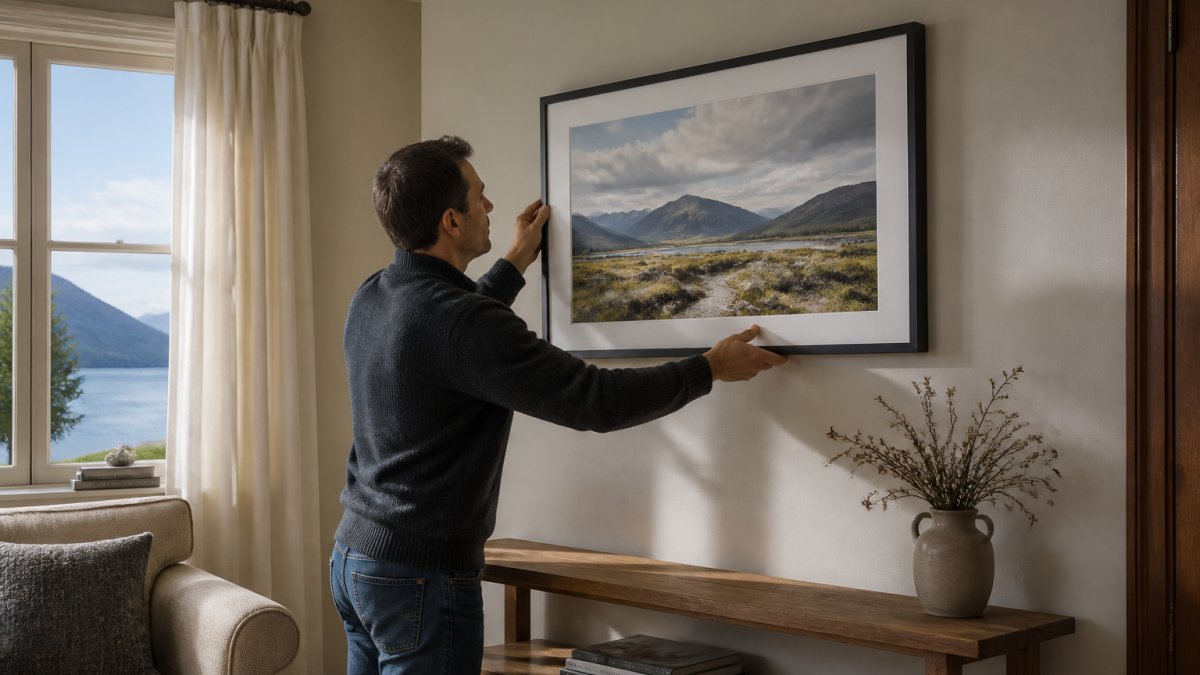
Start small. Your first purchase doesn't need to be perfect, just something you genuinely like looking at.
Talk to artists and sellers. Most are generous about their work and process, and asking questions is what collectors do.
Visit galleries and exhibitions when possible.
Remember that taste develops.
Caring for Your Scottish Art Prints
Once you own a piece, protect it. Proper care keeps your collection beautiful for decades.
Display prints away from direct sunlight, which fades colors.
Keep prints in stable conditions (Family Archives: General Guidance). Extreme temperature swings and high humidity damage paper and frames, a climate-controlled living room is fine, a damp basement or hot attic is not (General Preservation - FAQ).
Handle prints by the frame, never the paper, skin oils can mark the surface.
If a piece is damaged, consult a professional conservator rather than attempting repairs yourself.
Collecting Scottish fine art is accessible, rewarding, and deeply personal.
Frequently Asked Questions
How can I start collecting Scottish fine art on a budget?
Begin with fine art prints from Highland artists, which range from £16 to £60. Start with one or two pieces that resonate with you, then build your collection gradually. Look for entry-level prints (£16-£31) featuring wildlife or landscapes, such as the Old Bothy or Snowy Hare. Set a monthly budget and prioritize original artwork over mass-produced reproductions to support authentic Scottish artists and ensure lasting quality.
What should I check before buying Scottish art prints online?
Verify the seller's credentials and check that artwork is from genuine Highland artists. Look for archival-quality materials: acid- and lignin-free paper and handmade wooden frames indicate durability. Request high-resolution images to assess colour and brushwork accurately. Confirm shipping protection and return policies, reputable sellers offer guarantees like safe-arrival promises.
Are fine art prints a good way to start an art collection?
Yes. Fine art prints from original paintings offer authentic artistic value at affordable prices. They feature the same quality materials as higher-priced originals, acid- and lignin-free paper, textured matte surfaces, and handmade frames. Prints allow you to explore different artists, styles, and themes without major financial commitment, helping you develop your taste before investing in larger pieces. Many collectors build meaningful collections entirely from fine art prints.
How can I tell if a Scottish artwork is authentic?
Authentic Scottish fine art comes from recognized Highland artists with verifiable backgrounds. Check for artist credentials. Examine the artwork's materials: genuine fine art uses acid- and lignin-free paper and quality framing. Request provenance information and artist statements. Be cautious of vague descriptions or suspiciously low prices. Direct purchases from artist studios or established galleries run by Highland artists offer the strongest authenticity assurance.


