

History of Landscape Painting in the Scottish Highlands
Oct 23, 2026
Last Updated: October 22, 2026
Quick Summary
Scottish landscape painting is one of Europe's most distinctive artistic traditions, with the Highlands' dramatic mountains, misty glens, and windswept coastlines captivating artists for nearly two centuries, evolving from the Romantic period into contemporary practice.
- Alexander Nasmyth (1758-1840) is often described as a foundational figure in Scottish landscape painting.
- Horatio McCulloch (1805-1867) painted dramatic large-scale views of Glencoe, Loch Lomond, and the Trossachs, helping codify the visual image of the Highlands in the Victorian imagination.
- William McTaggart (1835-1910) brought loose, energetic brushwork and a strong sense of light and weather, departing from McCulloch's finished style toward an immediate, atmospheric approach.
- The Scottish Colourists brought bold, post-impressionist use of color to Scottish painting, demonstrating that Scottish landscape art could absorb European modernist ideas.
- Contemporary Highland artists work across oil, acrylic, watercolor, pastel, and mixed media, often combining field sketching with digital tools.
Table of Contents
- Scottish Landscape Painting: From Romantic Vision to Contemporary Practice
- The Scottish Highlands as Artistic Inspiration
- Romantic Paintings of the Scottish Highlands
- Famous Scottish Landscape Painters and Their Legacy
- Materials, Techniques, and Changing Artistic Practice
- Modern Scottish Landscape Art and Contemporary Approaches
- Viewing and Collecting Highland Landscape Art
- Frequently Asked Questions
Scottish Landscape Painting: From Romantic Vision to Contemporary Practice
Scottish landscape painting is one of Europe's most distinctive artistic traditions. The Highlands' dramatic mountains, misty glens, and windswept coastlines have captivated artists for nearly two centuries, evolving from the Romantic period into contemporary practice.

At Cairngorm Artists, our collective of ten Highland artists continues this legacy, creating original works that capture the raw beauty and atmospheric drama that has inspired painters since the early nineteenth century.
The Scottish Highlands as Artistic Inspiration
The Highlands' vertical drama, shifting weather, and play of light across water and stone present technical and emotional challenges that draw painters back repeatedly.
Mountains, Glens, Lochs, and Coastlines
Mountains form the backbone of Highland landscape art. Artists depict peaks not as isolated forms but as elements within atmospheric systems where weather, light, and distance create visual depth.

Glens and lochs introduce water and horizontal movement. A loch functions as a mirror for sky and mood, while glacier-carved glens create natural corridors that guide the viewer's eye.
Coastlines present their own challenge: rocky shores and sea cliffs generate compositions where human scale becomes almost irrelevant, and artists translate the constant movement of tides, waves, and weather into visual form.
Highland Life and Rural Settings
Beyond pure scenery, Highland landscape painting often incorporates human presence, rural settlements, shepherds, traditional ways of life, anchoring the vast landscape to human experience.
Early nineteenth-century paintings romanticized rural existence; later artists moved toward naturalistic representation of actual conditions and labor. Contemporary artists continue to ask how human presence registers within wild landscapes.
Romantic Paintings of the Scottish Highlands
Early Nineteenth-Century Development
Scottish landscape painting emerged as a distinct tradition from roughly 1800 onward, when artists began traveling to the Highlands specifically to paint. Landscape became worthy of serious attention in its own right, not merely background for historical or mythological scenes.
Working outdoors in changeable weather demanded portable materials and rapid execution. Artists adapted watercolor and oil techniques to capture fleeting light and atmosphere, developing a visual language for mist, storm, and sudden illumination.
Colour, Light, and Atmospheric Drama
Colour became the primary vehicle for expression. Rather than local color, artists used color expressively, warm ochres, deep blues, subtle greens, to convey mood and atmosphere.
Light functions as both subject and medium. Highland light, affected by latitude, weather, and water, changes dramatically throughout the day and across seasons; artists developed layered washes, broken brushwork, and strategic use of white paper or canvas to represent this mutability.
Atmospheric effects, mist, cloud, haze, became primary artistic subjects. Many paintings depict landscape partially obscured, where definition dissolves into suggestion, aligning with Romantic aesthetics that valued the incomplete over the fully rendered.
Famous Scottish Landscape Painters and Their Legacy
Individual artists shaped the tradition through distinctive approaches and influence on subsequent generations, developing it as a connected conversation rather than isolated efforts.
Key Figures and Their Artistic Practice
Alexander Nasmyth (1758-1840) is often described as a foundational figure in Scottish landscape painting.
J. M. W. Turner (1775-1851) was English, but his 1801 and 1831 Scottish tours produced watercolors and oils of Highland subjects that shaped how the region was seen across Britain.
Horatio McCulloch (1805-1867) is one of the central figures in Highland landscape painting. Based in Glasgow and Edinburgh, he painted dramatic large-scale views of Glencoe, Loch Lomond, and the Trossachs, combining careful observation with Romantic staging.

John Knox (1778-1845) painted Highland scenery and is associated with the early nineteenth-century Glasgow school; his views of Loch Lomond contributed to the growing market for Scottish landscape imagery.
The Scottish Colourists, **F. C. B.
Influence and Artistic Movements
The tradition did not develop in isolation: artists engaged with broader European movements while responding to specifically Scottish conditions, and influence flowed in multiple directions.
Later artists built upon earlier achievements, sometimes revisiting locations previously depicted. This dialogue across decades creates a cumulative tradition where individual works gain resonance from their relationship to earlier paintings.
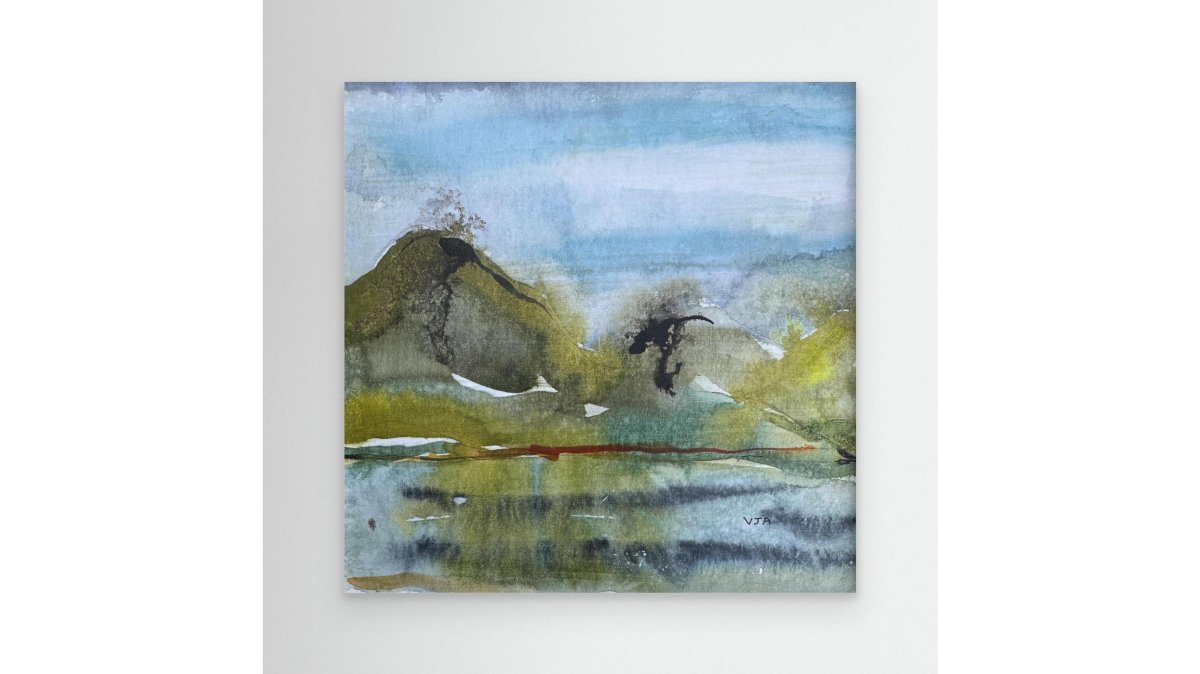
Scottish Glen - Fine art print from original artwork →
Materials, Techniques, and Changing Artistic Practice
Materials, tools, and technical approaches evolved significantly across Highland landscape art, reflecting practical considerations and shifting priorities that left visible traces in the paintings.
Watercolor, Oil, and the Practicalities of Painting Outdoors
Watercolor and oil dominated Highland landscape painting, each imposing different constraints on artists working in the field.
Watercolor's portability made it the practical choice for sketching tours: a small box of cakes or tubes, a folding stool, and a block of paper allowed quick work before weather changed.
Oil allowed richer color, greater control over surface effects, and exhibition scale, but demanded elaborate setup and drying time.
The nineteenth-century 'sketching tour', summer travel through the Highlands filling sketchbooks, then studio work for exhibition and sale, shaped the look of much Highland painting, which combines observed detail with composed, idealized arrangements.
Brushwork, Finish, and the Shift Toward Expression
Brushwork became increasingly expressive. Early paintings such as McCulloch's showed careful, controlled application; later artists, notably McTaggart and the Glasgow Boys, embraced gestural brushwork conveying movement and immediacy, making visible strokes and impasto part of the painting's meaning.
This shift reflected changing ideas about what a landscape painting should do: a finished painting asserted control over nature and offered a legible scene, while a looser one asserted immediate response to weather and light. Both approaches coexisted throughout the tradition.
Changing Practice in the Twentieth and Twenty-First Centuries
The twentieth century brought further changes: the Scottish Colourists absorbed post-impressionist and fauvist ideas, and later artists explored abstraction, mixed media, and conceptual approaches, sometimes using landscape as a departure point rather than a subject.
Contemporary Highland artists work across oil, acrylic, watercolor, pastel, and mixed media, often combining field sketching with digital tools. Plein-air painting has revived, and the challenges of wind, rain, and midges remain part of the experience.
Modern Scottish Landscape Art and Contemporary Approaches
Contemporary Scottish landscape painting has moved beyond strict adherence to Romantic traditions while maintaining connection to the landscape itself.
Departure from Traditional Representation
Modern artists approach the Highlands with awareness of earlier traditions but without obligation to follow them. Some work entirely abstractly, using landscape as a departure point for exploration of color, form, and composition. Others maintain representational elements but simplify or distort them according to personal vision.
The question of what landscape painting is for has shifted. Rather than seeking to capture nature accurately or to inspire Romantic emotion, contemporary artists might investigate how perception works, how memory shapes vision, or how cultural narratives about the Highlands influence what we see when we look at them.
Contemporary Artists and Cultural Identity
Contemporary Highland landscape artists engage with questions of cultural identity and representation. The Highlands carry historical weight, associations with clan culture, displacement, and national identity, that inform how modern artists approach the terrain. Some artists deliberately address these histories, using landscape as a vehicle for exploring cultural memory and belonging.
The work of contemporary artists demonstrates that landscape painting remains vital. Rather than a historical tradition frozen in the nineteenth century, it continues to evolve as artists find new questions to ask and new ways of seeing to explore.
Viewing and Collecting Highland Landscape Art
For those drawn to the tradition of Highland landscape painting, access to original works has expanded significantly in recent decades.
Museums, Collections, and Public Access
Major museums across Scotland and beyond maintain collections of Highland landscape paintings. These works are accessible to the public, allowing direct engagement with paintings from the tradition's foundational period. Museum collections provide context, seeing paintings alongside related works, historical documents, and artist information, that deepens understanding.
Beyond institutional collections, contemporary artists continue to create landscape paintings. Galleries specializing in Scottish art, both in Scotland and internationally, represent working artists. This creates opportunity to engage with the living tradition, to see how contemporary artists approach the same landscape that inspired their predecessors.
Original Artwork and Contemporary Collections
Collecting original Highland landscape paintings ranges from acquiring museum-quality historical works to supporting contemporary artists. Each approach offers distinct rewards.
The tradition of Highland landscape painting offers particular value for collectors with Scottish heritage or deep connection to the landscape. A painting of a specific glen or loch becomes a personal connection to place, a way of bringing the landscape's spirit into daily life.
The history of landscape painting in the Scottish Highlands represents an ongoing conversation between artists and place. From the Romantic period through contemporary practice, painters have found in the Highlands a landscape worthy of sustained artistic attention.
Frequently Asked Questions
How did landscape painting develop in the Scottish Highlands?
Scottish landscape painting emerged as a distinct artistic practice during the late eighteenth and nineteenth centuries, driven by Romanticism's fascination with wild, dramatic scenery. The Highlands' mountains, lochs, glens, and rugged coastlines captured artists' imaginations as symbols of nature's power and beauty. Early landscape painters used watercolour and oil to convey the region's atmospheric qualities, colour shifts, and emotional intensity. This development was tied to growing tourism, cultural identity, and the artistic conviction that Highland scenery offered subjects worthy of serious artistic study and interpretation.
Who are some famous Scottish landscape painters?
Many artists have contributed to the rich tradition of Scottish landscape painting, developing distinctive approaches to depicting mountains, lochs, and rural Highland life, and establishing traditions that influenced subsequent generations. Their work remains central to understanding how landscape painting became intertwined with Scottish cultural identity and artistic heritage.
What makes Highland landscape painting distinctive?
Highland landscape painting is characterized by its focus on dramatic natural elements, mountains, glens, lochs, and coastlines, rendered with attention to colour, light, and atmospheric conditions. Artists emphasize the region's moody skies, shifting weather, and the play of light across water and stone. The tradition blends factual observation with emotional and imaginative interpretation, often depicting Highland life and rural settings alongside pure landscape. This distinctive approach reflects both the landscape's inherent visual drama and the cultural significance the Highlands hold in Scottish identity, making the scenery a vehicle for exploring themes of nature, tradition, and national character.
How has modern Scottish landscape art changed from traditional Highland paintings?
Modern Scottish landscape art has moved beyond literal representation toward abstraction and experimental approaches. Contemporary artists use layered colour, loose brushwork, and non-representational techniques to convey the emotional and atmospheric essence of Highland scenery rather than precise detail. This shift reflects broader changes in artistic practice and allows artists to interpret the landscape through personal vision and contemporary visual language. Despite these departures from traditional methods, modern Scottish landscape art remains rooted in the region's natural elements and cultural identity, maintaining the connection between place, emotion, and artistic expression that defined earlier Highland painting traditions.


