

Identifying Authentic Scottish Landscape Paintings
Oct 12, 2026
Table of Contents
- What Makes a Scottish Landscape Painting Authentic
- How to Identify a Painting Signature and Artist Attribution
- Examining Materials and Techniques in Scottish Landscape Art
- How to Authenticate an Oil Painting Through Physical Inspection
- Painting Provenance Research: Tracing Ownership and History
- Original Painting vs Print: Spotting Reproductions and Copies
- When to Seek Professional Appraisal and Authentication
- Frequently Asked Questions
Last Updated: October 12, 2026
What Makes a Scottish Landscape Painting Authentic
An authentic Scottish landscape painting is an original work created by a skilled artist, not a mass-produced print or reproduction.
At Cairngorm Artists, we work with ten Highland artists who create original works inspired by Scotland's wild beauty.
Most people think authenticity is obvious. It isn't. Skilled reproductions can fool even experienced collectors. The good news is you don't need an art degree to spot the real thing. You need to know what to look for.
Authentic paintings show evidence of an artist's individual technique. Every artist has a distinct way of applying paint, handling light, and building composition. Reproductions, even high-quality ones, lack this personal mark. They're technically competent but emotionally flat.
How to Identify a Painting Signature and Artist Attribution
Identifying the artist starts with the signature. A signature is your first clue to authenticity, but it's also where many collectors make mistakes.
Most authentic signatures appear in one of three locations: the lower right corner, lower left corner, or hidden within the composition itself. Scottish landscape artists from the nineteenth century often signed their work discreetly.
Here's what to check:
- Placement: Look at the corners first, then scan the edges and lower portions of the painting
- Legibility: Can you read the signature clearly, or is it obscured? Authentic signatures vary in clarity
- Medium match: Is the signature painted in the same medium as the rest of the work? Oil signatures on oil paintings should look integrated, not added later
- Pressure and flow: Does the signature show natural pen or brush pressure, or does it look mechanical and uniform?
Reproductions often have printed signatures that look identical across multiple copies. Authentic signatures show variation in pressure, ink flow, and positioning because they were hand-applied.
Once you've identified a signature, research the artist. Scottish landscape painters from the nineteenth century are often documented in museum collections, auction records, and art historical references. If you find the artist's name, you can verify their working period, typical subjects, and known techniques.
Many authentic Scottish landscape paintings carry inscriptions beyond the signature. These might include the title, date, or location painted. Inscriptions on the back of the canvas or frame are especially valuable for provenance research.
Examining Materials and Techniques in Scottish Landscape Art
The materials an artist chose tell you a lot about the painting's age and authenticity.
Scottish landscape artists worked primarily in two mediums: watercolor and oil. Each medium leaves distinct physical evidence.
Watercolor paintings use pigment suspended in water-based binder. They're typically painted on paper or card. Authentic watercolors from the nineteenth century show:
- Paper that has aged naturally (slight yellowing, foxing marks from moisture exposure)
- Pigments that have faded unevenly, following the light exposure pattern of where the painting hung
- Layered washes that show the artist's working process
- A matte surface unless varnished
Oil paintings use pigment suspended in linseed oil. They're painted on canvas, wood panels, or prepared boards. Authentic oils show:
- Canvas weave visible beneath the paint in some areas
- Brushwork that varies in texture and thickness
- Natural cracking (crazing) that follows the paint's age and the canvas's movement
- A surface that may be glossy or matte depending on the final varnish
The technique visible in brushwork is your strongest indicator of authenticity. Scottish landscape artists developed regional approaches. Some favored loose, expressive brushwork. Others worked with tight, detailed application.
Look at how the artist handled:
- Foreground detail: How much definition appears in the closest elements?
- Middle ground transition: How does the artist move your eye from foreground to background?
- Sky treatment: Are clouds rendered with soft blending or defined edges?
- Light direction: Does the light source remain consistent throughout the composition?
These choices show an artist's maturity and skill. Reproductions often flatten these choices or apply uniform techniques across the entire surface.
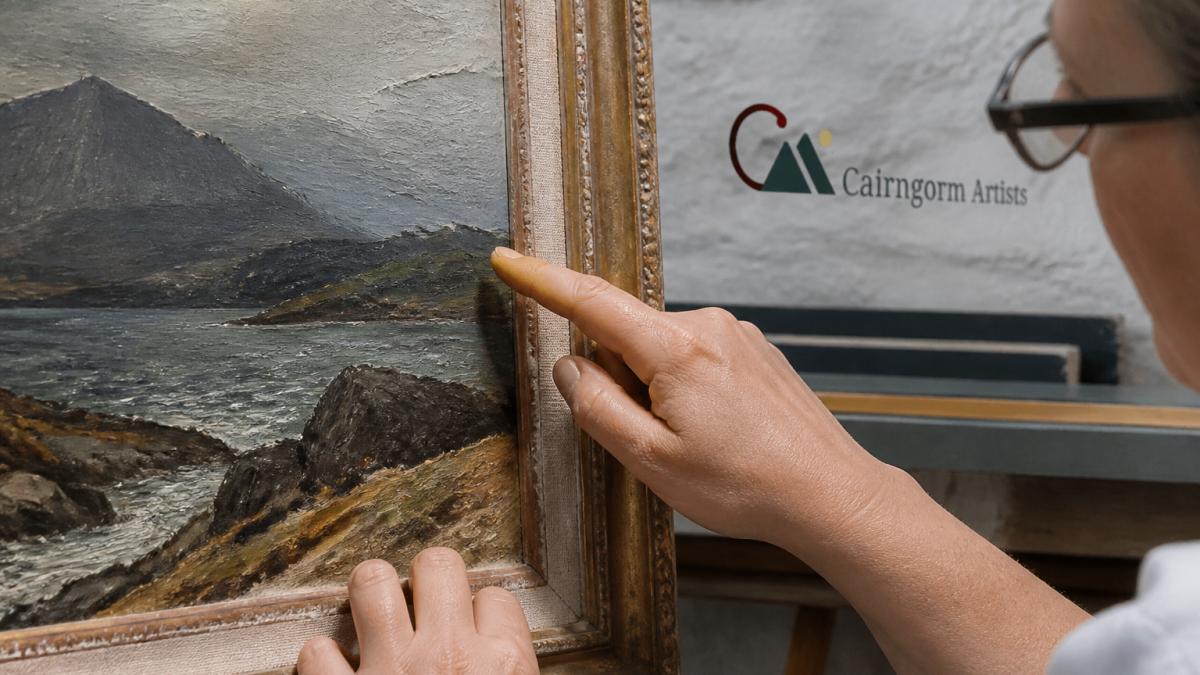
How to Authenticate an Oil Painting Through Physical Inspection
Physical inspection reveals what the naked eye can miss. You don't need expensive equipment. You need patience and attention to detail.
Start with the canvas. Flip the painting over if possible and examine the back. Authentic nineteenth-century canvases show:
- Stretcher bars made from wood (often pine or spruce)
- Canvas attached with tacks or nails that show patina
- Labels, stamps, or notations from galleries or previous owners
- No synthetic materials or modern adhesives
The front surface tells more. Use a magnifying glass and good lighting. Look at:
- Paint layers: Can you see where the artist painted over earlier work? Authentic paintings often show pentimenti, or changes the artist made during creation
- Brush marks: Do individual brushstrokes show variation in pressure and direction?
- Craquelure: Fine cracks in the paint surface follow a natural pattern as oil paint ages. Forced cracks look uniform and artificial
- Pigment consistency: Does the paint sit evenly on the canvas, or are there areas where it's flaked or lifted?
Canvas texture is important. Nineteenth-century canvas has a distinct weave pattern. Modern reproductions on canvas often use tighter, more uniform weaves. The texture should feel slightly rough under your fingertips, not smooth.
Check the edges and corners carefully. These areas show wear patterns that are hard to fake. If the painting is in a frame, ask if you can examine the edges where the canvas wraps around the stretcher bars. Authentic paintings show natural wear, dust accumulation, and color variation in these hidden areas.
Painting Provenance Research: Tracing Ownership and History
Provenance is the documented ownership history of a painting. It's your most powerful authentication tool because it creates an unbroken chain linking the painting to its creation.
Scottish Glen - Fine art print from original artwork →
Start with what you know. If you inherited the painting, gather family records:
- Letters or documents mentioning the painting
- Gallery receipts or invoices
- Exhibition catalogs that might list the work
- Photographs showing the painting in previous homes
- Insurance appraisals or valuations
These documents prove the painting existed in a specific place at a specific time. They're invaluable for establishing provenance.
For paintings you've purchased or found, research becomes detective work. Check these sources:
- Museum databases: Major Scottish museums catalog their collections online. If your painting appears in a museum record, provenance is partially established
- Auction house records: Christie's, Sotheby's, and regional auction houses document sales. Search their archives for similar works or the specific painting
- Art historical references: Books on Scottish landscape artists often include illustrated catalogs of known works
- Gallery records: Contact galleries that specialize in Scottish art. They maintain historical records and can sometimes trace paintings through their sales history
When researching provenance, document everything. Note where you found information, what it says, and when you found it. Provenance is built from accumulated evidence, not single sources.
Red flags in provenance research include:
- Gaps in ownership history longer than ten years
- No documentation for the painting's location during major historical events
- Conflicting information from different sources
- Claims that the painting was "lost" or "forgotten" for decades
These don't automatically mean the painting is inauthentic, but they warrant deeper investigation.
Original Painting vs Print: Spotting Reproductions and Copies
The difference between an original and a reproduction is fundamental, and it's visible if you know where to look.
Reproductions include fine art prints, canvas prints, and lithographs created from original paintings. They're legitimate products with their own value.

Reproductions show these characteristics:
- Uniform texture: The surface feels consistent across the entire image. Real paintings have textural variation from brushwork
- Perfect registration: Colors align perfectly at every edge. Hand-painted work shows slight variations where colors meet
- Ink or printing medium: Close inspection reveals the dots or lines of the printing process. Oil or watercolor shows individual pigment particles
- Identical copies: If multiple "originals" exist with identical compositions, they're reproductions
- Backing material: Canvas prints are mounted on synthetic backing. Original canvases have natural stretcher bars and canvas weave
At Cairngorm Artists, we offer both original paintings and fine art prints. Our canvas prints use high-quality materials with water-based inks and UV protection, and they're honestly labeled as prints.
When evaluating whether a painting is original or print, the surface is your best evidence. Run your fingertips gently across the painting.
Look at the edges of the frame. Original paintings have canvas edges wrapped around stretcher bars. Prints are mounted on boards or backing materials. The construction is completely different.
When to Seek Professional Appraisal and Authentication
Some paintings need expert evaluation. Know when to stop investigating on your own and bring in a professional.
Seek professional authentication when:
- The painting is valuable enough to insure (typically over a certain threshold)
- You're planning to sell the work
- You've found conflicting evidence about authenticity
- The painting shows significant damage or restoration
- You cannot locate the artist or find any documentation
- The signature is unclear or the attribution is uncertain
Professional appraisers and art conservators have tools and training you don't have access to. They can perform technical analysis including:
- X-ray fluorescence to identify pigments
- Infrared reflectography to reveal underpainting
- Canvas and paint sampling for laboratory analysis
- Detailed condition assessment and restoration recommendations
These techniques provide definitive answers that visual inspection alone cannot.
When choosing an appraiser, verify credentials. Look for:
- Membership in professional organizations
- Specific experience with Scottish landscape paintings
- Insurance and bonding
- References from previous clients
- Written appraisal reports that document methodology
An appraisal costs money, but it's worthwhile insurance for valuable paintings. The appraisal also creates official documentation that supports future sales or insurance claims.
Identifying authentic Scottish landscape paintings combines observation, research, and sometimes professional expertise. You've learned to read signatures, examine materials, inspect physical condition, trace provenance, and distinguish originals from reproductions.
At Cairngorm Artists, we create original paintings that capture the wild beauty of the Scottish Highlands. Every piece arrives ready to hang with our safe-arrival promise, and each work carries the authentic vision of our ten Highland artists.
Frequently Asked Questions
How can you tell if a Scottish landscape painting is authentic?
Authentic Scottish landscape paintings show specific hallmarks: original brushwork with visible texture and variation, consistent signature placement, and verifiable provenance. Check for layered washes typical of watercolour or oil techniques, and verify the artist's name. Original works display subtle imperfections and spontaneous marks that reproductions cannot replicate. When in doubt, consult a professional appraiser.
What should you look for in a painting's signature?
Examine signature placement, which is typically in a corner or along an edge. The signature should match the artist's known hand through comparison with authenticated works. Look for signatures that appear integrated into the composition rather than added later. Check whether the signature is painted with the same medium as the work itself, oil signatures on oil paintings, watercolour signatures on watercolours. Inconsistent pressure, different ink colour, or signatures that appear raised or glossy may indicate later addition.
How can you check the provenance of a Scottish painting?
Start by documenting any existing paperwork: gallery labels, auction house records, or family documentation. Contact auction houses and galleries to search their historical records. Check museum databases and public collections for similar works by the artist. For inherited pieces, gather family records about where and when the painting was acquired. Request certificates of authenticity from previous owners if available. Document the painting's condition history and any conservation work.
How can you tell an original painting from a print or reproduction?
Original paintings show visible brushwork, texture, and paint layering when viewed closely or under magnification. Prints display uniform dot patterns or printing lines under magnification. Original canvases have natural canvas weave texture; reproductions often show a photographic surface. Check the reverse: originals have stretcher bars or backing boards; prints have flat backs. Examine edges for paint buildup; prints have clean, uniform edges. Original works feel substantial in weight; prints feel lightweight. Canvas prints from original artwork, like those from Cairngorm Artists, are clearly labelled as reproductions and offer authentic Highland scenery at an accessible price point.


