

Abstract vs Realistic Scottish Seascape Art
Sep 27, 2026
Table of Contents
- Defining Realism vs. Abstract Styles in Scottish Seascape Art
- Key Differences: Composition, Color Palette, and Brushwork
- How to Choose Seascape Art for Home Decor
- Why Support Independent Scottish Artists
- Techniques for Capturing Coastal Energy and Atmosphere
- The Hybrid Approach: Blending Realism with Abstract Elements
- Frequently Asked Questions
Last Updated: September 26, 2026
Defining Realism vs. Abstract Styles in Scottish Seascape Art
Realistic Scottish seascape art captures the literal visual experience: the exact curve of a wave, the precise color of storm clouds over the Hebrides, the identifiable geography of a particular coastline. Abstract Scottish seascape art strips away those details and rebuilds the scene using color, texture, and gestural marks to convey emotion and atmosphere instead.

It's about what the artist chooses to show you and what they ask you to imagine. At Cairngorm Artists, we work with Highland painters, and collectors often ask: which one belongs in my home?
Realistic seascapes invite recognition: you see the North Sea as it actually appears, with waves rendered in proper proportions and light behaving according to physics. Abstract seascapes use color intensity, layered brushwork, and compositional tension to suggest coastal energy without literal details, requiring active viewer interpretation.
Neither approach is superior. They serve different purposes and appeal to different emotional responses. Understanding the distinction helps you choose artwork that will genuinely speak to your space and your sensibilities.
Key Differences: Composition, Color Palette, and Brushwork
The technical language of seascape painting reveals where realism and abstraction diverge most sharply. Understanding these distinctions at a practical level helps collectors recognize what they're looking at and why one approach might resonate more than another.
Composition and Spatial Structure
Realistic Scottish seascape painters adhere to linear and atmospheric perspective, anchoring the horizon at a specific location. You can identify the Firth of Forth, Isle of Skye, or Moray Firth by recognizable landmarks. Foreground, middle ground, and background recede logically, creating a "window" effect where the viewer feels positioned at a specific vantage point.
Abstract seascapes dismantle spatial hierarchy: the horizon line tilts, disappears, or compresses into a corner. Foreground and background collapse into a single plane. Composition becomes about visual tension, how colors interact, where the eye travels, how marks create rhythm and movement, creating dynamic instability rather than spatial clarity.
Color Palette: Observed vs. Expressive
Realistic seascape artists work from direct observation, matching what the eye sees. Scottish coastal light produces specific color relationships: cool greys and blues on overcast days, warm ochres during golden hour, greens and purples in deeper water. The North Sea in winter is genuinely grey-green with white foam. Color saturation remains moderate because nature itself is moderate.
Abstract painters treat color as emotional language, using combinations that never appear in nature. Saturation intensifies to create visual excitement and emotional resonance. The color choice communicates the artist's feeling about the coast, turbulence, energy, melancholy, exhilaration, rather than what it literally looks like.
Brushwork and Surface Treatment
Realistic painting employs controlled, invisible brushwork where technique serves the subject. Brushstrokes follow form, horizontal for calm water, curved for swells, vertical for cliffs. The paint surface remains smooth and uniform, representing roughness through refined technique rather than creating actual physical texture. This demands significant skill.
Abstract work celebrates visible brushwork as content. Gestural marks, layered washes, splatters, and impasto create actual physical texture. The viewer is acutely aware of the artist's hand and the physical act of painting, prioritizing authenticity of gesture over accuracy of representation.
The Role of Detail and Specificity
Realistic seascapes reward close viewing, inviting study of details like individual rocks, foam patterns, and lichen texture. This specificity creates a sense of place so precise that familiar viewers often recognize the exact location.
Abstract seascapes abandon specificity in favor of essence. Rather than rendering individual rocks or waves, gestural brushwork and color shifts suggest the idea of terrain and movement. The viewer steps back to absorb overall emotional impact rather than studying hidden details.
| Aspect | Realistic Seascape | Abstract Seascape |
|---|---|---|
| Horizon Line | Accurate to actual location; stable anchor | May tilt, shift, compress, or disappear entirely |
| Spatial Structure | Linear and atmospheric perspective; clear foreground/middle/background | Flattened plane; spatial hierarchy dissolved |
| Color Palette | Naturalistic hues and saturation observed from nature | Intensified, symbolic colors chosen for emotional impact |
| Color Saturation | Moderate; reflects actual light conditions | High; creates visual excitement and psychological resonance |
| Brushwork | Controlled, invisible; serves the subject | Visible, gestural; becomes part of the content |
| Surface Texture | Smooth and uniform; represents texture through technique | Impasto and layered surfaces create actual physical dimension |
| Detail Level | High; rewards close study; specific to location | Low; prioritizes essence over specificity |
| Viewer Experience | Recognition, place connection, visual study | Interpretation, emotional response, overall impact |
How to Choose Seascape Art for Home Decor
The decision between realistic and abstract Scottish seascape art comes down to how you want the artwork to function in your space. Both can anchor a room, set a mood, and create a focal point. The choice depends on your interior aesthetic, the emotional atmosphere you want to create, and how actively you want the artwork to engage the viewer.
Matching Art Style to Your Interior Space
Realistic seascapes work well in spaces emphasizing clarity, order, and connection to place. They complement traditional aesthetics by offering visual depth and a sense of escape without competing with the room's design.
Abstract seascapes demand visual presence and work best in interiors embracing bold color, contemporary design, or eclectic style. An abstract piece becomes the statement, with other elements supporting rather than competing.
Storm over Glencoe - canvas print from →
Realistic seascapes benefit from consistent, even lighting. Abstract work gains power from directional light that reveals texture and impasto through shadow.
Considering Size, Format, and Display Options
Large realistic seascapes (48 inches or wider) command attention as dominant focal points. Smaller pieces work well in gallery arrangements for close viewing and comparison.
Abstract Scottish seascape art often reads better at larger scales, allowing viewers to step back and absorb overall effect.
Why Support Independent Scottish Artists
Every piece created by Cairngorm Artists represents a direct connection between you and a Highland artist's vision. When you buy from independent creators rather than mass-produced distributors, you're investing in authentic artistic expression shaped by lived experience of the Scottish landscape.
Techniques for Capturing Coastal Energy and Atmosphere
The most compelling Scottish seascape art, whether realistic or abstract, captures something beyond visual accuracy. It conveys the lived experience of being on the coast: the wind pressure, the sound of waves, the smell of salt, the shifting light. The technical choices artists make, and the order in which they make them, determine how successfully they translate that sensory experience onto canvas or paper.
Plein Air Painting and Direct Observation
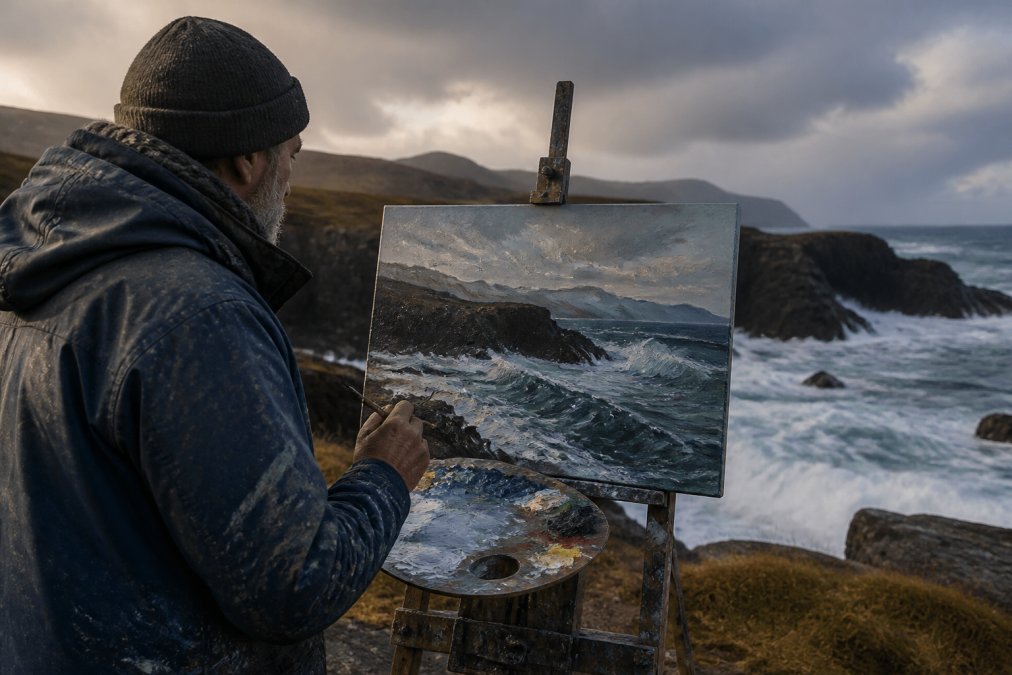
Plein air painting, working directly on location, remains one of the most effective ways to capture authentic coastal atmosphere. The artist experiences actual conditions in real time: changing light, weather shifts, the specific quality of air on a particular day at a particular hour. These observations inform every decision.
Studio Development and Refinement
Most accomplished Scottish seascape artists use a hybrid workflow: plein air observation followed by studio development. This approach allows them to retain atmospheric authenticity while gaining control over technique and composition.
Material Choices and Their Impact on Energy
The materials artists choose directly affect how coastal energy reads in the finished work.
Capturing Specific Coastal Conditions
Realistic and abstract painters approach different coastal conditions with distinct strategies.
Building Atmospheric Depth
Realistic painters create atmospheric depth through atmospheric perspective: distant elements become cooler, lighter, and less detailed. A realistic Scottish seascape might show a dark, detailed rocky foreground, churning middle-ground, and distant headland in cool, pale tones.
The Hybrid Approach: Blending Realism with Abstract Elements
The most innovative contemporary Scottish seascape art doesn't choose between realism and abstraction. Instead, it blends both approaches, using realistic elements to ground the composition while employing abstract techniques to convey emotion and energy.
Frequently Asked Questions
What is the main difference between realistic and abstract Scottish seascape art?
Realistic seascape art aims to represent coastal scenery with recognizable detail and accurate proportions, showing specific horizons, rock formations, and water movement as they appear. Abstract Scottish seascape art uses color, texture, and gestural brushwork to convey the emotional essence and atmospheric conditions of the coast without literal representation. Both capture the power of Scottish coastal scenery, but through fundamentally different visual languages.
How do I choose between abstract and realistic seascape art for my home?
Consider your interior style and personal connection to the subject. Realistic pieces work well in traditional or coastal-themed spaces and appeal if you want to recognize specific Scottish locations. Abstract seascape art suits modern interiors and works best if you respond to mood, color, and energy over detail. Think about how the piece will interact with your existing decor and whether you prefer a focal point that draws the eye to specific forms or one that creates an atmospheric presence.
Why should I support independent Scottish artists instead of buying mass-produced prints?
Independent Highland artists bring authentic connection to the landscapes they depict, often working from direct observation and personal experience of Scottish coastal scenery. Original artwork and limited-edition prints offer uniqueness, superior quality, and the knowledge that your purchase directly supports the artist's creative practice. You're investing in genuine artistic vision and cultural heritage rather than generic reproductions, and each piece carries the artist's individual interpretation and craftsmanship.
What techniques do Highland artists use to capture the energy of Scottish coastal scenery?
Many Highland artists use plein air methods, painting directly on location to capture authentic light and atmospheric conditions. They employ layered washes, visible brushwork, and varied texture to convey movement and mood. Techniques like impasto (thick paint application) and spontaneous mark-making suggest the dynamic energy of storms and shifting weather. These approaches create visual narratives that reflect both the physical landscape and the emotional intensity of Scotland's dramatic seascapes.


