

Art for Rustic Scottish Home Decor: A 2026 Guide
Sep 26, 2026
Table of Contents
- Understanding Scottish Rustic Art Aesthetics
- Highland Landscape Art: Beyond the Classic Loch
- Authentic Scottish Wildlife Art Prints
- How to Style Rustic Highland Home Decor with Art
- DIY Framing and Mounting for Maximum Impact
- Supporting Local: Sourcing Authentic Highland Artists
- Frequently Asked Questions
Last Updated: September 25, 2026
Understanding Scottish Rustic Art Aesthetics
When you're decorating a rustic Scottish home, the art you choose sets the entire mood. The right pieces transform a room from ordinary to extraordinary. At Cairngorm Artists, we work with collectors who want authentic art rustic scottish home decor that captures the wild spirit of the Highlands.
Scottish rustic interiors demand art that feels connected to the landscape. Think moody skies, weathered textures, and natural light filtering through mist. The best pieces don't fight your tartan and tweed, they work alongside them.
The moody palette: earthy tones and natural textures
Your color palette is the foundation. Earthy tones dominate Scottish rustic spaces. Warm browns, deep greens, slate grays, and burnt oranges create a cohesive look.
Natural textures matter just as much as color. Look for art that shows brushwork, visible paint layers, and tactile surfaces. Watercolor washes and oil painting textures catch light differently than smooth prints.
The moody aesthetic comes from restraint. You're not looking for bright, cheerful scenes. Instead, seek art that suggests atmosphere: shifting clouds, dim light, quiet moments. This approach makes smaller rooms feel intimate rather than cramped.
Pair earthy art with your existing textiles. If your sofa has a rust-colored throw, choose artwork with similar warm undertones. This creates visual harmony without feeling matchy.
Why landscape and wildlife dominate Highland interiors
Landscape art belongs on Highland walls because it echoes what's outside your window. Moorlands, lochs, and mountain views are the soul of Scottish decor.
Wildlife art serves the same purpose. Stags, puffins, and Highland cattle appear throughout rustic Scottish homes because they're part of the region's identity. These subjects feel natural, not decorative.
The reason is simple: authentic Scottish decor celebrates the environment. Art that shows the landscape or its inhabitants feels true to the place. Generic botanical prints or abstract pieces feel out of place.
When you choose landscape or wildlife art, you're anchoring your home in a specific place. This creates emotional resonance that mass-produced decor cannot match.
Highland Landscape Art: Beyond the Classic Loch
Not all Highland landscape art looks the same. The best pieces move beyond postcard clichés to show the raw, complex beauty of the region.
Stormy skies and moorland scenes
Stormy skies are the signature of authentic Highland art. These aren't decorative touches, they're the dominant feature. Dark clouds, shifting light, and dramatic weather create visual tension that draws the eye.
Moorland scenes work beautifully in rustic spaces because they're honest. Moorlands aren't manicured gardens. They're wild, textured, and slightly austere. Art depicting moors feels grounded in reality rather than idealized fantasy.
The best moorland paintings show detail: heather, grasses, exposed earth. This specificity makes the work feel authentic. Viewers recognize the landscape, even if they've never been there.
Stormy skies also solve a practical problem. They hide dust and imperfections better than pale, clear skies. This makes them ideal for living spaces where art hangs above furniture and receives natural wear.
Croft cottages and rural homesteads
Croft cottages are icons of Highland life. A weathered stone cottage with a red or slate roof, smoke curling from the chimney, these images resonate with people who love Scottish heritage.
Art showing rural homesteads works because it tells a story. The cottage isn't just a building. It represents resilience, tradition, and connection to the land.
The best croft paintings include atmospheric details: mist rolling across fields, distant mountains, warm light from windows. These elements create a sense of place that viewers can almost step into.
When you hang a croft painting in your living room, you're inviting a narrative. The piece becomes a conversation starter. Visitors ask about the location, the artist, the story behind the scene.
Cairngorm Artists specializes in croft and cottage scenes because our Highland-based artists paint from direct observation.
Authentic Scottish Wildlife Art Prints
Wildlife art brings movement and personality to rustic spaces. A stag, a puffin, or a Highland cow becomes a focal point that anchors a room.
Stags, puffins, and Highland cattle as focal points
Stags are the most iconic Highland animal. Their antlers create strong visual lines. Their presence suggests nobility and wildness. A stag painting commands attention without overwhelming a room.
Scottish Hillside - Canvas print from →
Puffins bring humor and charm. These distinctive birds are instantly recognizable. A puffin print works well in bedrooms or studies where you want personality without heaviness.
Highland cattle, with their long horns and shaggy coats, are uniquely Scottish. They're also visually striking. The texture of their fur translates beautifully into paint, especially in watercolor or oil.
The key is choosing one strong focal point rather than scattering wildlife art throughout the room. A single, well-placed stag painting above a mantelpiece is more effective than three small prints scattered on different walls.
Watercolor versus oil painting textures
Watercolor and oil painting create different moods. Watercolor feels lighter, more spontaneous. Washes of color suggest atmosphere without heavy detail. This approach works well in smaller rooms where you want visual breathing room.
Oil painting feels richer and more substantial. Thick brushwork and layered color create depth. Oil paintings often look better from a distance, making them ideal for larger walls.
For Scottish rustic decor, both work. The choice depends on your room size and existing aesthetic. A small bedroom benefits from watercolor's airiness. A large living room can handle oil's visual weight.
Texture matters more than medium. Whether watercolor or oil, look for visible brushwork. Smooth, slick surfaces feel too polished for rustic spaces. You want art that shows the artist's hand.
How to Style Rustic Highland Home Decor with Art
Hanging art is only half the battle. The real skill is integrating it with everything else in the room.
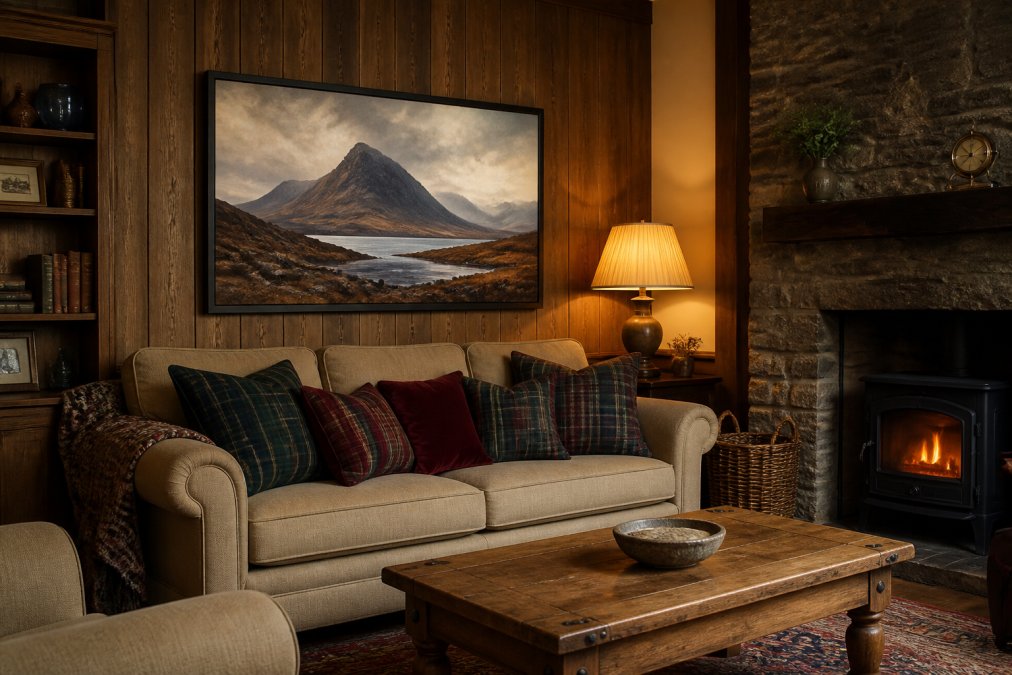
Pairing art with tartan, tweed, and textiles
Tartan and art can clash if you're not intentional. The key is matching color families. If your tartan features deep reds and greens, choose art with similar undertones.
Tweed textures work beautifully alongside landscape art. The rough texture of tweed echoes the textured surfaces of good paintings. They speak the same visual language.
Textiles anchor a room.
Wood panelling and gallery wall composition
Wood panelling is quintessentially Scottish. It also creates a natural frame for art. Paintings hung on panelled walls feel more grounded than those on plain drywall.
Lighting design for Highland artwork
Lighting transforms art. The right light makes a painting glow. The wrong light makes it disappear.
DIY Framing and Mounting for Maximum Impact
How you frame and hang art matters as much as the art itself. Poor framing undermines even exceptional paintings.
Choosing frame materials that complement rustic aesthetics
Wood frames are the obvious choice for rustic spaces. But not all wood frames work equally well.
Sizing art for small rooms versus large spaces
Room size determines painting size. This is non-negotiable.
In small rooms, oversized art can make the space feel cramped. A 24x36 inch painting in a 10x12 bedroom overwhelms. Instead, choose 16x20 or 18x24 inch pieces.
Supporting Local: Sourcing Authentic Highland Artists
Authentic Scottish rustic art comes from artists who live and work in the Highlands. This isn't snobbery, it's about authenticity.
| Art Type | Best For | Frame Style | Lighting Approach |
|---|---|---|---|
| Stormy landscapes | Living rooms, studies | Dark wood, 2-3 inch | Warm, indirect light |
| Croft cottages | Bedrooms, hallways | Medium wood | Soft, ambient light |
| Wildlife (stags) | Focal walls | Dark wood or simple | Picture light or table lamp |
| Moorland scenes | Any room | Light wood | Natural or warm light |
| Puffin prints | Bedrooms, offices | Light wood | Bright ambient light |
Frequently Asked Questions
What kind of art goes best with rustic Scottish home decor?
Landscape paintings, wildlife prints, and moody Highland scenes work best. Look for artwork featuring stormy skies, moorland, croft cottages, stags, and puffins rendered in earthy tones, deep greens, slate grays, and warm reds. Oil paintings and watercolors both suit rustic Scottish interiors. The key is choosing pieces that capture the raw, tranquil character of the Highlands rather than polished or overly refined styles.
How do I choose between modern alternatives to classic Highland loch art?
Consider shifting from traditional loch scenes to stormy skies, moorland compositions, or croft cottages for a fresher take. Modern Highland art often emphasizes texture and movement through expressive brushwork and abstract elements rather than photorealistic detail. Look for pieces that blend contemporary technique with traditional Highland subject matter. This approach keeps your decor authentic while avoiding the predictable loch painting that appears in many rustic homes.
Can I mix tartan textiles with landscape art without the room feeling too busy?
Yes. Balance bold tartan or tweed through your soft furnishings by keeping your art palette cohesive. If your tartan is rich red and deep green, choose artwork in similar earthy tones. Use the art as a focal point and let tartan elements support it rather than compete. Wood panelling and neutral wall colors create breathing room, allowing both textiles and art to shine without overwhelming the space.
What lighting should I use to display Scottish rustic artwork?
Warm, adjustable lighting works best for Highland art. Picture lights mounted above framed pieces or soft table lamps positioned to one side create depth and highlight texture in oil paintings and watercolors. Avoid harsh overhead lights that flatten moody artwork. If your room is small, directional lighting helps the art feel like a focal point without making the space feel cramped. Natural daylight from windows also brings out the richness of earthy color palettes.


