

Wild Coastal Art: A 2026 Guide to Authentic Seascapes
Oct 04, 2026
Table of Contents
- What Is Wild Coastal Art?
- Common Subjects in Wild Coastal Art
- Colour Palettes and Artistic Mediums
- Why Support Independent Scottish Artists
- Collecting Original Scottish Art: Building an Authentic Collection
- How Wild Coastal Art Transforms Your Living Space
- Frequently Asked Questions
Last Updated: October 3, 2026
What Is Wild Coastal Art?
Wild coastal art captures the untamed essence of the sea, not the gentle, romanticized version you see on greeting cards, but the raw power of nature in its most authentic form. At Cairngorm Artists, we specialise in work that honours this distinction. Wild coastal art depicts seascapes and maritime subjects with an emphasis on drama, movement, and the unpredictable force of natural elements.
This isn't simply coastal decor. The difference lies in artistic intention and execution. Generic coastal art tends toward softness, pastel skies, calm waters, decorative lighthouses. Wild coastal art, by contrast, embraces texture, turbulence, and the interplay of light across restless surfaces. The subject matter may be serene in composition, but the emotional register is one of tension and resilience.
The 'Wild' Distinction
What separates wild coastal art from conventional seaside imagery? The answer lies in how artists approach their subjects. Wild coastal art emphasises the forces at work, wind, spray, the relentless motion of waves, rather than creating a static, peaceful scene. A lighthouse in wild coastal art isn't simply a charming structure; it's a symbol of human resolve against the elements. The sky isn't decorative; it's moody, shifting, alive with weather.
The aesthetic draws heavily on the Scottish Highlands tradition, where artists have long captured the drama of exposed coastlines and the power of nature. This tradition values authenticity over sentimentality. When you look at a wild coastal artwork, you're not being invited to escape into fantasy, you're being asked to witness something real, something that exists in those places where land meets the relentless Atlantic.
Defining Characteristics and Visual Language
Wild coastal art shares several defining visual characteristics. First, texture plays a central role. Artists use layered brushwork, visible impasto, and varied surface treatments to suggest the tactile reality of salt spray, worn stone, and turbulent water. This isn't smooth or polished; it's deliberate and expressive.
Second, the colour palette tends toward cool, sophisticated tones: deep blues, slate greys, whites, and muted earth tones. These colours reflect the actual light conditions of northern coastal environments, overcast skies, the pale foam of breaking waves, the weathered tones of rock and driftwood.
Third, composition often emphasises horizon lines, vertical elements like lighthouses or cliffs, and the dynamic tension between stillness and motion. The viewer's eye moves through the work following lines of energy, the direction of waves, the sweep of wind-driven clouds, the vertical thrust of a solitary structure.
Common Subjects in Wild Coastal Art
The subjects that appear most frequently in wild coastal art reflect both the geography of the Scottish Highlands and the universal appeal of maritime themes. Each subject carries its own visual and emotional weight.
Lighthouses and Solitary Structures
Lighthouses dominate wild coastal art for good reason. They represent human presence in an inhospitable landscape, a beacon of purpose and resilience. In wild coastal compositions, lighthouses are rarely rendered as quaint or charming. Instead, they're depicted as steadfast markers against turbulent skies and restless seas.
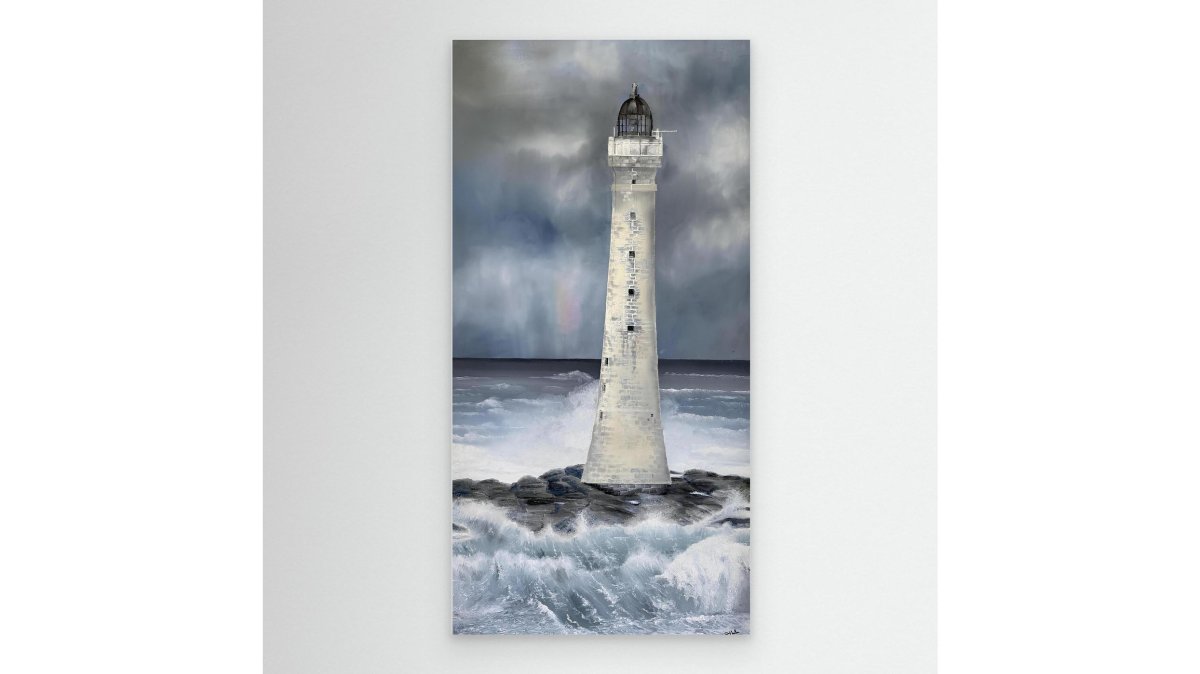
Cairngorm Artists features several lighthouse studies that exemplify this approach. The Skerryvore Lighthouse canvas print depicts a tower rising from wind-scoured rocks with layered brushwork conveying salt, worn stone, and the motion of breaking waves. The Scalpay Lighthouse canvas print shows a red-and-white beacon standing firm on rocky outcrops while waves and mist swirl around it, balancing turbulence with quiet resilience.


Seascapes, Marine Life, and Crashing Waves
Seascapes in wild coastal art prioritise movement and energy. Waves aren't rendered as decorative elements; they're depicted with genuine force. The foam, the curl, the moment of impact, these details matter because they convey the ocean's power. Marine life appears not as cute or decorative subjects, but as elements integrated into the broader ecosystem. A bird wheeling through storm clouds, a seal on rocks, fish glimpsed beneath turbulent water, these subjects anchor the composition in natural reality.
The interplay of light on water becomes crucial in seascape work. Reflected light, the glow of breaking foam, the way storm clouds catch late-afternoon sun, these effects require skill and intention to render convincingly. Wild coastal seascapes often feature dramatic lighting contrasts that emphasise the drama of the moment being depicted.
Colour Palettes and Artistic Mediums
The visual language of wild coastal art depends heavily on colour choices and the medium through which those colours are applied.
Blues, Greys, and Neutral Tones
The dominant colour palette of wild coastal art reflects the actual environment. Deep, sophisticated blues dominate water and sky. These aren't bright or cheerful blues; they're complex tones that shift depending on light conditions and atmospheric pressure. Slate greys, charcoal, and cooler blacks appear throughout, suggesting storm clouds, shadowed rock, and deep water.
Whites and creams serve as accents, the foam of breaking waves, the beam of a lighthouse, the glow of light on masonry. Neutral earth tones, ochres, warm greys, muted browns, ground compositions and suggest stone, soil, and weathered wood.
This restrained palette creates visual coherence and emotional resonance. It's a palette that feels authentic to place, drawn from observation rather than decoration.
Oil Paintings, Canvas, and Digital Art
Wild coastal art appears across multiple mediums, each with distinct advantages. Oil paintings remain the traditional choice for fine art landscapes. The medium's richness allows for subtle colour mixing, layered glazes, and visible brushwork that conveys texture and movement. Oil's slow drying time permits artists to work into the surface, building complexity and depth.
Canvas prints from original artworks offer accessibility without compromising quality. The Cairngorm Artists collection features canvas prints created from original paintings, printed with water-based HP Latex inks and UV protection to ensure long-lasting colour vibrancy. These prints are mounted on solid wooden frames from renewable sources, arriving ready to hang.
Digital art has expanded the possibilities for wild coastal imagery. Digital tools allow artists to work with precision while maintaining expressive brushwork qualities. The medium suits artists exploring dramatic lighting effects and atmospheric conditions.
Why Support Independent Scottish Artists
The case for collecting from independent Scottish artists extends beyond aesthetics. When you purchase wild coastal art from Highland creators, you're supporting a tradition rooted in place and authentic observation. Independent artists develop their practice through years of direct engagement with their subject matter, not through commercial briefs or mass-market trends.
Highland artists have particular advantages when depicting wild coastal landscapes. They live within these environments. They understand the light conditions across seasons, the specific character of particular coastlines, the way weather systems move across the water. This lived knowledge translates into authenticity that commissioned work or derivative pieces cannot replicate.
Ardnamurchan Lighthouse View - canvas print from original artwork →
Supporting independent creators also preserves artistic diversity. When collectors choose original work from individual artists rather than reproductions or mass-produced alternatives, they sustain the economic conditions that allow artists to continue their practice.
Collecting Original Scottish Art: Building an Authentic Collection
Approaching wild coastal art as a collector requires intention. The market includes everything from mass-produced prints to genuine original works. Understanding how to distinguish between them, and how to select pieces that will resonate in your space, separates thoughtful collecting from impulse purchasing.
Choosing the Right Size and Placement
Size matters more than many collectors realise. A piece that dominates a wall creates different emotional impact than one that sits quietly in a corner. For wild coastal art, scale should match the energy of the composition.
Consider wall space and viewing distance. A piece hung at eye level in a frequently occupied room invites repeated engagement. The same piece positioned above a doorway or in a hallway becomes background rather than focal point. Wild coastal art, with its emphasis on texture and movement, rewards close viewing and regular attention.
Placement also depends on existing light conditions. Canvas prints with matte finishes, like those from Cairngorm Artists, perform well in varied lighting without glare. However, the colours in wild coastal art, the sophisticated blues and greys, benefit from natural light that reveals their complexity.
Sustainability in Art Production
Sustainability increasingly matters to collectors making long-term investments. Original artworks represent the most sustainable choice: a single piece created with intention, intended for permanence. No manufacturing process, no mass production, no planned obsolescence.
Canvas prints from original works occupy a middle ground. The Cairngorm Artists production process uses water-based inks and renewable wooden frames, reducing environmental impact compared to conventional printing. The poly-cotton canvas blend offers durability that extends the lifespan of the piece, reducing the likelihood of replacement.
Consider also the artist's relationship to their materials and process. Independent artists typically work with intention around material choices. They select paints, canvas, and mediums based on quality and longevity rather than cost minimisation. This attention translates into pieces that age gracefully, retaining colour vibrancy and structural integrity across decades.
How Wild Coastal Art Transforms Your Living Space
Beyond aesthetics, wild coastal art functions as a psychological anchor. The right piece changes how you experience a room.
Creating a Coastal Aesthetic in Any Home
You needn't live near the ocean to benefit from wild coastal art. Landlocked homes often feel the absence of certain natural elements, the sound of waves, the smell of salt air, the visual vastness of open water. Wild coastal art addresses this absence by creating a visual window to those experiences.
The key is intentional placement and complementary design choices. A single strong wild coastal piece becomes the focal point around which other design elements organise themselves. Furniture, textiles, and accent colours can echo the artwork's palette without overwhelming the space. The goal is coherence, not thematic saturation.
Lighting deserves particular attention. Wild coastal art with its emphasis on atmospheric effects and shifting light conditions reveals its complexity under varied lighting conditions.
The Emotional Impact of Untamed Seascapes
There's a reason wild coastal imagery resonates across cultures and centuries. The ocean represents something beyond human scale, power, mystery, the sublime. Untamed seascapes, in particular, acknowledge this reality rather than softening it.
Living with wild coastal art creates a subtle but persistent psychological effect. The viewer is reminded, daily, of forces larger than themselves. This perspective can be grounding, even meditative.
The emotional impact intensifies when the artwork depicts recognisable places. A collector who has stood on the rocks beneath Ardnamurchan Lighthouse, felt the spray, experienced the wind, will find particular resonance in the Ardnamurchan Lighthouse View canvas print.

Wild coastal art offers something increasingly rare: authentic visual connection to untamed natural places.
Frequently Asked Questions
What are the defining characteristics of wild coastal art?
Wild coastal art captures untamed seascapes with raw energy and authenticity. It emphasises dramatic weather, turbulent water, weathered structures, and rugged shorelines rather than soft beach scenes. The work uses layered brushwork, textured surfaces, and moody colour palettes of blues, greys, and cool neutrals to convey the ocean's unpredictability and power. Unlike decorative beach art, wild coastal art prioritises emotional intensity and the harsh beauty of nature.
Why should I support independent Scottish artists when collecting original Scottish art?
Independent artists bring authentic vision and direct connection to the landscapes they paint. When you buy from Highland artists like those at Cairngorm Artists, your investment supports real creators rooted in the places they depict, not middlemen or mass production. Independent artists often use sustainable methods and invest in their craft with care. You receive original work with genuine provenance, and each piece carries the artist's personal story and commitment to their region.
How does wild coastal art differ from traditional beach decor?
Traditional beach decor tends toward soft pastels, serene scenes, and decorative appeal. Wild coastal art embraces the ocean's raw power: stormy skies, crashing waves, weathered rocks, and dramatic lighting. It's designed to provoke emotion and contemplation rather than simply complement furnishings. Wild coastal pieces often feature solitary structures like lighthouses standing against turbulent conditions, emphasising resilience and nature's untamed character. This approach creates visual depth and narrative impact.
Can wild coastal art work in a landlocked home?
Yes. Wild coastal art creates a visual escape and emotional anchor wherever it hangs. Many homeowners without ocean access are drawn to these pieces because they evoke tranquility, contemplation, and connection to nature. Pieces like the Skerryvore Lighthouse canvas print work beautifully in living rooms or studies, bringing a sense of calm resilience to any space. The key is choosing a size and placement that feels natural to your room's flow, and selecting colours that harmonise with your existing palette.


