

Investing in Contemporary Scottish Landscape Art
Oct 05, 2026
Table of Contents
- Is Contemporary Scottish Landscape Art a Good Investment?
- Art Investment for Beginners: Understanding the Market
- Original Paintings vs. Art Prints: Which Holds Value?
- Art Provenance and Authenticity: Verifying What You Buy
- Buying Original Art Online: A Step-by-Step Framework
- Colour, Mood, and Lasting Appeal in Scottish Landscape Art
- Size, Placement, and Display Considerations
- Frequently Asked Questions
Last Updated: October 5, 2026
Is Contemporary Scottish Landscape Art a Good Investment?
Investing in contemporary Scottish landscape art requires understanding both the emotional and financial dimensions of art ownership. Unlike traditional investments with predictable returns, art appreciation depends on artist reputation, market demand, and the piece's condition and provenance.
The question isn't whether Scottish landscape art will make you rich. It won't. Most pieces appreciate modestly, if at all. The real question is whether the piece resonates with you and whether you're buying from a source you trust. This distinction matters because it shapes how you should approach the purchase, what you should pay, and how you'll feel about the investment long-term.
Contemporary Scottish landscape art sits at an interesting intersection. It captures the raw beauty of the Highlands and lochs, landscapes with deep cultural meaning for many collectors. At the same time, the contemporary art market for emerging Scottish artists remains relatively accessible compared to established names. This creates both opportunity and risk.
Art Investment for Beginners: Understanding the Market
The art market operates differently from stocks or property. There's no central exchange, no standardized pricing, and no guarantee of liquidity. When you buy a painting, you're betting that someone else will want it enough to pay more than you did. That bet depends entirely on factors outside your control: the artist's career trajectory, broader taste shifts, and whether the piece remains in good condition.
Primary vs. Secondary Market Purchases
When you buy directly from an artist or gallery, you're purchasing on the primary market. When you buy from another collector through auction houses or resale platforms, you're on the secondary market. The distinction matters financially.
Primary market purchases give artists direct revenue and collectors a direct relationship with the creator. You might negotiate price, understand the piece's inspiration, or even commission work. However, primary market pieces often face a resale penalty, you'll typically recover 50-70% of your purchase price if you sell within five years.
Secondary market purchases happen after the initial sale. Resale prices reflect what the market will actually bear, not what the artist charges. A painting that sold for £400 on the primary market might fetch £250 at auction if demand has cooled. Conversely, work by an artist whose reputation has grown can appreciate significantly on the secondary market. The challenge is predicting which artists will gain recognition over time.
Total Cost of Ownership and Financial Risk
Buying a painting isn't a one-time expense. Frame, shipping, insurance, climate control, and potential restoration all add cost. Original paintings can double in total cost when you include professional framing and insurance.
Climate matters too. Paintings stored in damp, unheated spaces deteriorate faster. Temperature fluctuations cause wood frames to warp and canvas to crack. If you live in a Scottish climate with significant humidity variation, preservation costs are real.
Insurance protects against theft and damage but adds annual expense.
The financial risk is straightforward: you might not recover your total investment if you need to sell.
Original Paintings vs. Art Prints: Which Holds Value?
This is where many collectors get confused. Original paintings and high-quality art prints are fundamentally different investments.
Original paintings, whether watercolour, acrylic, or oil, are one-of-a-kind works. They can appreciate in value as the artist's reputation grows. The scarcity of original work creates potential for appreciation.
Art prints, including fine art paper prints and canvas prints, are reproductions of original artwork. Canvas prints from original artwork, like the Scottish Glen canvas print at Cairngorm Artists, offer durability and visual impact but no scarcity premium.

Prints don't appreciate like originals because supply is unlimited. You can always print another copy. The value of a print lies entirely in its aesthetic appeal and the quality of reproduction, not in rarity or artist appreciation.
For investment-focused collectors, original paintings hold more potential. For homeowners who want authentic Highland landscape art without the financial risk, prints offer excellent value.
Art Provenance and Authenticity: Verifying What You Buy
Provenance, the documented ownership history of a work, matters enormously for original paintings. A piece with clear provenance (artist → first owner → documented subsequent owners) is worth more and easier to sell than one with gaps in its history.
When buying original art online, ask for documentation. A reputable artist or gallery should provide:
- A certificate of authenticity signed by the artist or gallery
- Details about the materials used (canvas type, paint medium, dimensions)
- Information about when and where the piece was created
- Any exhibition history
- The artist's background and training
Red flags include vague descriptions, refusal to provide artist information, or suspiciously low prices for work by established artists. If you can't verify who created the piece or where it came from, the investment risk increases dramatically.
For contemporary Scottish landscape artists, verification is simpler because the artist community is relatively small and interconnected. Research the artist's background, exhibition history, and whether they're represented by galleries or art organizations. Cairngorm Artists works with ten Highland artists whose work is created locally and documented, this transparency is part of what makes purchasing directly from artist collectives valuable.
Buying Original Art Online: A Step-by-Step Framework
Purchasing original art without seeing it in person requires a structured approach to minimize regret and financial risk.
Step 1: Define Your Budget and Purpose
Decide how much you can afford to lose. If you can't absorb a 50% loss without financial strain, you're overextended.
Step 2: Research the Artist
Look for artists with consistent exhibition history, representation by galleries, and a recognizable style. Check whether they've been reviewed in art publications or featured in exhibitions.
Step 3: Examine the Piece Thoroughly
Request high-resolution images showing the entire work, close-ups of brushwork or texture, and the back of the canvas (which reveals materials and any damage).
Step 4: Check the Seller's Track Record
Buy from established galleries, artist collectives, or individual artists with verifiable history. Read reviews if available.
Step 5: Negotiate Thoughtfully
Scottish Glen - Fine art print from original artwork →
For original paintings, some negotiation is normal. Artists sometimes offer discounts for multiple purchases or direct commissions.
Step 6: Verify Shipping and Insurance
Confirm that shipping is insured for the full purchase price. Understand who bears the cost if damage occurs in transit. Professional art shipping costs money but protects your investment.
Evaluating Artist Reputation and Track Record
An artist's reputation determines whether their work appreciates. Look for these signals:
Exhibition History: Has the artist shown work in galleries, art fairs, or museums? Multiple exhibitions suggest recognition within the art community.
Longevity: How long has the artist been working? Five years of consistent output is more meaningful than one year of intense activity.
Education and Training: Formal art training (degree, apprenticeship, or recognized mentorship) signals skill and commitment.
Community Recognition: Are they featured in local art publications, included in group shows, or represented by galleries? Recognition within the Scottish art community matters.
Consistency: Does the artist's work show a coherent vision, or does it jump randomly between styles? Collectors buy into an artist's perspective, not just individual pieces.
Emerging artists with strong fundamentals, clear style, exhibition history, and community presence, are better long-term bets than unknown names selling on generic platforms.
Assessing Condition and Presentation
For original paintings, condition is everything. A damaged painting loses value dramatically, even if the damage is repairable. When evaluating condition:
- Canvas or paper: Look for tears, creases, water damage, or stains. Any damage reduces value.
- Paint surface: Check for cracks, flaking, or areas where paint has lifted. These are expensive to restore.
- Framing: Is the frame professional and appropriate to the work? A beautiful painting in a cheap frame signals careless presentation.
- Signature: Is the artist's signature present and legible? This affects authenticity and resale value.
For prints, condition matters less because reproductions are replaceable. However, check that the print is properly mounted, the colors are vibrant, and the frame is sturdy. A well-presented print from Cairngorm Artists, with proper framing and mounting, will maintain its appearance for years.
Colour, Mood, and Lasting Appeal in Scottish Landscape Art
The best investment is a piece you genuinely want to live with. This means choosing work that resonates emotionally and fits your space aesthetically.
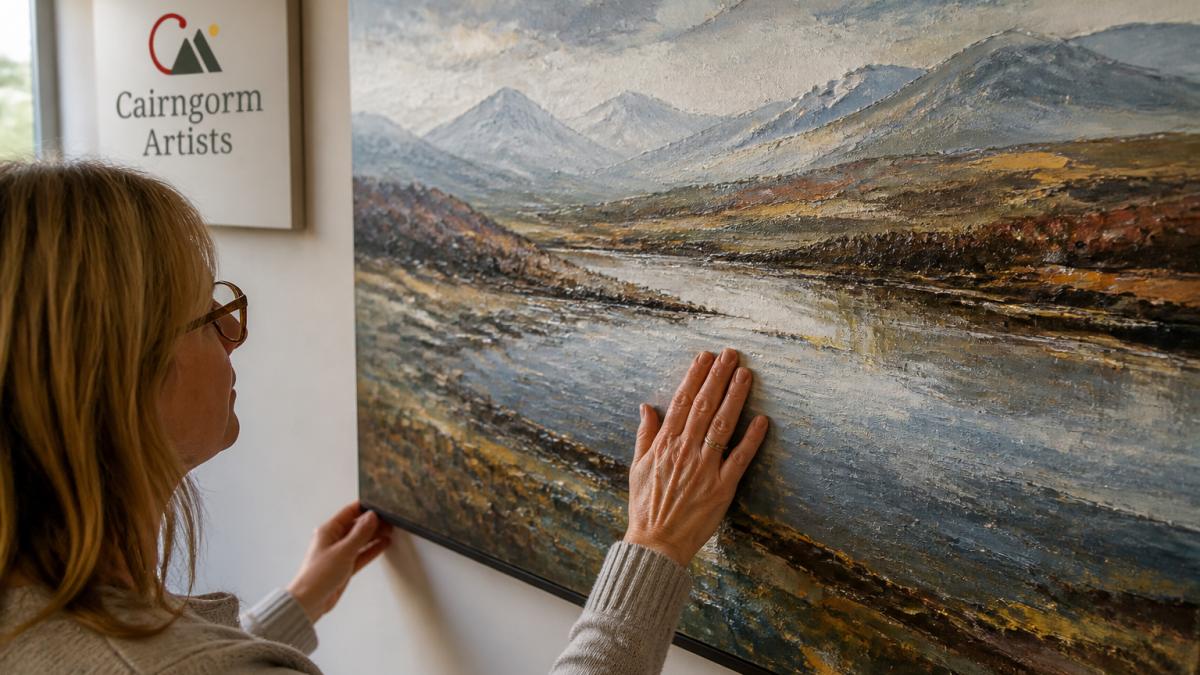
Scottish landscape art typically emphasizes mood over literal detail. Warm bands of red and ochre meeting cool greens and deep blues create emotional response. Layered washes and spontaneous brushwork convey movement and atmosphere.
When evaluating a piece, consider:
Colour Harmony: Does the palette feel cohesive or chaotic? Scottish Highland landscapes often use earth tones, deep blues, and muted greens, colours that age well in interiors and feel timeless rather than trendy.
Emotional Resonance: Does the piece evoke the feeling you want in that space? A moody, stormy landscape creates different atmosphere than a bright, peaceful one. Choose based on how you want to feel when you see it daily.
Timelessness: Will you still like this piece in five years? Trends shift; pieces that feel contemporary now might feel dated later. Work with strong artistic vision tends to age better than pieces that chase current design trends.
The Scottish Highlands offer infinite subject matter, lochs, coastlines, glens, mountains, each with distinct character. A piece capturing the wild beauty of Glencoe creates different mood than one depicting a peaceful loch.
Size, Placement, and Display Considerations
Where you hang a piece affects how much you enjoy it and how well it appreciates. A painting that overwhelms a small room or disappears in a large space diminishes impact.
Size Relationship: The artwork should be proportional to the wall and furniture. A small painting on a large blank wall looks lost. A massive piece in a cramped room feels oppressive.
Lighting: Natural and artificial light dramatically affect how artwork appears. A piece photographed in bright studio light might look dull in your north-facing living room.
Wall Colour: The background wall affects how colours in the artwork appear. A vibrant landscape reads differently against white versus deep blue walls. Consider your existing décor before committing.
Height and Viewing Distance: This applies whether you're displaying a small print or a large original painting.
The goal is integration, the piece should feel like it belongs in your space, not like something you're tolerating. Take time to visualize how a work fits your home before purchasing.
Investing in contemporary Scottish landscape art works best when you approach it as acquiring something beautiful for your home, with potential appreciation as a secondary benefit. Whether you're collecting original paintings or investing in high-quality art prints like the Scottish Glen or Storm over Glencoe pieces, focus on what draws you back to the work again and again.

Frequently Asked Questions
Is contemporary Scottish landscape art a good investment?
Contemporary Scottish landscape art can appreciate over time, especially works by established Highland artists with strong exhibition records and collector demand. However, art investment carries financial risk and illiquidity. Unlike stocks, there's no guaranteed return. Success depends on artist reputation, provenance, condition, and market timing. Treat it as a long-term holding and only invest money you can afford to lose. Emotional connection and enjoyment of the artwork matter as much as financial potential.
What's the difference between original paintings and art prints when investing?
Original paintings, watercolours, oils, acrylics, typically appreciate in value and remain unique assets. Fine art prints and giclée reproductions, while beautiful and durable, do not appreciate the same way because they're produced in multiples. Originals carry higher upfront cost but stronger investment potential and resale value. Prints suit homeowners seeking quality decor without investment risk. If building a collection, originals from emerging Highland artists offer better long-term appreciation.
How do I verify the authenticity and provenance of Scottish artwork?
Request a certificate of authenticity from the artist or seller that includes the artwork's title, date, materials, and artist signature details. Verify the artist's background, check their website, exhibition history, and artist collective memberships. For significant purchases, ask for provenance documentation showing previous ownership. Buy from established galleries or artist collectives like Cairngorm Artists that stand behind their work. Ask direct questions: Is the piece original or a reproduction? Does it come with a safe-arrival guarantee? Legitimate sellers welcome scrutiny.
Can I buy original Scottish landscape art online safely?
Yes, if you purchase from reputable sources with clear return policies and shipping guarantees. Choose sellers who offer safe-arrival promises, detailed photos from multiple angles, and transparent artist information. Cairngorm Artists, for example, ensures every piece arrives ready to hang with a safe-arrival promise and worldwide shipping. Request high-resolution images showing colour accuracy and texture. Start with smaller purchases to build confidence. Read reviews from other buyers. Avoid deals that seem underpriced, they often signal quality or authenticity issues.


