

How to Commission Custom Landscape Artwork
Oct 22, 2026
Table of Contents
- How to Commission Custom Landscape Artwork: Step by Step
- Choosing a Landscape Artist by Portfolio and Style
- What to Put in Your Art Commission Brief Template
- Custom Artwork Pricing: How to Read and Compare a Quote
- Contract, Deposit and Refund Terms Before You Pay
- Art Commission Timeline: From Concept to Completion Date
- Copyright, Reproduction Rights and Image Permissions
- Shipping, Framing and Displaying the Finished Piece
- Frequently Asked Questions
Last Updated: October 21, 2026
How to Commission Custom Landscape Artwork: Step by Step
Commissioning custom landscape artwork means hiring an artist to paint a scene you choose, from a photo or a place you love. At Cairngorm Artists, our ten Highland artists paint original work inspired by the wild scenery and wildlife of Scotland.
Most buyers start with a phone photo and a rough budget. That is enough; the rest is a set of decisions you make in order.
Step 1: Define the Subject and Where It Will Hang
Start with the wall, not the artwork. Measure the space and note the light: window, lamp or dark corner?
A big scene in a small hallway feels cramped; a muted landscape over a bright sofa can disappear. Match scale to the room first.
Next, name your subject. Common choices include:
- A glen, loch or coastline you visited
- A family home or garden
- A wedding or anniversary location
Write one sentence describing the scene. "The view from the cottage in Glencoe at dusk, with storm clouds over the ridge." That single line becomes the spine of your commission request.
Step 2: Gather Reference Photos and Scenery Details
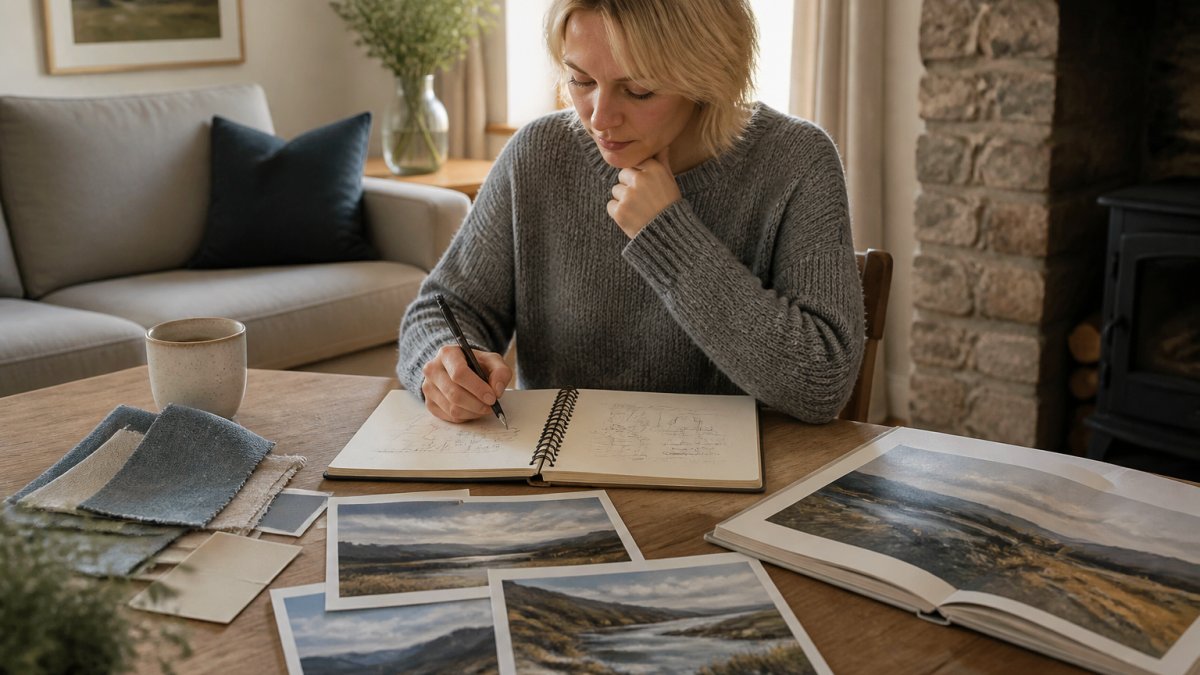
Reference images do most of the work. A good photo reference gives the artist composition, color and light. A vague memory gives them guesswork.
Collect more than one image if you can:
- A wide shot for composition
- A close shot for detail and texture
- A shot at the time of day you remember best
Phone photos are fine, but avoid heavily filtered images since the colors mislead. With no photo, describe the scene in detail and ask whether the artist can work from description plus local knowledge.
Step 3: Choose the Size, Canvas and Medium
Size and medium decide both look and price. A large canvas makes a bold statement. A smaller fine art print suits a hallway or a gift.

Watercolour gives soft, loose washes; acrylic and oil build texture and depth.
| Choice | Best For | Watch Out For |
|---|---|---|
| Small canvas | Hallways, gifts, gallery walls | Can look lost on a large wall |
| Large canvas | Living rooms, open-plan spaces | Needs correct hanging height |
| Watercolour | Soft, atmospheric scenes | Less textured than oils |
| Acrylic or oil | Bold color and depth | Longer drying and framing time |
| Digital | Budget flexibility, quick turnaround | Not a one-of-a-kind piece |
If you want a ready-to-hang original with no framing decisions, browse our Scottish Hillside canvas print to see how a finished piece looks on a wall.

Choosing a Landscape Artist by Portfolio and Style
Choosing a landscape artist comes down to two checks: does their portfolio match your scenery, and does their style suit your room?
Style is the harder call: loose and expressive or tight and detailed, neither is better. What matters is whether you want that look on your wall for years.
Ask yourself:
- Do their skies and colors feel right for your home?
- Have they painted your kind of scenery before?
- Can they show you a past commission with a client brief?
Communication tells you a lot: an artist who answers in plain language and sets expectations early is easier to work with.
What to Put in Your Art Commission Brief Template
An art commission brief template is a short written summary of your scene, size, style, deadline and budget that keeps both sides aligned.
Keep it to one page. Here is the structure we recommend.
ART COMMISSION BRIEF
- Subject: [one sentence describing the scene]
- Location: [place name and region]
- Reference images: [list file names or links]
- Preferred size: [width x height]
- Medium: [watercolour / acrylic / oil / open to advice]
- Style: [loose and expressive / detailed / abstract / not sure]
- Color palette: [warm / cool / muted / bold / match room tones]
- Display location: [room and wall]
- Deadline: [date and reason, e.g. anniversary]
- Budget: [range]
- Must-have details: [e.g. the old oak, the red boat]
- Anything to avoid: [e.g. no people, no text]
Send the brief with your reference images. Ask the artist to confirm the brief in writing before any deposit changes hands.
Custom Artwork Pricing: How to Read and Compare a Quote
Custom artwork pricing reflects size, medium, detail and the artist's time, and a quote should break those down rather than arrive as one unexplained number. The goal is not the cheapest quote but comparing quotes on the same basis.
What actually drives the price
Five factors move a landscape commission quote more than anything else:
- Size. Price scales roughly with surface area, not just width. Doubling a canvas from 30 x 40 cm to 60 x 80 cm quadruples the painted area, and most artists price accordingly.
- Medium. Watercolour is usually the most affordable original medium because it dries fast and needs less material. Acrylic and oil cost more in materials and drying time.
- Detail and complexity. A single tree line against a sky takes fewer hours than a busy harbour with boats, figures and reflections. Tell the artist up front if the scene is detail-heavy.
How to compare two quotes fairly
Put every quote into the same six-line structure before you decide:
| Line item | What to check |
|---|---|
| Base price by size | Same dimensions on both quotes? |
| Materials and framing | Included or extra? |
| Concept and revision allowance | How many rounds, and what counts as a round? |
| Shipping and insurance | Quoted, estimated or excluded? |
| Deposit and payment schedule | Percentage, refundability, milestone dates |
| Delivery date | Firm date or estimate, and what happens if it slips |
If a quote is missing a line, ask the artist to fill it in before comparing. A blank shipping line is not cheaper, it is incomplete.
Reading the revision allowance
A revision allowance is the number of feedback rounds included before extra charges apply; two is common, one at concept or colour-study stage and one at progress-photo stage. Ask what a "round" means, one consolidated set of comments or unlimited back-and-forth. A low quote with no revision allowance often costs more later, since every change becomes a new invoice.
Spotting an underpriced quote
A quote far below the others usually means the size is smaller than assumed, framing and shipping are excluded, the revision allowance is zero, or the artist has not priced their hours realistically.
Scottish Hillside - Canvas print from original artwork →
Ask each artist the same three questions: what is included, how many revisions are covered, and what happens if you cancel. The answers separate a professional quote from a rough guess.
Contract, Deposit and Refund Terms Before You Pay
A written contract protects both you and the artist, stating scope, price, timeline, revision limits and cancellation terms in plain words.
Check that the agreement covers:
- The agreed brief and final size
- Total price and payment dates
- Deposit amount and whether it is refundable
Deposits are normal in commissioned work, since the artist sets aside time for you. Ask directly whether the deposit is refundable and under what conditions.
A common mistake is paying in full upfront with no contract. If the piece arrives wrong or late, you have little to stand on.
Art Commission Timeline: From Concept to Completion Date
An art commission timeline runs from brief to delivery in set stages. Ask for the schedule at the start and note each date in writing, and before paying a deposit ask two questions: when does the artist's next slot open, and which stages have fixed dates versus estimates.
The stages, and what usually happens in each
- Brief and quote agreed. You send the brief and reference images; the artist confirms scope, price and a provisional schedule. This is usually the fastest stage, days, not weeks.
- Deposit paid, slot booked. The deposit reserves studio time. Until it is paid, the slot is not held. Ask whether the slot is calendar-dated or "next available".
- Concept sketches or colour studies shared. The artist sends one or more directions for composition and palette. This is your main chance to redirect the piece before painting begins.
- Your feedback and approval. Consolidate comments into one round. Scattered feedback across several messages slows the schedule and can eat into your revision allowance.
- Main painting begins. This is usually the longest single block, and it is the stage most affected by the complexity of the scene and the medium's drying time.
- Progress photo or draft shared. You see the piece mid-way. Approve or request changes within the revision allowance.
- Final approval. Confirm the finished piece before framing and packing.
- Framing, packing and shipping. Framing adds days to weeks depending on the frame; shipping adds transit time and, for international orders, customs clearance.
- Delivery and hanging. Inspect on arrival and report any damage immediately.
What actually stretches a timeline
Most delays come from four places, none of them the painting itself:
- Booking lead time. Many artists work in slots booked weeks or months ahead. A short deadline may not be possible at all, or may carry a rush fee.
- Feedback lag. Every day you take to respond to a concept or progress photo is a day added to the end date. Set a personal rule to reply within 48 hours.
- Drying and framing. Oils need longer before they can be framed and shipped safely. Custom framing adds its own lead time.
Building buffer for a gift or anniversary
Work backwards from the date you need the piece on the wall, not the date you give it, and add buffer for framing, shipping and at least one feedback round.
Ask the artist to confirm the schedule in writing with the deposit, including which dates are fixed and which are estimates. A written schedule is the difference between a plan and a hope.
Build in buffer time if you need the piece for a gift or an anniversary. Artists book slots in advance, so a short deadline may carry a rush fee or may not be possible at all.
Copyright, Reproduction Rights and Image Permissions
Copyright stays with the artist unless the contract says otherwise. Buying a painting buys the physical piece, not the right to reproduce it.
You can hang and enjoy the artwork, but you cannot print copies, sell prints or use the image in advertising without written permission.
Clarify these points in the contract:
- Who owns copyright after the sale
- Whether you may photograph and share the piece online
- Whether the artist may use the image in their portfolio
Most collectors only need the piece on their wall, and that is fine. If you plan to use the image commercially, agree the terms before work starts.
Shipping, Framing and Displaying the Finished Piece
Shipping and framing decide whether the piece arrives safely and looks right on the wall.
Canvas prints often arrive ready to hang. Paper pieces usually need framing, so factor that cost in.
On arrival, check the packaging before you sign.
Hanging tips:
- Place the center of the artwork at eye level
- Leave breathing room around the frame
- Avoid direct sunlight and damp walls
Our Storm over Glencoe canvas print shows how a deep, moody palette can anchor a living room wall, while the Scottish Glen fine art print suits a hallway or home office.

Keep the original packaging for the first month. If you need to return or reframe the piece, the box is the difference between a safe trip and a damaged corner.
Commissioning a landscape is a series of small, clear decisions, each easier when the artist explains the process up front.
Frequently Asked Questions
How much does custom landscape artwork cost?
Cost depends on size, medium and how much design work the piece needs. Handmade originals carry a higher price than prints because you are paying for the artist's time as well as materials. At Cairngorm Artists, canvas prints from original Highland artwork start at £44 and fine art paper prints at £60. Always ask for a written estimate that separates design work, materials and any commission surcharge before you commit.
Can an artist create a landscape painting from a photo?
Yes, and most commissioned landscape work begins with a photo reference. Send the highest-resolution images you have, plus notes on the light, season and mood you remember. A good artist will tell you which details will translate into paint and which will not. If your reference image is a phone snap of a Highland glen, expect the artist to reinterpret the color palette rather than copy it exactly. Ask to see a small color study or design concept before the final artwork begins.
How long does a custom landscape painting take?
Most commissions run from a few weeks to a few months, depending on size, drying time and the artist's current workload. Ask for a completion date in writing and confirm how many revision rounds are included. Build in time for feedback at each checkpoint, since slow replies from you can push the timeline back. If you need the piece for a wedding or housewarming, tell the artist the deadline at the brief stage so the schedule can be planned around it.
What should I agree on before paying for an art commission?
Agree on the subject matter, painting size, medium, price, deposit amount, revision limits, completion date and delivery method. Confirm who owns copyright and whether you may reproduce the image. Ask about cancellation and refund terms, and get everything in a written contract or messenger confirmation. For shipping, check who covers insurance and what happens if the piece arrives damaged. Cairngorm Artists backs every order with a safe-arrival promise, so ask any artist you hire how they handle damage in transit.


