

Scotland Art Alternatives for Original Paintings
Sep 16, 2026
Table of Contents
- Why Collectors Seek Scotland Art Alternatives to Original Paintings
- Types of Scottish Art Alternatives: Canvas, Prints, and More
- Giclée Prints vs Original Paintings: Key Differences
- Affordable Scottish Art Prints for Every Budget
- Buying Art Directly from Scottish Artists: What to Expect
- Digital Art, Rental Models, and Framing: Alternatives Competitors Miss
- How to Choose Scotland Art That Fits Your Home and Budget
- Conclusion
- Frequently Asked Questions
Last Updated: September 16, 2026
Why Collectors Seek Scotland Art Alternatives to Original Paintings
Original Highland paintings carry a price tag reflecting genuine scarcity: one canvas, one artist, one sale. For collectors who cannot commit to five-figure originals, Scotland art alternatives include canvas prints, limited edition giclée editions, fine art photography, ceramics, and digital works, each balancing affordability, authenticity, and long-term value.
At Cairngorm Artists, a collective of ten Highland artists, we see this firsthand. Buyers want work rooted in real places, from Glencoe to Loch Lomond, at a price that lets them live with it.

Below, we break down what each alternative actually delivers, what it costs, and where it falls short.
Types of Scottish Art Alternatives: Canvas, Prints, and More
The main alternatives are canvas prints, limited edition prints, giclée editions, fine art photography, mixed media, and ceramics or sculpture. Canvas suits large wall statements, giclée suits collectors wanting fidelity to the original, and ceramics suit shelves.

Canvas Prints from Original Artwork
Canvas prints reproduce an original onto stretched canvas, usually a poly-cotton blend with a matte or satin finish. Quality canvases resist scratching, cracking, and warping, and solid wooden frames hold their shape for years.
A common mistake is assuming all canvas prints are equal. The difference is the ink: water-based latex inks with UV protection hold colour far longer than cheap dye-based alternatives, which fade within a season in direct light.
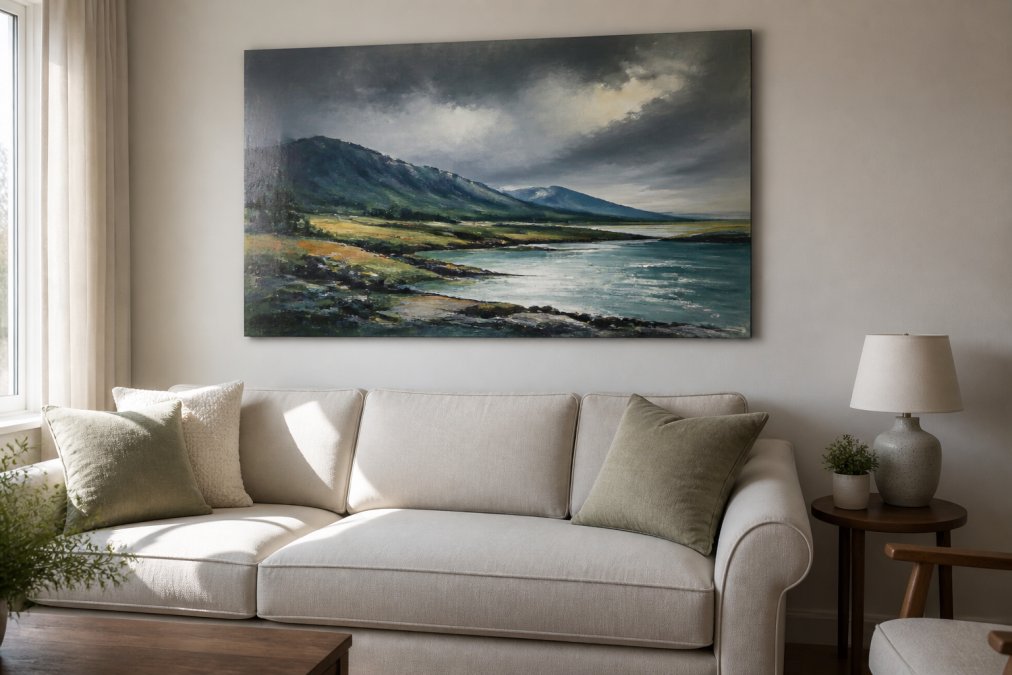
For a Highland landscape, canvas is the natural fit. The texture echoes the surface of an original painting without the four-figure price.
Limited Edition Prints and Giclée Editions
Limited edition prints are produced in a fixed run, numbered and often signed, then retired once sold out. Giclée is the method most often used: a high-resolution inkjet process laying fine pigment droplets onto archival paper or canvas.
The word "limited" does real work: a run of 50 will never become 500, giving the print a defined market place an open-edition poster never has.
Giclée Prints vs Original Paintings: Key Differences
Giclée prints and original paintings differ in three ways that matter to buyers: colour accuracy, surface texture, and resale value. A giclée can match an original's colours closely, but it cannot reproduce the physical texture of brushwork or the one-of-a-kind status that drives auction prices.
Colour Accuracy and Longevity
Modern giclée printing captures colour with impressive fidelity, especially when the artist oversees proofing. It typically uses a 12-colour pigment inkjet printer resolving detail at 2880 dpi, and pigment inks on archival stock resist fading for decades indoors.
Where giclée falls short is depth. An original oil or acrylic holds pigment layers that shift as light moves across the surface; a print is flat and consistent. Under gallery lighting the difference shows, but on a living room wall most viewers will not notice.
A practical test: tilt a giclée under raking light. An original shows ridges and brush marks catching light unevenly; a giclée reflects light uniformly. That check tells you more than any certificate.
Texture, Presence, and Investment Value
Texture is the honest dividing line. An original has physical relief: ridges of paint, visible brush marks, the unevenness of a human hand. Canvas prints mimic some of this through fabric weave, and heavily textured originals read better on canvas than on paper.
Investment value is the harder truth. Originals by established artists can appreciate; prints rarely do, though limited editions by artists who later gain recognition sometimes hold or modestly rise. Buy a print to live with, not to profit from.
How to Read an Edition: Numbering, Proofs, and Certificates
A limited edition print carries three details that determine its market place: edition size, impression number, and the artist's signature. A print marked "12/50" is the twelfth impression from a run of fifty, retired once all sell. An artist's proof (AP) sits outside the main run, usually reserved for the artist, and can be more valuable for its scarcity.
A certificate of authenticity should name the artist, title, edition size, printing method, and date. Without it you rely on the seller's word; reputable Scottish printmakers issue these as standard.
What Actually Drives Resale Value
- Edition size. A run of 25 will always be scarcer than a run of 500. Smaller runs from recognised artists tend to hold better.
- Artist trajectory. Work by an artist who later exhibits nationally or is collected by a public gallery can appreciate. This is unpredictable, which is why buying what you love remains the only reliable rule.
- Condition. Fading, foxing (age spots on paper), and frame damage all erode value. UV-filtering glass and acid-free mounts are not optional if resale matters.
Affordable Scottish Art Prints for Every Budget
Affordable Scottish art prints start at a few tens of pounds and rise with size, edition size, and whether the work is signed.
Buying Art Directly from Scottish Artists: What to Expect
What changes in practice:
- Pricing transparency. Direct sellers usually publish prices openly rather than quoting on request.
- Provenance. You can ask which artist made the piece and where they are based, and get a straight answer.
- Framing and hanging. Many direct sellers ship ready to hang, which saves a framing bill that can otherwise rival the cost of the artwork.
- Shipping risk. This is where direct buying can go wrong. Artwork damaged in transit is a genuine problem, which is why a clear safe-arrival promise matters more than a low shipping quote.
Digital Art, Rental Models, and Framing: Alternatives Competitors Miss
Most buying guides stop at prints and photography.
Digital Art and NFT Alternatives
Digital editions let an artist sell work without physical production costs, keeping prices low.
Art Rental and Subscription Models
Rental suits people in temporary homes, staging a property for sale, or testing a bold piece before committing.
DIY Framing and Display Techniques
The Investment Potential of Emerging Scottish Artists
Digital art, rental, DIY framing, and emerging-artist investment are not replacements for original paintings. They are different tools for different situations. The right choice depends on whether you value ownership, flexibility, physical presence, or long-term potential, and most collectors end up using more than one.
How to Choose Scotland Art That Fits Your Home and Budget
| Decision | Options | Best For | Watch Out For |
|---|---|---|---|
| Size | Small (under 40 cm), medium (40-70 cm), large (70 cm+) | Large rooms need large work; hallways suit small | Undersizing a big wall; the piece disappears |
| Medium | Canvas print, giclée print, photography, ceramics, digital | Canvas for walls; ceramics for shelves | Buying digital when you want physical presence |
| Budget | £38-£54 entry range at Cairngorm Artists | First purchases and gifts | Stretching to an original you cannot frame |
| Placement | Living room, office, entryway, hallway | Match mood to room function | Hanging in direct sunlight without UV-protected inks |
Conclusion
The gap between wanting Highland art and affording an original is wider than most guides admit, and the alternatives that close it are not equal.
Frequently Asked Questions
What are the best alternatives to original oil paintings for Scottish art?
Canvas prints from original artwork and limited edition giclée prints are the most popular alternatives. Canvas prints reproduce the look of an original painting on textured poly-cotton canvas with a matte finish, while giclée prints use pigment-based inks for high colour accuracy. Both options let you enjoy Scottish landscape art at a fraction of the cost of an original oil painting, with prices for canvas prints starting around 38 to 54 pounds from independent Highland artists.
What is the difference between a giclée print and an original painting?
An original painting is a one-of-a-kind piece created by hand, while a giclée print is a high-resolution reproduction printed with pigment-based inks on archival paper or canvas. Giclée prints capture fine detail and colour accurately, but they lack the physical texture and impasto of an original. For buyers who want the look of Scottish art without the premium price, giclée prints and canvas prints offer a practical middle ground.
How can I verify the authenticity of Scottish landscape art?
When buying art directly from Scottish artists, ask for a signed certificate of authenticity that confirms the piece is produced by the artist or their studio. Reputable sellers provide details about the artist, the original work the print derives from, and the printing method. Buying from a collective of named Highland artists, rather than an anonymous marketplace, gives you a clear chain of provenance and ensures your purchase supports real local craftsmanship.
Where can I buy affordable Scottish art prints online?
Independent artist collectives and direct-from-artist websites are the best sources for affordable Scottish art prints. Cairngorm Artists, for example, offers canvas prints from original artwork starting at 38 pounds, created by ten Highland artists. Buying directly from the artists means you avoid gallery markups and receive a piece that arrives ready to hang, with a safe-arrival promise covering shipping to your door.
Are limited edition prints a good investment for Scottish art collectors?
Limited edition prints can hold value if the artist gains recognition, but they are not a guaranteed investment. The edition size, the artist's reputation, and the print quality all affect resale potential. For most buyers, the primary value is enjoyment rather than financial return. If investment matters to you, focus on emerging Highland artists whose work you genuinely admire, and buy the highest quality print available within your budget.
If you have been circling a piece of the Highlands for your wall and hesitating on price, Cairngorm Artists exists for exactly that decision. Every canvas print is made from an original artwork by one of our ten Highland artists, arrives ready to hang, and ships worldwide under our safe-arrival promise. Get started with Cairngorm Artists and bring a piece of the Scottish Highlands home.


