

Original Art vs Mass Produced Prints: A 2026 Guide
Aug 23, 2026
Table of Contents
- Original Art vs Mass Produced Prints: Core Differences
- Authenticity and Provenance: Proving What You Own
- Investment Potential and Resale Value
- Benefits of Buying Original Art
- Scarcity, Limited Editions, and the Middle Ground
- Investing in Local Artists: Why It Matters
- How to Spot Factory Art and Distinguish Real Work
- Archival Quality and Long-Term Preservation
Last Updated: August 23, 2026
Original Art vs Mass Produced Prints: Core Differences
When you stand in front of a painting, you're experiencing one of two fundamentally different things: an object that exists nowhere else in the world, or one of thousands of identical copies. Understanding these differences shapes how you experience the piece, what it costs, how long it lasts, and whether it holds value over time.
At Cairngorm Artists, we work with a collective of ten Highland artists creating original pieces that capture the raw beauty of Scottish landscapes and wildlife. This guide breaks down the real distinctions between original art and mass produced prints, so you can make an informed decision about what works for your home and your values.
What Makes Art Original
An original artwork is a one-of-a-kind object created directly by the artist's hand. Whether it's an oil painting, acrylic, watercolor, or mixed media piece, the artist has applied pigment, texture, and their unique vision directly to the surface. No two originals are identical, subtle variations in brushwork, color intensity, and composition make each piece distinct.
This uniqueness creates scarcity. There is only one "Curious Pine Marten" original acrylic painting. Once it sells, it's gone. The artist has invested hours of labor, skill, and creative decision-making into a single object that will never be replicated exactly.
The tactile quality of an original is something photographs can't capture. You can see brushstrokes, texture variations, the way light reflects off layered paint, and the physical presence of the artist's hand in the work. This visual depth and sensory richness is what draws collectors back to the same piece repeatedly.
How Mass Production Changes the Equation
A mass produced print starts with an original artwork or digital design and uses mechanical or digital reproduction to create hundreds or thousands of identical copies. Common methods include giclée printing, lithography, screen printing, or offset printing. Each copy is made to match the original as closely as possible, but they're manufactured, not hand-created.
Mass produced prints cost far less because the labor is front-loaded into creating the original design, then distributed across many units. A fine art print might cost between 29 and 140 pounds, while an original painting can range from hundreds to thousands. The economics work because the production cost per unit drops dramatically as volume increases.

The trade-off is reproducibility. Mass produced prints are consistent, affordable, and available in volume. But each copy is interchangeable with every other copy, there's no scarcity, no unique object, no evidence of the artist's hand on your specific piece.
Authenticity and Provenance: Proving What You Own
Authenticity matters most when you're buying original art. Provenance, the documented history of who has owned a piece, is how collectors verify that what they're buying is genuine.
For an original painting, provenance typically includes the artist's signature, documentation from the artist or gallery, and ideally a certificate of authenticity. When you buy an original from Cairngorm Artists, you're getting a piece created directly by one of our Highland artists, with the artist's signature and our safe-arrival promise backing the transaction.
Mass produced prints don't require provenance in the same way because they're not unique objects. The question isn't "Is this the real one?" but rather "Is this a legitimate reproduction made by the authorized publisher?"
The risk of counterfeit art exists in the original market. This is why buying from established artists, reputable galleries, or direct from creators like our collective matters. You're not just buying an object; you're buying confidence in its authenticity.
Investment Potential and Resale Value
Original artworks can appreciate in value over time, especially if the artist gains recognition, their work becomes harder to find, or collectors' interest in their style grows. An original painting bought today for 500 pounds might be worth significantly more in ten years if the artist's reputation strengthens.
Mass produced prints rarely appreciate. They're manufactured goods available in volume, so there's no scarcity driving demand upward. The resale market for prints is thin because anyone who wants that image can buy a fresh copy from the publisher.
If part of your motivation for buying art is the possibility that it might hold or gain value, original work is the only option. Limited edition prints sit in the middle ground, offering some scarcity without the price of a full original.
The artist's reputation matters enormously. A piece by an established artist with a strong exhibition history commands premium prices and stronger resale demand.
Benefits of Buying Original Art
Owning an original connects you directly to the artist's vision and labor in a way mass produced work cannot. You're supporting a creator whose time and skill went into that specific object. For collectors with Scottish heritage or a deep connection to the Highlands, buying from Highland artists means you're supporting the communities and landscapes you care about.
Original art brings authenticity to your space. There's something meaningful about living with a one-of-a-kind object, knowing that no one else has exactly what's on your wall. This emotional connection often deepens over time.
From a practical standpoint, original art that's well-maintained holds value. If your circumstances change and you need to sell, an original by an established artist has a resale market. The tactile and visual qualities of original work also reward repeated viewing, brushstrokes, texture, and the way light catches the surface reveal themselves over time in ways a reproduction cannot match.
Scarcity, Limited Editions, and the Middle Ground
Limited edition prints occupy a middle position between originals and mass produced work. An artist might create an original painting, then authorize a limited run of 100 or 500 high-quality giclée prints, each numbered and signed. Once that edition sells out, no more are made.
Limited editions offer some scarcity appeal without the price tag of a full original. They're more affordable than the original painting but rarer than an unlimited print run. For collectors on a budget who still want some scarcity and artist involvement, limited editions make sense.
The catch is that limited editions still depreciate like mass produced prints, they're manufactured reproductions, not one-of-a-kind objects. But the numbered, signed format and finite production creates collector appeal that open-edition prints lack. When evaluating a limited edition, check the edition size. An edition of 50 is genuinely scarce; an edition of 5,000 is marketing theater.
Investing in Local Artists: Why It Matters
Supporting local artists, especially in regions like the Scottish Highlands, sustains creative communities and ensures that the landscapes and wildlife you care about continue to be documented by people who live there.
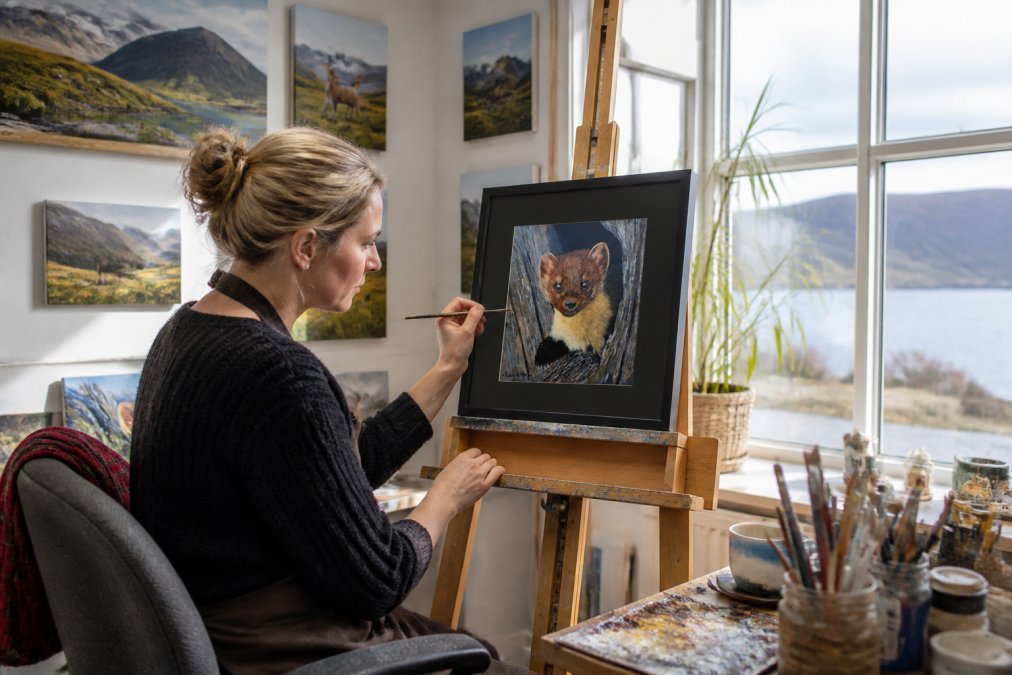
When you buy an original from a Highland artist, the money goes directly to the creator. You're not paying a middleman or a mass production facility. That direct relationship, artist to collector, is part of what makes original art meaningful.
Local artists also tend to create work rooted in place. Our Highland artists paint the landscapes and creatures they see and feel connected to. That authenticity shows in the work. A mass produced print of a Highland landscape might be technically competent, but it often lacks the lived connection that comes from an artist who actually inhabits that environment.
Buying original work from local artists also preserves artistic diversity. Mass production favors generic, commercially safe designs. Original artists push boundaries and create work that reflects their unique vision.
How to Spot Factory Art and Distinguish Real Work
The easiest way to tell original from mass produced is to look closely at the surface. Original paintings show brushstrokes, texture variations, and evidence of the artist's hand. Paint thickness varies. Colors shift subtly across the canvas. Light reflects differently depending on the angle and layering of pigment.
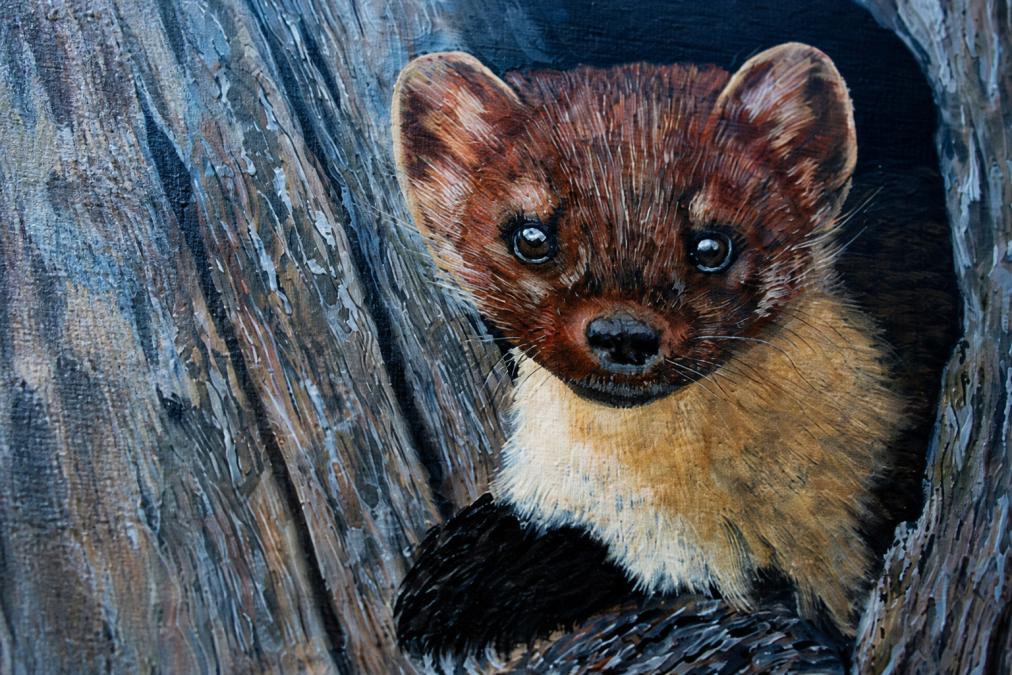
Mass produced prints have a uniform, flat surface. The image is identical across every copy. There are no brushstrokes because no brush was used, the image was applied mechanically or digitally.
Check for a signature. Original artworks are signed by the artist, usually on the front or back. Mass produced prints may have a printed reproduction of the artist's signature, but it's part of the image, not hand-signed.
Look at the back of the piece. An original painting typically has a canvas back, stretched over wooden stretcher bars, with visible staples or tacks. The back of a giclée print shows the substrate but no evidence of hand-stretching or artist preparation.
Ask about the artist. Can you find information about them? Do they have an exhibition history, a studio, a documented body of work? Check the materials. Ask what pigments, inks, and substrates were used. High-quality original paintings use archival pigments. Fine art prints use acid-free paper and UV-protective inks.
Archival Quality and Long-Term Preservation
Original paintings made with quality pigments and properly stretched canvas can last centuries (si.edu). The pigments used by professional artists are formulated to resist fading. A well-maintained original painting from the 18th century can still be vibrant today.
Mass produced prints vary widely. A fine art giclée print on acid- and lignin-free paper with UV-protective inks can last 100+ years or more (peer-reviewed research). But a cheap reproduction on standard paper will fade, yellow, and deteriorate within a decade or two.
When you buy a fine art print, the manufacturer should specify:
- Acid-free, lignin-free paper or canvas
- UV-protective inks (pigment-based, not dye-based)
- Matte or textured surface to reduce glare and protect the image
Storage and display affect longevity too. Keep artwork out of direct sunlight, which fades pigments over time. Maintain stable temperature and humidity. Proper framing protects both originals and prints, keeping the piece stable and preventing dust and moisture from reaching the surface.
| Art Type | Material Lifespan | Archival Factors | Best Storage |
|---|---|---|---|
| Original painting (quality pigments) | 100+ years | Acid-free canvas, professional pigments | Stable temperature/humidity, indirect light |
| Fine art print (archival materials) | 75-150+ years | Acid-free paper, UV-protective inks | Framed with UV glass, indirect light |
| Limited edition print (signed) | 50-100 years | Depends on substrate and inks | Same as fine art print |
| Mass-produced print (standard materials) | 10-30 years | Standard paper, non-archival inks | Quick fading in sunlight |
The choice between original art and mass produced prints ultimately comes down to what you value. If you want affordability and don't mind that others have identical copies, a fine art print serves that purpose well. If you want uniqueness, direct connection to an artist, and the possibility of appreciation over time, original art is worth the investment.
At Cairngorm Artists, we offer both options: original paintings and fine art prints created from original Highland artwork. Our original pieces bring the spirit of Scotland to collectors who want one-of-a-kind work by artists rooted in the Highlands. Our fine art prints, like the "Curious Pine Marten" available in both fine art paper and canvas formats, use archival-quality materials and arrive ready to hang with our safe-arrival promise. Whether you choose an original or a print, you're supporting Highland artists and bringing authentic Scottish landscape art into your home.

Frequently Asked Questions
How can I tell if art is original or a print?
Original art shows visible brushstrokes, texture variation, and tactile depth when viewed up close. Prints have a uniform surface and no dimensional texture. Check for an artist's signature on the front (originals often have this), examine the back for stretcher bars or canvas edges, and ask for a certificate of authenticity or provenance documentation. Mass-produced prints typically lack any tactile quality and feel completely flat to the touch.
What is the investment potential of original art compared to mass produced prints?
Original art typically appreciates in value over time, especially from established or emerging artists with collector followings. Mass-produced prints hold little resale value and often depreciate. Original works gain value through scarcity, artist reputation, and collector demand. A limited edition giclée print may retain some value if numbered and certified, but original paintings from working artists offer genuine investment potential for collectors seeking both aesthetic and financial returns.
Why does original art from local artists hold more emotional value?
Original art connects you directly to the artist's vision, technique, and creative process. When buying from local artists like those at Cairngorm Artists, you're supporting real people in your community and owning a one-of-a-kind piece created with intention. This connection, knowing the artist's story, understanding their inspiration, and owning something truly unique, creates a deeper emotional bond than mass-manufactured decor. Each brushstroke carries the artist's hand and vision, making the piece feel personal rather than generic.
What is a giclée print and how does it differ from an original?
A giclée is a high-quality inkjet print made from a digital scan of an original artwork, using archival inks on fine art paper or canvas. While giclées offer excellent color reproduction and can be quite durable, they are still reproductions, not originals. The key difference: a giclée is mass-produced (even if in limited numbers), lacks the artist's hand and tactile texture, and will never appreciate in value like an original. However, a numbered, limited-edition giclée with a certificate of authenticity sits between mass-market prints and originals in both quality and value.
This article was written using GrandRanker


