

How to Verify Original Art Authenticity: 2026 Guide
Aug 16, 2026
Table of Contents
- How to Verify Original Art Authenticity: A Step-by-Step Checklist
- How to Spot a Fake Painting: Red Flags to Watch For
- Certificate of Authenticity Requirements: What a Valid COA Must Include
- Art Provenance Research: Tracing Ownership History
- Art Authentication Services: When to Call a Professional
- Digital Authentication and Blockchain: The Modern Layer of Proof
- Legal Implications of Selling or Buying Inauthentic Art
- How Original Art from Established Artists Simplifies Verification
Last Updated: August 16, 2026
How to Verify Original Art Authenticity: A Step-by-Step Checklist
Knowing how to verify original art authenticity before purchasing is one of the most valuable skills any collector or homeowner can develop. At Cairngorm Artists, we work with buyers ranging from seasoned collectors to first-time purchasers, and the same question comes up repeatedly: "How do I know this is real?" The answer involves physical examination, documentation research, and, in some cases, professional consultation.
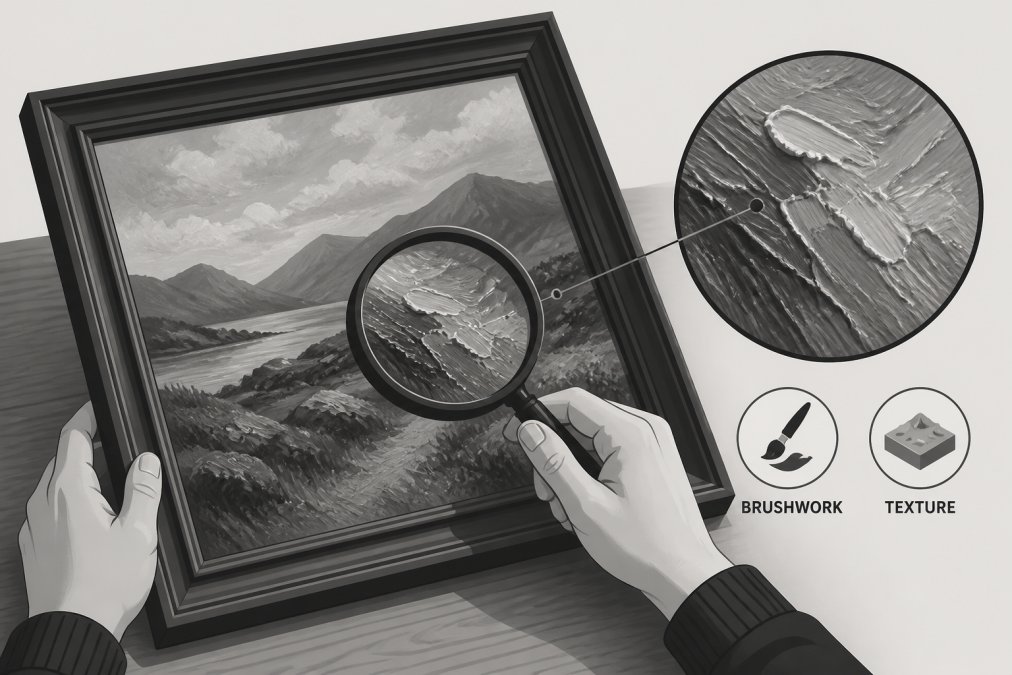
Step 1: Examine the Physical Work Up Close
Physical inspection is your first and most telling line of enquiry. An original work carries physical characteristics that reproductions and forgeries struggle to replicate convincingly.
Start with the brushwork. On an original oil or acrylic painting, you should see genuine impasto texture: raised ridges, layered pigment, and directional strokes that reflect light differently from different angles. Run a raking light source (a torch held at a low angle) across the surface. Authentic brushwork creates shadows and depth that printed reproductions cannot fake.
Next, examine the medium itself. Canvas, board, and paper each age in characteristic ways. Canvas develops a craquelure pattern (a fine network of cracks) over decades. A work claimed to be from the 19th century on synthetic canvas should raise immediate questions. Turn the work over, the reverse often carries as much information as the front: stretcher bar construction, old exhibition labels, gallery stamps, and inscriptions in the artist's hand.
Step 2: Check the Signature and Edition Number
Signature verification is nuanced. A signature alone does not authenticate a work, and its absence does not necessarily condemn one. Many artists signed inconsistently throughout their careers.
Compare the signature against documented examples from the artist's verified works. Look for consistency in letter formation, pressure, and placement. A signature that looks too neat, too uniform, or positioned too conveniently in the centre of the canvas warrants scrutiny.
For prints and limited editions, the edition number is critical. A signed limited edition print should carry a fraction (e.g., 12/50) indicating its place in the run, along with the artist's original signature. The edition number should match any accompanying documentation.
Step 3: Look for Signs of Age and Condition
Genuine age cannot be perfectly faked, though sophisticated forgers attempt artificial aging. Look for foxing (brown spots caused by fungal growth), fading in light-exposed areas, and natural paper discoloration that develops evenly over time. Ultraviolet light inspection is particularly useful: UV light causes old varnish to fluoresce with a characteristic greenish glow, while new varnish appears dark. Retouching and restoration work also shows up clearly under UV.
Inspection Step |
What to Look For |
Red Flag |
|---|---|---|
Brushwork / surface |
Impasto texture, directional strokes |
Flat, uniform surface; printed dot pattern |
Reverse of canvas |
Old labels, stretcher construction |
Clean, unmarked, suspiciously new materials |
Signature |
Consistency with documented examples |
Too perfect, centred, or atypical placement |
Edition number |
Fraction format, original signature |
Missing, inconsistent, or typed |
Signs of age |
Foxing, craquelure, UV fluorescence |
Artificial cracking, dark UV response on varnish |
Medium and support |
Age-appropriate canvas, board, or paper |
Synthetic materials on claimed antique works |
How to Spot a Fake Painting: Red Flags to Watch For
Most forgeries fail on multiple fronts simultaneously. The most common red flags include a provenance gap (ownership history that cannot be traced before a suspiciously recent date), documentation that looks freshly produced, and a price well below the artist's established market value. Forgeries are often priced to seem like a bargain, exploiting the buyer's excitement at finding a "deal."
Stylistic analysis is equally important. Every artist has compositional habits, characteristic colour relationships, and preferred ways of handling light. A work that deviates significantly from these patterns deserves scrutiny, even if the technical execution appears competent.
Other red flags: canvas or paper that looks artificially aged (uneven discoloration, cracks that don't follow natural stress patterns), pigments chemically inconsistent with the claimed period, and a watermark on paper that post-dates the work's supposed creation.
Certificate of Authenticity Requirements: What a Valid COA Must Include
A certificate of authenticity is a formal document that attests to the genuineness of an artwork. Understanding what a valid COA must contain is essential.
A credible COA should include the artist's full name, the title of the work, the date of creation, the medium and support (e.g., oil on linen), the dimensions, a clear photograph of the work, and the signature of the issuing authority. That authority matters enormously. A COA issued by the artist themselves, a recognised artist estate, gallery, or authentication board carries genuine weight. One typed up by a private seller carries almost none.
For living artists, a COA signed directly by the artist is the gold standard. For historical works, authentication by a recognised scholarly body or the artist's estate is the equivalent. According to The Art Loss Register's guidance on due diligence, checking a work against theft and forgery databases should accompany any serious authentication process.
Art Provenance Research: Tracing Ownership History
Art provenance research is the process of tracing a work's complete ownership history from its creation to the present day. A clear, unbroken provenance chain is one of the strongest indicators of authenticity and is essential for establishing art market value.
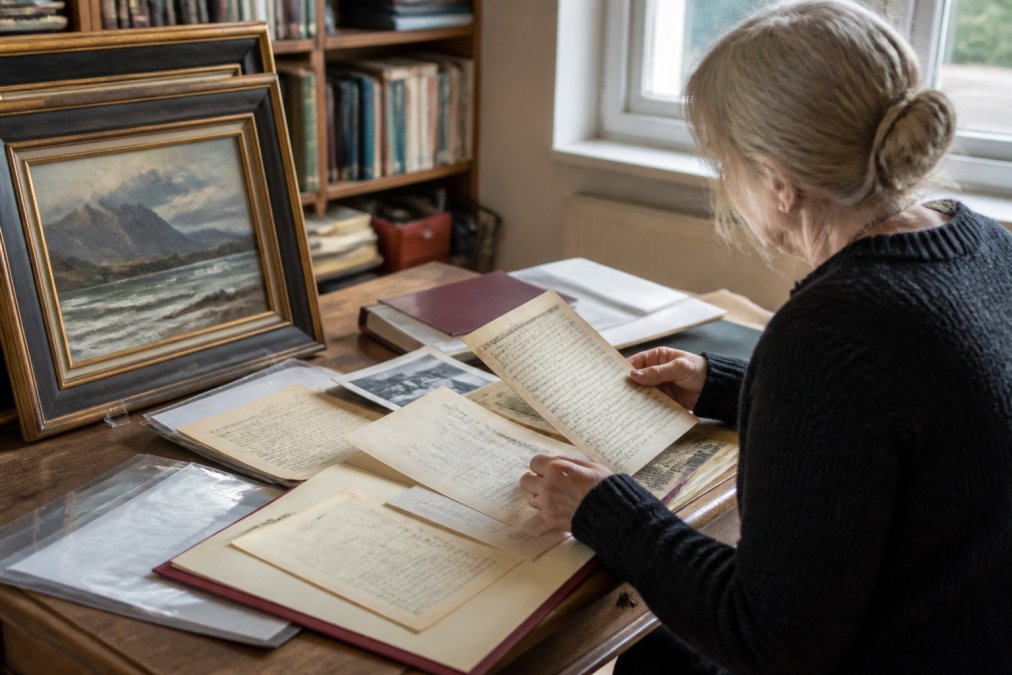
The ideal provenance chain includes the original sale from the artist's studio, subsequent ownership, exhibition records, and auction house history. Each transaction ideally leaves a paper trail: receipts, correspondence, exhibition catalogues, and gallery records. Gaps in this chain are not automatically suspicious, but unexplained gaps in the 20th century warrant careful scrutiny.
Using the Catalogue Raisonné
The catalogue raisonné is the definitive scholarly catalogue of an artist's complete output. For significant artists, this is the single most authoritative reference for attribution. A work that does not appear in the catalogue raisonné requires explanation, while inclusion in a well-researched catalogue provides strong supporting evidence.
Catalogue raisonné entries typically include the work's full provenance history, exhibition record, bibliography, and condition notes. Accessing them often requires visiting specialist libraries, contacting artist estates, or using academic databases.
Gallery Records, Auction House History, and Artist Estates
Gallery records and auction house history are primary sources for provenance research. Major auction houses maintain detailed records of works sold, including buyer and seller information. Artist estates maintain registries of authenticated works and can confirm whether a specific piece is consistent with the artist's known output. According to guidance from the College Art Association on authentication, contacting the relevant artist estate early in the research process saves significant time and expense.
Art Authentication Services: When to Call a Professional
Professional art authentication services exist on a spectrum, from single-expert appraisers to multi-disciplinary scientific laboratories. For works by living artists with established gallery relationships, professional authentication is often unnecessary. For historical works, works purchased at auction without full provenance, or any work where documentation is incomplete, professional opinion becomes essential.
Art appraisal and authentication are distinct services. An appraisal establishes market value; authentication establishes genuineness.
DIY vs. Professional Authentication: A Cost-Benefit View
DIY authentication has real limits. Physical inspection, provenance research, and COA review can rule out obvious fakes and flag serious concerns, but they cannot definitively authenticate a significant work. Forensic examination, including pigment analysis, canvas dating, and UV light inspection by a specialist, requires equipment and expertise that no checklist can replicate.
Approach |
Best For |
Limitations |
Approximate Commitment |
|---|---|---|---|
DIY inspection |
Initial screening, low-value works |
Cannot confirm authenticity definitively |
A few hours |
Provenance research |
Building the ownership history |
Requires archive access and art historical knowledge |
Days to weeks |
Expert appraisal |
Establishing market value |
Appraiser may not be an authentication specialist |
Single consultation |
Scientific forensic examination |
High-value or disputed works |
Costs can be significant; invasive testing requires consent |
Weeks |
Authentication board review |
Works by major historical artists |
Boards are selective; some have closed |
Months |
Digital Authentication and Blockchain: The Modern Layer of Proof
Digital authentication represents a genuine shift in how original art is documented and verified. Blockchain-based provenance records create an immutable, timestamped ledger of a work's ownership and transaction history. When an artist registers a work on a blockchain platform at creation, every subsequent transfer can be recorded and verified without relying on paper documents that can be lost, damaged, or forged. According to analysis of blockchain art authentication by MIT Media Lab, this approach is particularly effective for contemporary works where the provenance chain begins in the digital era.
Digital certificates linked to blockchain records can include high-resolution images, artist signatures, and provenance data in a format that cannot be retrospectively altered. For buyers of contemporary original art, asking whether the work has a digital provenance record is an increasingly reasonable question. This does not replace physical inspection or traditional provenance research for historical works, but it provides a layer of proof for contemporary purchases that was unavailable a decade ago.
Legal Implications of Selling or Buying Inauthentic Art
The legal dimension of art authentication is frequently underestimated by private buyers and sellers. Selling a work as an original when it is not constitutes fraud in most jurisdictions, regardless of whether the seller knew the work was inauthentic.
Buyers who discover they have purchased an inauthentic work may have grounds for rescission of the sale and recovery of the purchase price, but legal proceedings in art fraud cases are complex, expensive, and often international in scope. For sellers, the risk extends beyond civil liability to potential criminal fraud charges.
The practical implication: authentication is not a courtesy to buyers. It is a legal protection for everyone in the transaction chain. Thorough documentation, a credible COA, and a clear provenance record are genuine safeguards.
How Original Art from Established Artists Simplifies Verification
The verification challenges described throughout this guide are largely products of incomplete documentation and long ownership chains. The simplest way to verify original art is to purchase it directly from the artist or their authorised representative, with full documentation provided at the point of sale.
This is the model that Cairngorm Artists is built on. Every piece in the collection is created by one of ten Highland artists whose identities, practices, and creative processes are fully documented. When you purchase an original work, you receive it directly from the artist's collective, with clear provenance beginning at creation. There are no gaps in the ownership chain, no questions about attribution, and no need for third-party forensic examination.
For collectors who want the beauty of original landscape art without the authentication complexity that surrounds the secondary market, purchasing from a source where the artist's identity is transparent and the provenance is unambiguous is the most practical approach available.
Authenticating art on the secondary market requires a combination of physical inspection skills, provenance research, documentation review, and, for significant works, professional forensic examination. For buyers who want to avoid that complexity entirely, the answer is to purchase original works directly from artists with clear documentation from the outset. Cairngorm Artists offers exactly that: original works by named Highland artists, arriving ready to hang, with a safe-arrival promise and a provenance chain that starts at the studio. Explore the collection to find a piece that brings the Highlands home, with complete confidence in what you're buying.
Frequently Asked Questions
How can I verify the authenticity of an artwork?
Start by physically inspecting the work: examine brushwork, medium, paper texture, and any signatures or edition numbers. Then trace its provenance through gallery records, auction house history, or a catalogue raisonné. Request a certificate of authenticity from the seller, and check whether the artist's estate or a recognised attribution body has documented the piece. For high-value purchases, commission a formal appraisal from a qualified art authentication expert who can also carry out UV light inspection and pigment analysis.
What documents are needed to prove art authenticity?
The core documents for proving authenticity are a certificate of authenticity (COA) signed by the artist or their estate, a provenance record showing ownership history, and any gallery or auction receipts. For prints, an edition number and signed limited edition certificate are standard. A condition report and, where available, an entry in the artist's catalogue raisonné add further weight. Together, these create a paper trail that supports both the artwork's attribution and its art market value.
Does a signature guarantee an artwork is original?
No. A signature alone is not proof of authenticity. Signatures can be forged, added later, or misattributed. Signature verification should always be cross-referenced against documented examples of the artist's handwriting from gallery records or auction house catalogues. A genuine original work will also show consistent brushwork, period-appropriate materials, and a provenance trail that supports the attribution. Treat the signature as one piece of evidence among many, not a definitive stamp of originality.
How much does it cost to get a painting authenticated?
Authentication costs vary widely depending on the artist's profile, the method used, and the expert engaged. A basic appraisal from a qualified art appraiser may be relatively affordable, while forensic examination involving pigment analysis or scientific dating can run significantly higher. For contemporary works bought directly from an artist or an established gallery, the cost is often minimal because the COA and provenance documentation already exist. Always weigh the authentication cost against the artwork's market value before commissioning a full forensic examination.


