

How to Choose Art for Living Rooms: A 2026 Guide
Aug 19, 2026
Table of Contents
- Start with Your Room's Color Palette and Lighting
- Determine the Right Scale and Size for Your Wall
- How to Choose Large Wall Art for Your Living Room
- How to Display Original Landscape Paintings
- Hanging Height, Positioning, and Visual Balance
- Selecting Art That Reflects Your Personality and Lifestyle
- Art Maintenance and Long-Term Care
- Conclusion
Last Updated: August 19, 2026
Start with Your Room's Color Palette and Lighting
Your room's color palette and lighting conditions are the foundation for choosing art for living rooms. Walk through your space at different times, morning light behaves differently from afternoon light, and warm artificial lighting transforms how artwork appears. A painting vibrant in daylight can appear dull under incandescent bulbs.
Look at your existing color palette honestly. Are your walls neutral or do you have accent walls in deeper tones? Do furnishings lean warm (terracottas, golds) or cool (blues, silvers)? Your artwork should complement these colors or intentionally contrast for visual interest. Consider the psychological impact: blues and greens feel calming, while warm oranges and reds energize.
The texture of artwork matters too. Canvas prints with visible brushwork interact differently with light than flat paper prints. Original paintings capture light in ways reproductions cannot. Cairngorm Artists' collection excels here, the layered texture and color depth in pieces like Storm Over Glencoe create visual interest that shifts subtly as light changes throughout the day.

Determine the Right Scale and Size for Your Wall
Scale and proportion are where many people stumble when choosing art for living rooms. A painting that looks perfect in a gallery can disappear on a large wall or overwhelm a small space.
Measure your wall space and furniture dimensions first. For a wall above a sofa, the artwork should occupy roughly 50-75% of the sofa's width. If your sofa is 84 inches wide, aim for artwork between 42 and 63 inches across. Leave at least 6-12 inches of clear wall space on either side, negative space is as important as the artwork itself.
Consider the height of your wall and ceiling. In rooms with 8-foot ceilings, a single large piece works better than multiple smaller pieces. In rooms with 9-foot or higher ceilings, you have flexibility to use multiple pieces or a very large statement piece. A common mistake is choosing artwork too small for high ceilings, where the piece gets visually swallowed by the wall.
Think about what furniture sits beneath or near the artwork. A painting above a console table can be wider than the table itself, creating intentional visual weight. The relationship between artwork and furniture matters more than the relationship between artwork and wall.
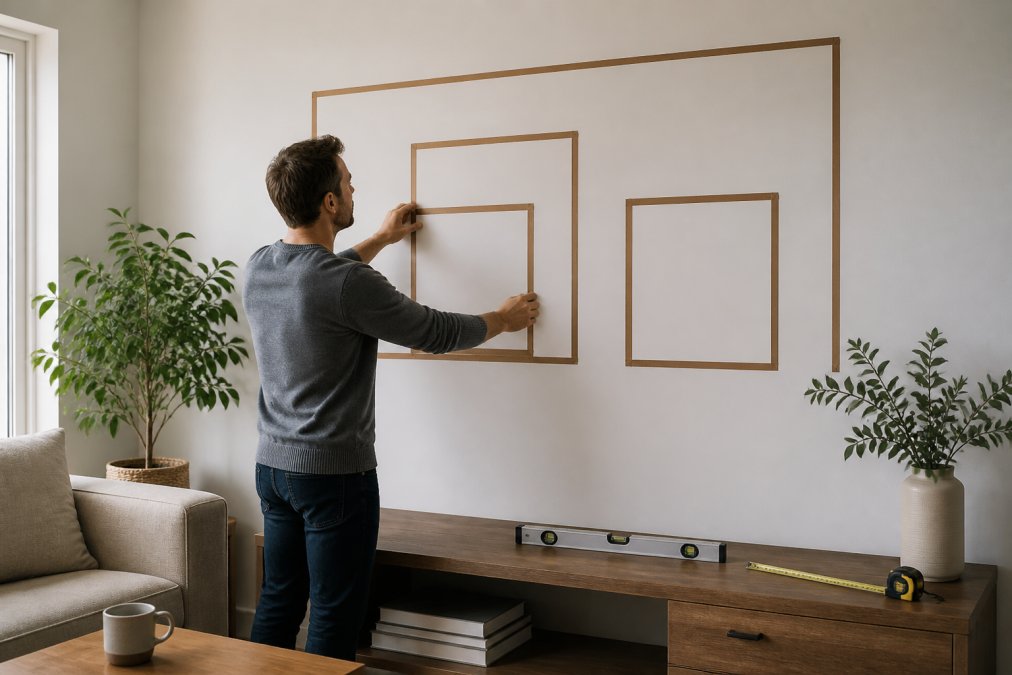
How to Choose Large Wall Art for Your Living Room
Large wall art creates focal points that anchor a room and make a statement. Before committing, ensure the piece genuinely speaks to you and works with your color palette and style.
Large abstract landscapes work particularly well in living rooms. They provide visual interest without competing with conversation or other design elements. The beauty of abstract art is its flexibility, it adapts to multiple color palettes and design styles.
Consider the composition and visual weight within the large piece itself. A painting with heavy dark colors on one side and light colors on the other creates tension. For a calming, balanced space, choose a composition with even distribution of visual weight. For dynamic energy, asymmetrical compositions create movement.
Cairngorm Artists offers several large-format pieces that work beautifully as focal points. The Scottish Hillside canvas print uses deep reds and earthy greens with stormy clouds, a composition that anchors a room while remaining cohesive with varied color schemes. The layered texture and brushwork create depth that engages viewers from different distances.

Test the piece in your space before finalizing the purchase. Many providers, including Cairngorm Artists, photograph their work in actual living room settings. Study how the piece interacts with different furniture styles and color schemes.
How to Display Original Landscape Paintings
Original landscape paintings bring authenticity that prints cannot replicate. The brushwork, texture, and color variations create a sense of presence in your space.
Original paintings deserve thoughtful positioning as the primary focal point in your room, not secondary to a television. If your living room centers around a TV, position your original painting where it can be appreciated independently, perhaps on an adjacent wall or above a console table.
Lighting for original paintings should be intentional. Avoid direct sunlight, which fades pigments over time. Position original work where it receives indirect natural light or carefully positioned artificial lighting. Picture lights mounted above the frame can highlight the painting's texture and color without creating glare.
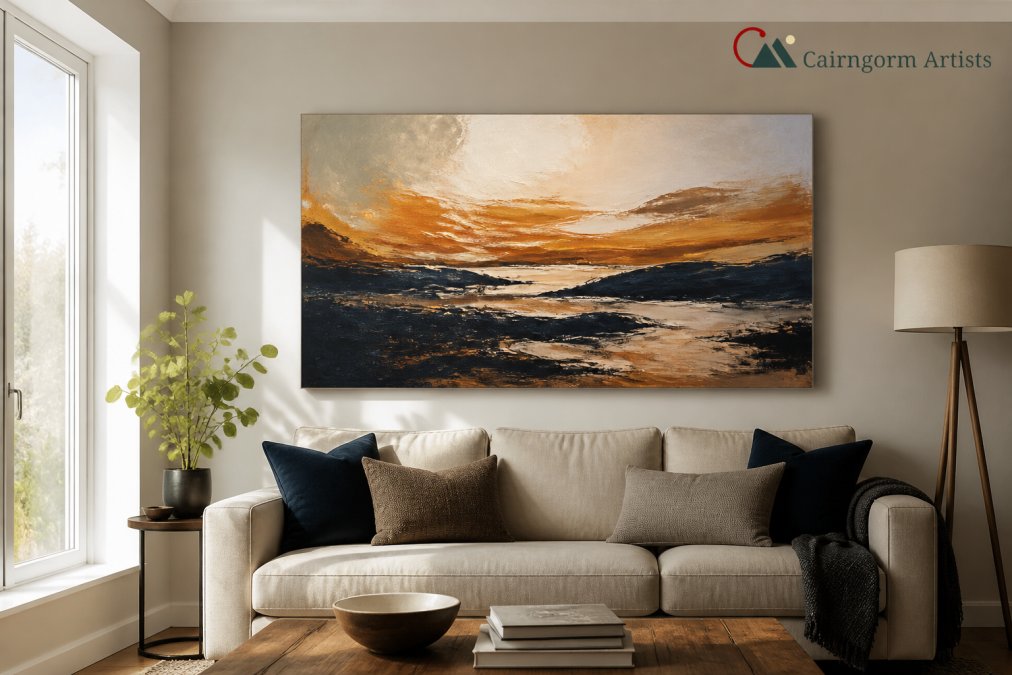
The frame matters more for original paintings than for prints. A simple, elegant frame draws attention to the artwork itself. For contemporary landscapes, minimal frames or frameless museum mounting works well.
Cairngorm Artists ensures every piece arrives ready to hang with professional mounting and framing already in place. The safe-arrival promise means your investment is protected during shipping, a significant concern when purchasing original paintings from online sources.
Hanging Height, Positioning, and Visual Balance
Hanging height determines whether your artwork feels integrated into your room or awkwardly placed. The standard recommendation is to hang artwork at eye level, with the center of the piece approximately 57-60 inches from the floor.
If most viewing happens while seated on a sofa, adjust accordingly. Position the artwork center slightly higher than seated eye level, roughly 10-15 inches above where eyes focus when seated. The relationship between artwork and furniture below it matters, if artwork hangs above a sofa, position it so the center aligns with the sofa's center.
Consider the negative space around your artwork. A painting shouldn't touch the edges of your wall or furniture; it should breathe. Leave at least 6-12 inches of clear wall space on all sides when possible.
When hanging multiple pieces together as a gallery wall, maintain consistent spacing between frames, typically 2-3 inches. Vary the sizes and orientations to create visual interest while maintaining overall coherence.
Visual balance extends to the room as a whole. A large, dark artwork on one wall should be balanced by visual weight elsewhere, perhaps a lighter-colored accent wall, a bright lamp, or another focal point. Distribute focal points and visual interest throughout the space.
Selecting Art That Reflects Your Personality and Lifestyle
The most important consideration when choosing art for living rooms is personal resonance. You'll live with this artwork every day, so it should reflect who you are and what brings you joy.
Ask yourself: What subjects captivate me? What colors make me feel at home? What artistic styles genuinely move me? If you love nature and landscapes, choose landscape art. If you're drawn to abstract forms and bold colors, embrace that. Art that reflects authentic interest creates spaces with genuine character.
Consider your lifestyle when choosing artwork. If you have young children or pets, choose pieces that can withstand occasional mishaps. Canvas prints are more forgiving than delicate paper prints. If you entertain frequently, choose artwork that sparks conversation.
The psychological impact of your surroundings is real. Choosing artwork aligned with your values and aesthetic preferences creates an environment that supports your wellbeing. A room filled with art you genuinely love feels fundamentally different from a room with "correct" art choices.
Cairngorm Artists' collection appeals to people drawn to Scottish landscapes, wild nature, and authentic artist voices. If Highland imagery resonates with you through heritage, travel experience, or aesthetic preference, that authentic connection matters. The Loch Lomond Flow canvas print appeals to viewers who find energy in dynamic landscapes and bold color. The Black Hills Landscape canvas print speaks to those seeking moody, contemplative imagery.

Art Maintenance and Long-Term Care
Original artwork and quality canvas prints require basic maintenance to preserve their appearance and value. Dust accumulates on artwork surfaces, dulling colors and obscuring detail. Clean gently using a soft, dry brush or microfiber cloth every 3-6 months, depending on your home's dust levels.
Light exposure is the primary threat to artwork longevity. Ultraviolet light fades pigments and damages materials. Position artwork away from direct sunlight, especially afternoon western light. If your space has significant natural light, consider UV-protective glass or acrylic for framed pieces.
Temperature and humidity fluctuations cause expansion and contraction in materials, leading to warping or cracking. Maintain stable room conditions, ideally 65-75 degrees Fahrenheit with 40-50% humidity. Avoid hanging artwork near heating vents, air conditioning units, or exterior walls. Kitchens and bathrooms, with their moisture fluctuations, are poor locations for valuable original work.
Inspect your artwork periodically for signs of damage. Look for discoloration, warping, insect damage, or frame deterioration. Early intervention prevents small problems from becoming major conservation issues.
Cairngorm Artists' safe-arrival promise protects artwork during shipping. The ready-to-hang mounting and professional framing they provide creates a stable foundation for long-term display. Canvas prints are particularly durable, resisting fading better than paper prints and withstanding minor environmental fluctuations more effectively.
Choosing art for living rooms ultimately comes down to creating a space that feels authentically yours. Start with your room's practical considerations, color palette, lighting, scale, and hanging height. Then layer in your personal aesthetic and emotional responses. The intersection of practical design principles and genuine passion creates rooms that are both beautiful and deeply satisfying to inhabit.
Cairngorm Artists offers original landscape paintings and canvas prints that bring the spirit of the Scottish Highlands into your home. Each piece arrives ready to hang with professional mounting and our safe-arrival guarantee, removing the complexity of framing and shipping concerns. Whether you're drawn to moody abstract landscapes or dynamic Highland imagery, these works from ten talented Highland artists create focal points that anchor living rooms with authenticity and character.
Frequently Asked Questions
What is the 3-5-7 rule when decorating with art in a living room?
The 3-5-7 rule is a design principle that suggests grouping art in odd numbers (3, 5, or 7 pieces) creates a more visually appealing composition than even numbers. For living rooms, this works well when creating gallery walls or arranging multiple pieces across a focal point. Odd-numbered groupings feel more curated and intentional, while maintaining visual balance without appearing too symmetrical or rigid.
How do I choose art that matches my living room furniture and color palette?
Start by identifying your room's dominant colors and the mood your furniture creates. If your sofa and chairs feature warm neutrals, choose art with complementary warm tones or accent colors that appear elsewhere in the room. For a cohesive look, select artwork that echoes one or two colors from your existing décor without matching exactly. Original landscape paintings, like those inspired by the Scottish Highlands, often contain layered color that naturally complements various interior styles.
How high should art be hung in a living room?
Art should be hung at eye level, typically 57-60 inches from the floor to the center of the piece. In living rooms with seating, position artwork so it aligns with the eye level of someone sitting down, which is usually lower than standing eye level. Above a sofa, hang art 8-10 inches above the furniture. This creates a focal point that draws the eye naturally and establishes visual balance in your space.
What's the difference between original artwork and prints, and why does it matter for my living room?
Original artwork is hand-created by the artist and exists as a one-of-a-kind or limited piece, offering unique texture, depth, and presence that photographs cannot capture. Prints are reproductions of original work. Original pieces command attention through their texture and subtle color variations, creating a more sophisticated focal point. For collectors seeking authentic, meaningful décor that supports independent artists, original landscape paintings bring genuine artistic character and investment value to a living room.


