

Original vs Reproduction Scottish Art: Value Guide
Aug 31, 2026
Table of Contents
- Original vs Reproduction Scottish Art: Key Differences
- How to Authenticate Scottish Art
- Physical Characteristics That Reveal Authenticity
- Resale Value and Investment Potential
- Investing in Contemporary Scottish Artists
- Spotting Mass-Produced Reproductions and Giclée Prints
- Legal and Ethical Considerations
- Frequently Asked Questions
Last Updated: August 31, 2026
Original vs Reproduction Scottish Art: Key Differences
The difference between an original Scottish painting and a high-quality reproduction comes down to authenticity: originals carry investment and cultural value that prints cannot replicate. Whether furnishing your home with Highland heritage artwork or building a collection, understanding these distinctions is essential.
At Cairngorm Artists, we work directly with ten Highland artists creating original pieces inspired by Scottish landscapes and wildlife. This guide breaks down key differences between originals and reproductions.
What Makes an Original Painting Unique
An original painting is a one-of-a-kind work created entirely by the artist's hand. Every brushstroke, color choice, and compositional decision reflects the artist's direct vision and technical skill. Originals are created using traditional mediums like oil, acrylic, or watercolor applied directly to canvas, panel, or paper, with the artist controlling every aspect: texture, depth, color intensity, and surface quality.
The value of an original extends beyond aesthetics. You're supporting the artist directly, preserving a unique cultural artifact, and acquiring something with genuine investment potential. Original Scottish landscape paintings, particularly those depicting the Cairngorms and coastal regions, have developed a dedicated collector base.
How Reproductions and Prints Are Made
Reproductions are copies created through mechanical or digital processes. Fine art prints, canvas prints, and giclée reproductions all involve capturing an image of the original artwork and transferring it onto paper, canvas, or another substrate using printing technology.

Fine art prints use high-resolution scanning to digitize an original, then print onto archival-quality paper using specialized inkjet printers. Canvas prints follow a similar process but transfer the image onto canvas. Giclée printing, which uses fine-art inkjet technology, produces museum-quality prints but remains mechanically produced rather than original.
Reproductions make artwork accessible to a broader audience at a fraction of original costs, allowing people to enjoy beloved pieces without the investment required for originals.
How to Authenticate Scottish Art
Authentication verifies that a painting is genuinely what it claims to be, involving physical examination, historical research, and sometimes specialized tools.
Visual Inspection Techniques
Start by examining the painting under natural and artificial lighting. Look closely at brushwork, original paintings show visible brushstrokes with varying pressure, direction, and texture that reflect the artist's hand. Reproductions display uniformity of surface reflecting mechanical printing.
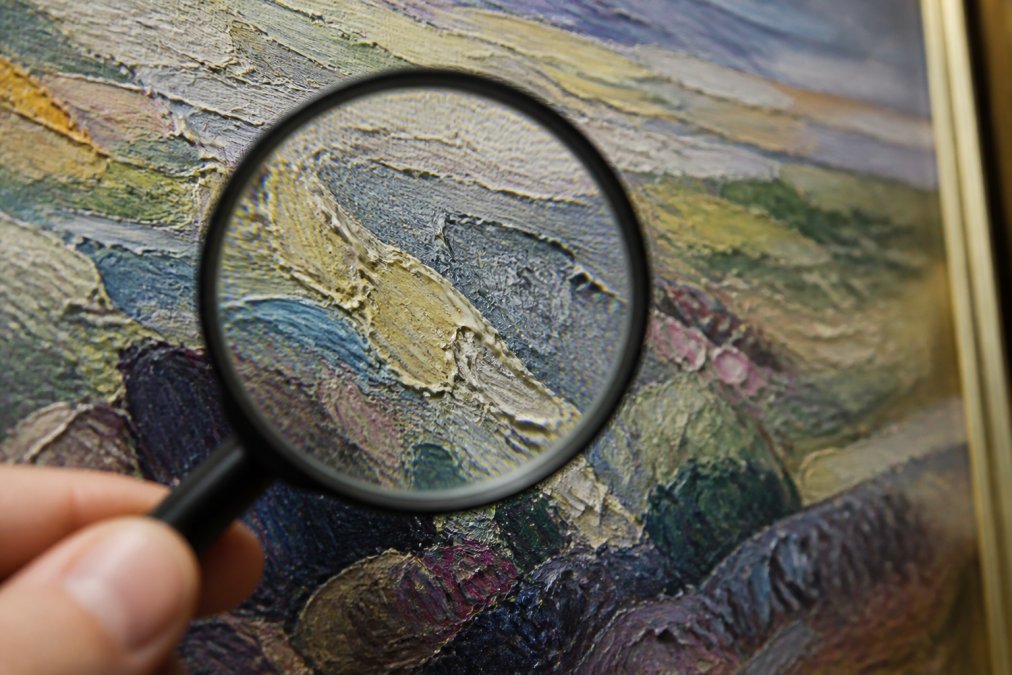
Examine for impasto, where paint is applied thickly enough to create visible texture and dimension. This is a hallmark of originals. You can often feel the texture by running your finger lightly across the surface. Reproductions on canvas or paper lack this tactile quality.
Check the painting's edges. Originals typically show paint applied to the edges or clean, intentional edges. Reproductions often have uniform, machine-cut edges with no variation.
Use a magnifying glass to inspect the surface. Original paintings show subtle color variations, overlapping brushstrokes, and areas where paint layers interact. Reproductions show consistent, uniform surface patterns reflecting the printing process.
Provenance and Documentation
Provenance is the documented history of ownership and location of an artwork. Strong provenance significantly increases authenticity confidence and value.
For original Scottish art, request documentation tracing the work back to the artist: a certificate of authenticity signed by the artist, gallery or exhibition records, purchase receipts, insurance documentation, or photographs from previous ownership.
Artists working with established galleries typically provide certificates of authenticity including title, date, medium, dimensions, and signature. For contemporary Scottish artists, direct communication with the artist or their representative is often possible to verify authenticity.
Be cautious of works claimed to be by deceased or historically significant Scottish artists without proper documentation, as the art market includes forgeries.
Digital Authentication Tools
UV light examination reveals details invisible to the naked eye. Original oil paintings may show different fluorescence patterns under UV light compared to reproductions. High-resolution imaging can document and verify original works by revealing brush patterns and paint layer structure.
Digital provenance tracking is emerging for contemporary art, with some artists providing blockchain-based authentication creating immutable ownership records.
For reproductions, look for printing marks or dots under magnification. Giclée and inkjet prints show a pattern of ink droplets under sufficient magnification. Original paintings never display this pattern.
Physical Characteristics That Reveal Authenticity
Physical properties provide concrete evidence of whether a painting is original or reproduction.
Canvas, Paint, and Brushstrokes
Original paintings are created on specific substrates: canvas, panel, paper, or other materials selected by the artist. Canvas for oil paintings is typically stretched over wooden frames and primed with gesso.
In original oil paintings, paint soaks into and bonds with canvas fibers, showing evidence of this interaction: slight variations in light reflection, uneven paint thickness, and visible brushstrokes following the artist's hand movements. Reproductions on canvas are printed, with ink sitting on top rather than bonding with fibers, creating noticeably smoother, more uniform surfaces.
Paint composition differs fundamentally. Original oil paintings use pigment-based paint with linseed oil or other binders (nga.gov). Acrylic paintings use pigment suspended in acrylic polymer. Reproductions use inkjet inks, which are chemically different. Color saturation in originals varies slightly as the artist mixed colors on the canvas, while reproductions display uniform saturation from digital printing.
Signs of Aging and Craquelure
Over time, original oil paintings develop fine cracks called craquelure as paint and varnish age and contract at different rates (getty.edu). This natural aging process cannot be reliably faked, artificial craquelure lacks the organic randomness of natural aging.
Original paintings also show dust accumulation, minor surface wear, and varnish changes over decades, subtle signs difficult to artificially replicate convincingly. Reproductions do not develop craquelure because printing inks and canvas substrates age differently. A reproduction appearing to have craquelure suggests artificial aging or deliberate deception.
Resale Value and Investment Potential
The financial aspect of original versus reproduction art is significant. Original artworks appreciate over time, while reproductions depreciate.
Why Original Artwork Appreciates
Original paintings by established or emerging artists typically increase in value (peer-reviewed research). Scarcity drives value, an original exists in only one instance, and as an artist's reputation grows, demand increases while supply remains fixed. Artist reputation matters substantially; as Scottish artists gain recognition and exhibition history, their earlier works become more valuable.
Market demand for Scottish landscape and wildlife art has grown steadily. Highland imagery resonates with both Scottish heritage seekers and international collectors. Provenance adds value; paintings with documented ownership history and strong provenance command premium prices.
What Reproductions and Prints Are Actually Worth
Reproductions serve a different market purpose: providing aesthetic enjoyment and home decoration at accessible price points. However, they do not appreciate in value and depreciate after purchase. The resale market for reproductions is minimal.
Some limited-edition reproductions, particularly those numbered and signed by the artist, hold modest resale value. A limited-edition print of 100 copies, numbered and signed, retains more value than an unlimited print, but even these appreciate minimally compared to originals.
Cairngorm Artists offers both original paintings and fine art prints. Fine art prints, including pieces like the Curious Pine Marten fine art print at 140.00, provide beautiful, affordable access to Highland artwork ideal for decorating your home without the investment commitment of an original.
Investing in Contemporary Scottish Artists
For those interested in art as an investment, contemporary Scottish artists represent an emerging market with genuine growth potential.
Selecting Artists with Growth Potential
Look for artists with formal training and exhibition history. Galleries, museums, and prestigious exhibitions validate artistic skill and vision. Seek artists developing a distinctive style or subject matter; collectors value originality. Artists specializing in specific wildlife, geological features, or emotional interpretations of the landscape tend to build stronger collector followings.
Consider the artist's age and career trajectory. Emerging artists with growing reputations can offer appreciation potential. Research exhibition records, awards, and collector base. Support artists working with independent galleries or directly with collectors, as the Highland art scene includes many talented artists offering better value than those already represented by major galleries.
Limited Edition Prints vs Original Oil Paintings
A limited-edition print is a reproduction created in a specific quantity, typically numbered (e.g., 1/100). Once the edition sells out, no more prints are produced, giving limited editions more value than unlimited prints.
However, limited-edition prints still appreciate minimally. They remain mechanically produced copies. Original oil paintings or acrylic works by the same artist appreciate far more substantially. If you have investment intent, original paintings offer better returns.
For collectors prioritizing home decoration over investment, limited-edition prints or fine art prints represent excellent value. The Cairngorm Artists collection includes canvas prints like the Loch Morlich Chill canvas print at 218.00, providing museum-quality display without the original artwork price point.

Spotting Mass-Produced Reproductions and Giclée Prints
Mass-produced reproductions are designed to look like original art but are manufactured at scale. Learning to identify them protects you from overpaying or mistakenly believing you've purchased an original.
How Giclée Printing Works
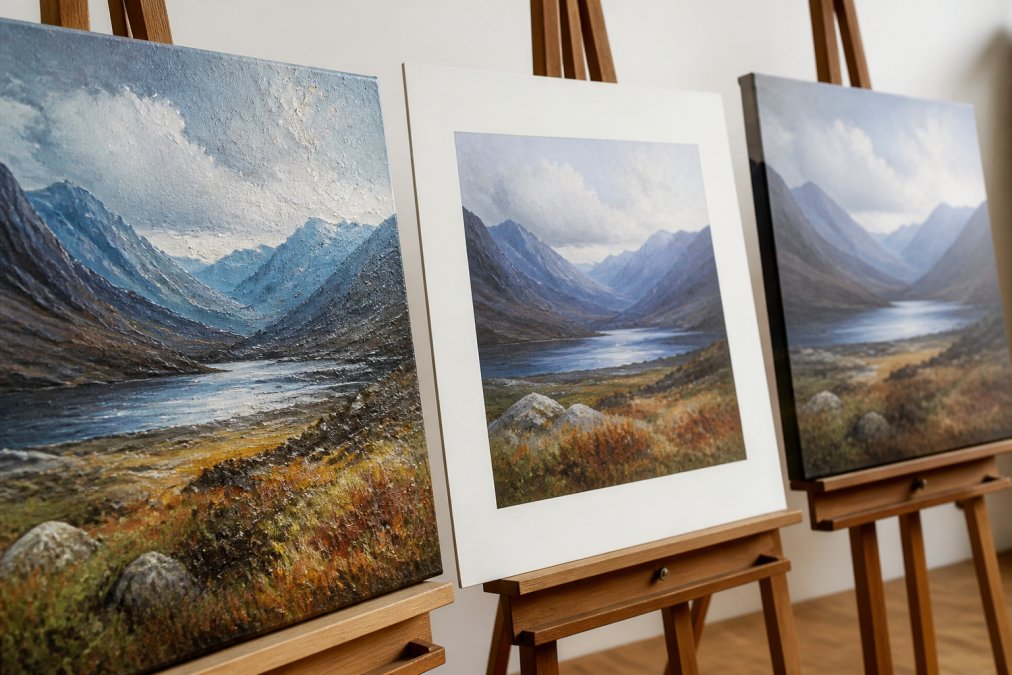
Giclée printing is a legitimate fine-art reproduction technique producing high-quality prints. The process begins with high-resolution scanning of an original artwork. The digital image is color-corrected and prepared for printing. A specialized inkjet printer applies archival inks to fine-art paper, canvas, or other substrates, producing hundreds or thousands of copies from a single digital file.
Giclée prints can be remarkably beautiful with fade-resistant inks and archival paper lasting decades. Many galleries sell giclée reproductions of museum artworks. The key distinction: a giclée print is a mechanically produced copy, however fine the quality. Value and appreciation potential differ fundamentally from original works.
Red Flags in Mass-Produced Art
Uniform surface texture is a primary red flag. Run your hand lightly across the painting. Original oil paintings have variations in surface texture reflecting brushwork. Reproductions feel uniformly smooth or have consistent patterns reflecting printing.
Perfect color uniformity across large areas suggests printing. Original paintings show subtle color variations as the artist mixed pigments and applied paint in layers. Lack of brushstroke variation indicates mechanical production. Examine areas of solid color, originals show subtle brushstrokes and paint texture; reproductions show perfectly uniform color.
The price point is practical. Genuine original paintings by contemporary Highland artists typically start at several hundred pounds and range into thousands. Offers under 200.00 for what appears to be an original oil painting indicate a reproduction or print.
Check for printing marks under magnification. Giclée and inkjet prints show ink droplet patterns under sufficient magnification. Original paintings never display this dot pattern.
Request a certificate of authenticity. Legitimate original artworks come with documentation. If the seller cannot provide a certificate or artist confirmation, the work is likely a reproduction or has questionable provenance.
Legal and Ethical Considerations
Selling reproductions as original artwork is fraud. Misrepresenting a print as an original is illegal and unethical. Reputable sellers clearly distinguish between originals and reproductions.
Copyright and reproduction rights matter. Artists retain copyright to their original works. Creating reproductions without the artist's permission violates copyright law. Legitimate reproductions are produced by the artist or with explicit authorization.
Authentication fraud is a genuine concern. Forged certificates, false signatures, and fabricated provenance deceive buyers. When purchasing original Scottish art, verify authenticity through multiple channels: the artist directly, established galleries, or professional appraisers.
Supporting original artists ethically means purchasing directly from them or through authorized representatives, ensuring the artist receives fair compensation and you receive authentic work with proper documentation.
Understanding the distinction between original Scottish art and reproductions helps you make purchases aligned with your values and goals. For home decoration with Highland artwork, reproductions and fine art prints offer beautiful, accessible options. For supporting Highland artists, building a collection, or investing in appreciating assets, original paintings represent the genuine article.
Cairngorm Artists connects collectors worldwide with original works by ten talented Highland artists. Every piece arrives ready to hang with our safe-arrival promise, and you can purchase with confidence knowing you're supporting authentic Highland creativity. Explore our collection of original paintings and fine art prints capturing the raw beauty of Scottish wildlife and landscapes.
Frequently Asked Questions
Q: How can I tell if my Scottish painting is an original or a reproduction?
A: Start with visual inspection using a magnifying glass to examine brushstrokes and paint texture. Originals show visible impasto (thick paint application), varying brushwork, and unique colour variations. Check the back for artist signatures, dates, or gallery labels. Request provenance documentation and a certificate of authenticity. If it's a giclée print or canvas print, the surface will feel uniform and smooth rather than textured. A professional art appraisal can confirm authenticity.
Q: What is the difference between a limited edition print and an original oil painting?
A: Original oil paintings are one-of-a-kind works created directly by the artist with unique brushstrokes, impasto, and colour variations. Limited edition prints are reproductions of an original artwork, created using giclée or other printing technology, numbered and signed by the artist. Original paintings appreciate in value over time and hold investment potential. Limited edition prints offer affordable access to fine art but have limited resale value and do not appreciate like originals. Both can be beautiful, but they serve different purposes.
Q: Are reproduction prints of Scottish landscapes worth anything?
A: Reproduction prints have minimal resale value compared to original artwork. A high-quality giclée print or canvas print from a contemporary Scottish artist might retain some of its original purchase price if sold secondhand. Mass-produced reproductions are worth even less. However, they serve a real purpose: they allow homeowners to enjoy authentic Highland imagery affordably without the investment commitment. For collectors seeking financial appreciation, original artwork is the only option with genuine investment potential.
Q: Do original Highland art pieces appreciate in value over time?
A: Yes, original Highland art from established or emerging contemporary Scottish artists typically appreciates in value, especially if the artist gains recognition or the piece has strong provenance. Factors affecting appreciation include the artist's reputation, exhibition history, subject matter (rare wildlife or iconic landscapes can command higher prices), and certificate of authenticity. Contemporary Scottish landscape and wildlife paintings are particularly sought after. However, appreciation is not guaranteed; it depends on artist trajectory, market demand, and condition. Investing in contemporary Scottish artists requires research into their bodies of work and collector interest.
Q: Why does original Scottish art hold more value than mass-produced prints?
A: Original artwork holds value because it is unique, created directly by the artist with individual vision and skill. Each brushstroke, colour choice, and composition decision is irreplaceable. Originals have provenance (documented history) and authenticity, making them collectible assets. Mass-produced prints and reproductions, by contrast, are infinitely reproducible with no scarcity. Supply abundance affects value. Collectors, interior designers, and investors prize originals for their uniqueness, emotional connection to the artist's hand, and potential for appreciation. This scarcity and authenticity are what drive resale value and make original artwork a meaningful investment.


