

How to Start a Scottish Art Collection
Oct 19, 2026
Table of Contents
- Define Your Collecting Style and Personal Taste
- Set an Art Collection Budget That Works for You
- Learn About Scottish Artists to Collect
- Where to Buy Original Scottish Art
- Making Your First Purchase
- How to Care for an Art Collection
- Understanding Provenance and Authenticity
- Frequently Asked Questions
Last Updated: October 18, 2026
Define Your Collecting Style and Personal Taste
Starting a Scottish art collection begins with understanding what moves you. Before spending money, ask what draws your eye: moody landscapes, abstract compositions, wildlife studies?
Personal taste matters more than trends. A piece you love rewards you for years; one bought as "investment-grade" but unloved becomes a burden.
Many collectors try to like what they think they should like. Instead, look at work that genuinely speaks to you, visit galleries, browse online, notice what makes you stop.
Set an Art Collection Budget That Works for You
Start with what feels comfortable to lose, then plan for the full cost of ownership, not just the sticker price.
Art collecting doesn't require wealth, it requires intention. Modest, regular purchases build a meaningful collection over time; a budget matched to your stage of knowledge separates coherent collections from random accumulations.
Realistic Scottish Art Price Bands by Medium and Career Stage
Treat these as starting ranges, not rules.
- Open-edition prints and small reproductions (typically under £50): The most accessible entry point. Cairngorm Artists, for example, lists the Old Bothy, Isle of Harris fine art print at £16 and the Scottish Hillside canvas print at £44, ideal for learning what you like without financial pressure.
- Signed limited-edition prints (roughly £50-£250): Edition size, artist reputation, and print quality drive the price. A signed and numbered edition of 50 from an emerging Scottish printmaker often sits here; the same edition from an established name climbs higher.
- Small original works on paper (roughly £150-£600): Watercolours, drawings, and small mixed-media pieces by early-career Scottish artists. This is where many collectors make their first original purchase.
- Small to medium original paintings (roughly £400-£2,500): The core of most private Scottish collections. Price depends on size, medium, and exhibition history: emerging artists sit at the lower end, those with gallery representation and public-collection credits higher.
Most collectors start in the print and small-original bands, then move up as their eye sharpens. One £300 original you love often teaches you more than three £100 impulse prints.


The Hidden Costs Beyond the Purchase Price
Budget for more than the artwork itself. These costs surprise first-time buyers:
- Framing: Professional framing with acid-free mounts and UV-filtering glass commonly runs £60-£200 for a small to medium work on paper, more for large or bespoke frames.
- Shipping and handling: Original paintings and framed works need protective packaging. Some sellers, including Cairngorm Artists with their safe-arrival promise, build protection into their shipping.
- Insurance: Once a collection passes a few thousand pounds in value, specialist art insurance or a home-insurance rider is worth pricing. Premiums are usually modest relative to the value covered.
- Conservation and restoration: Cleaning, reframing, or repairing older works can cost hundreds of pounds. Factor this in when buying anything vintage or previously owned.
A Simple Budget Rule for New Collectors
Set a budget per piece, not a total collection budget. Decide the maximum you'd spend without regret if the piece turned out not to be your long-term favourite, and stay under it for your first three to five purchases.
Learn About Scottish Artists to Collect
Understanding the artists behind the work deepens your appreciation. Scottish art has a rich tradition rooted in landscape, light, and the Highlands.
When you find a Scottish artist you like, research their background: where they're from, what drives their work, how long they've been creating.
Cairngorm Artists represents a collective of ten Highland artists, each bringing their own vision to the landscape and wildlife of Scotland.
Understanding Artist Biography and Authentic Voice
An artist's biography tells you whether their voice is authentic. Look for deep roots in their subject matter.
Scottish artists worth collecting often spend significant time in the regions they paint, understanding the light, seasons, and mood of the landscape. That lived experience translates into work that feels true rather than superficial.
When you read an artist's CV, notice:
- How long they've been working in their medium
- Whether they've exhibited in galleries and public collections
- What themes appear consistently in their work
- Whether they're actively creating new work
Where to Buy Original Scottish Art
Most guides mention galleries and move on. Here is a practical route through the main channels where Scottish art is actually discovered and purchased, with the trade-offs of each.
Independent Galleries Across Scotland
Commercial galleries remain the backbone of the Scottish art market, offering curated selections, expert advice, and the chance to see work at full scale. Staff can explain an artist's background and help you judge fit.
Scotland's gallery geography is worth learning. Edinburgh and Glasgow concentrate the most contemporary and commercial galleries. Aberdeen, Dundee, Perth, and Inverness each support their own scenes, and smaller Highland and Borders towns often host galleries specialising in landscape and wildlife work.
Artist Studios and Open Studio Events
Buying directly from an artist is one of the most rewarding routes. Many Scottish artists open their studios, and organised open-studio events let you meet makers in person, support them directly, and often see work in progress. The trade-off: visits require planning, and not every artist sells directly.
Art Fairs and Degree Shows
Art fairs bring multiple galleries and artists together, letting you compare work quickly and meet dealers; Degree shows at Scotland's art schools are another underused route, where many collectors first see emerging artists at the most accessible prices of their careers.
Online Galleries and Artist Collectives
Online retailers offer convenience and wider selection. Cairngorm Artists, a collective of ten Highland artists, ships worldwide with a safe-arrival promise, so you can buy original Scottish work from anywhere, and their ready-to-hang pieces eliminate the extra step of framing. When buying online, check the return policy, ask for additional photographs of condition and detail, and confirm what documentation accompanies the piece.
Auction Houses and the Secondary Market
Auction houses and resale platforms let you find established work at a range of price points and are where much of the Scottish secondary market trades. The trade-offs are real: understand condition reports, buyer's premiums, and that auction purchases are usually final.
Public and National Collections as a Free Reference Library
You don't have to buy from them, but Scotland's public and national collections are the best free education a collector can get. The National Galleries of Scotland, the Burrell Collection and Kelvingrove in Glasgow, and regional museums hold deep holdings of Scottish art.
National Galleries of Scotland collection search
Making Your First Purchase
Your first purchase should feel right, not rushed.
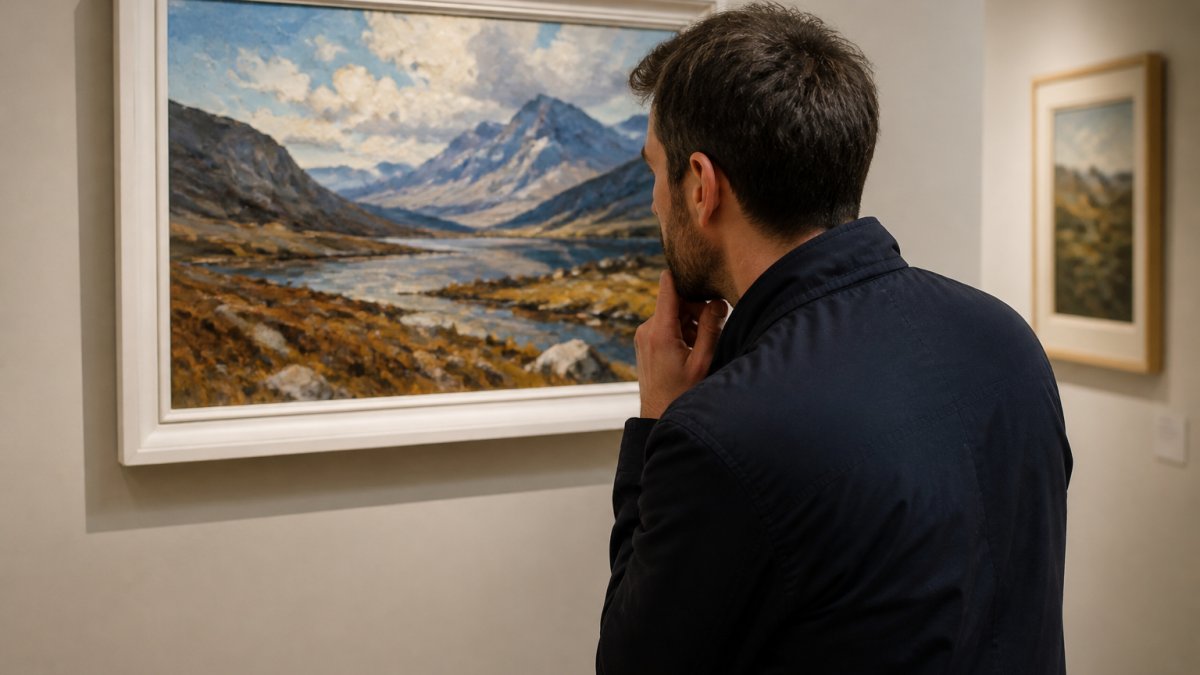
Take time to live with the idea before you buy.
Scottish Glen - Fine art print from original artwork →
Check the details before purchasing: artist's name, title, year, edition information, and condition.
When your piece arrives, inspect it carefully for damage and verify it matches the description.
Display your piece where you'll see it daily and notice how light changes its mood throughout the day.
Document your purchase. Keep the receipt, any certificate of authenticity, and the artist's information.
How to Care for an Art Collection
Art requires attention to last. Proper care protects your investment and preserves the work for future generations.
Handle pieces carefully. Oils and dirt from your hands can damage surfaces. Wear cotton gloves when handling works on paper.
Control your environment. Extreme temperature swings, high humidity, and direct sunlight damage art. Keep pieces away from radiators, air conditioning vents, and windows with intense afternoon sun.
Preservation, Display, and Long-Term Storage
Framing protects paper-based work. Use acid-free materials and UV-filtering glass. Professional framing costs money but extends the life of your piece significantly.
For canvas and paintings, avoid direct sunlight. Rotate pieces periodically if you have multiple works. This prevents uneven fading.
If you need to store work temporarily:
- Store vertically or slightly angled, never flat
- Wrap in acid-free paper, not plastic
- Keep in a cool, dry space
- Avoid basements and attics where humidity fluctuates
Insurance matters once your collection has value. Document each piece with photographs and receipts.
Transport requires care. Professional art shippers have equipment to protect pieces.
Understanding Provenance and Authenticity
Provenance is the documented history of a piece.
Strong provenance increases value and protects you.
When you buy, ask for documentation. This might include:
- The artist's signature and date
- A certificate of authenticity
- Exhibition history
- Previous ownership records
For contemporary work from living artists, documentation is straightforward.
For older work, provenance becomes more complex.
Condition affects value. A painting with significant damage costs less than an identical piece in excellent condition.
When you're considering a purchase, ask direct questions:
- Is this an original work or a reproduction?
- If a print, what is the edition size and number?
- What is the condition?
- What documentation comes with the piece?
Honest sellers welcome these questions. They're signs of a serious collector.
Starting a Scottish art collection is a journey, not a destination.
At Cairngorm Artists, we believe every collector deserves access to authentic Highland work. Whether you're buying your first print or your tenth original, we're here to help you build a collection you'll treasure for years to come. Explore our collection and find the piece that speaks to you.
| Decision Point | Action | Outcome |
|---|---|---|
| Define your taste | Spend time looking at art you love | Clear sense of what appeals to you |
| Set a budget | Decide how much to spend per piece | Confident purchasing decisions |
| Learn about artists | Research backgrounds and exhibitions | Deeper understanding of authenticity |
| Choose format | Decide between originals, prints, canvas | Right balance of investment and accessibility |
| Make first purchase | Buy with intention, not impulse | Piece you'll live with happily |
| Document and care | Keep records and control environment | Long-term preservation and value |
Frequently Asked Questions
How much should I budget for my first piece of Scottish art?
Start with what feels comfortable for your situation. Fine art prints from Highland artists range from £16 to £60, making them accessible entry points. Original paintings typically cost more but offer unique investment potential. Many collectors begin with a single piece they genuinely connect with, rather than a fixed budget. Consider your wall space, interior style, and whether you want original works or prints. Your budget can grow as your collection develops and your appreciation deepens.
How do I find emerging Scottish artists to collect?
Visit independent galleries and art fairs across Scotland to discover contemporary artists. Many Highland artists exhibit locally before gaining wider recognition. Follow artist social media and gallery websites to track new work and exhibitions. Attend artist open studios and studio visits when available. Look for artists whose narratives and visual language resonate with you personally. Galleries often provide artist CVs and background information that help you understand their practice and authenticate their work.
What's the difference between buying original Scottish art and prints?
Original works are unique, one-of-a-kind pieces created directly by the artist, offering exclusivity and typically higher future appreciation potential. Fine art prints are reproductions of original artwork, made using archival materials and professional printing techniques. Limited edition prints are numbered and signed, offering authenticity and longevity at a lower price point than originals. Both formats can be valuable and beautiful. Prints are ideal for starting collectors or those with specific budget constraints, while originals suit collectors seeking investment and uniqueness.
How should I care for and display my Scottish art collection?
Display artwork away from direct sunlight, which fades colours over time. Keep pieces in stable temperature and humidity conditions to prevent warping or damage. Use acid-free framing materials and UV-protective glass for long-term preservation. Dust gently with a soft cloth. Avoid damp areas like bathrooms. For storage, keep wrapped pieces flat or upright in a climate-controlled space. Handle artwork by the frame, never the surface. Proper display and care ensure your collection maintains its beauty and value for decades.


